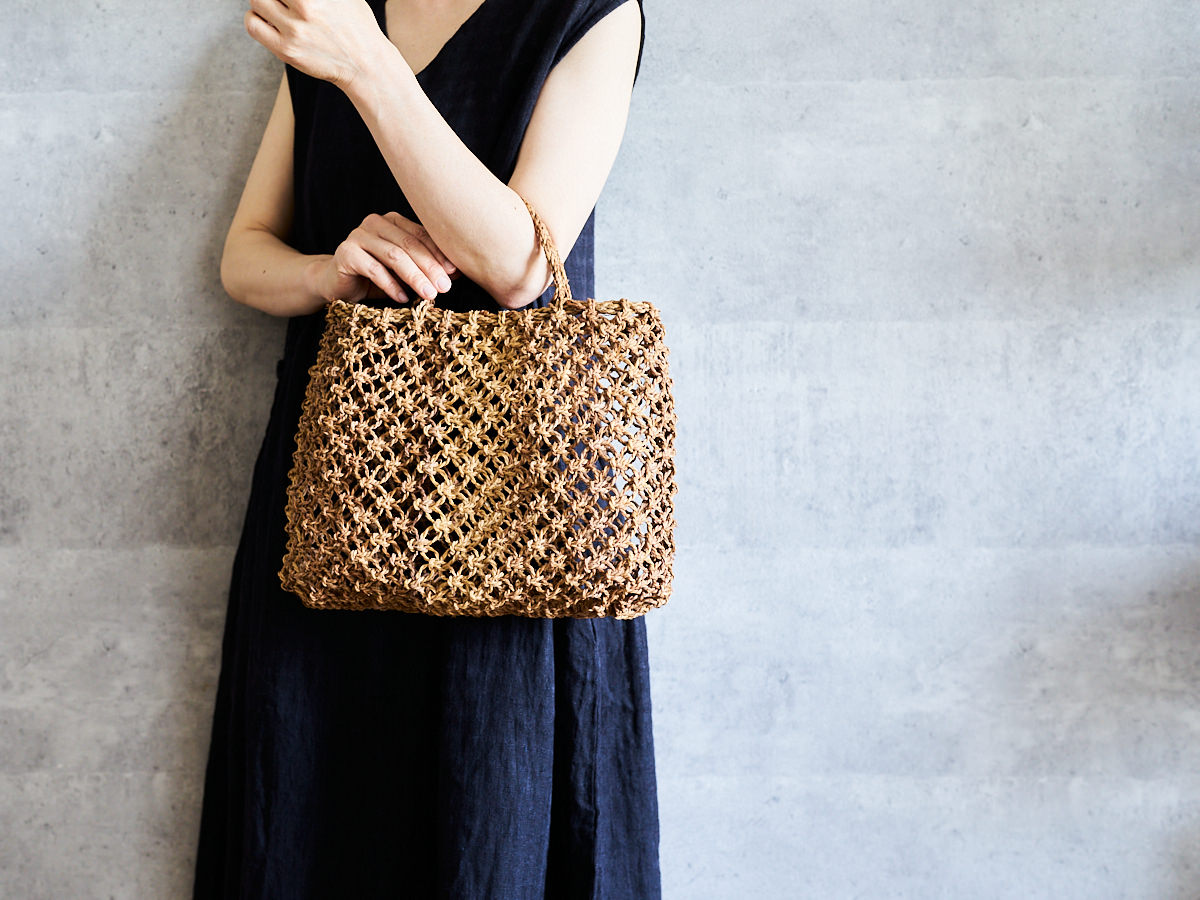
Macramé-Style Tote Basket / Linden Bark / Yamagata-JPN 340502
Macramé-Style Tote Basket / Linden Bark / Yamagata-JPN 340502
Couldn't load pickup availability
- Size / Weight
- 【 inches / oz 】
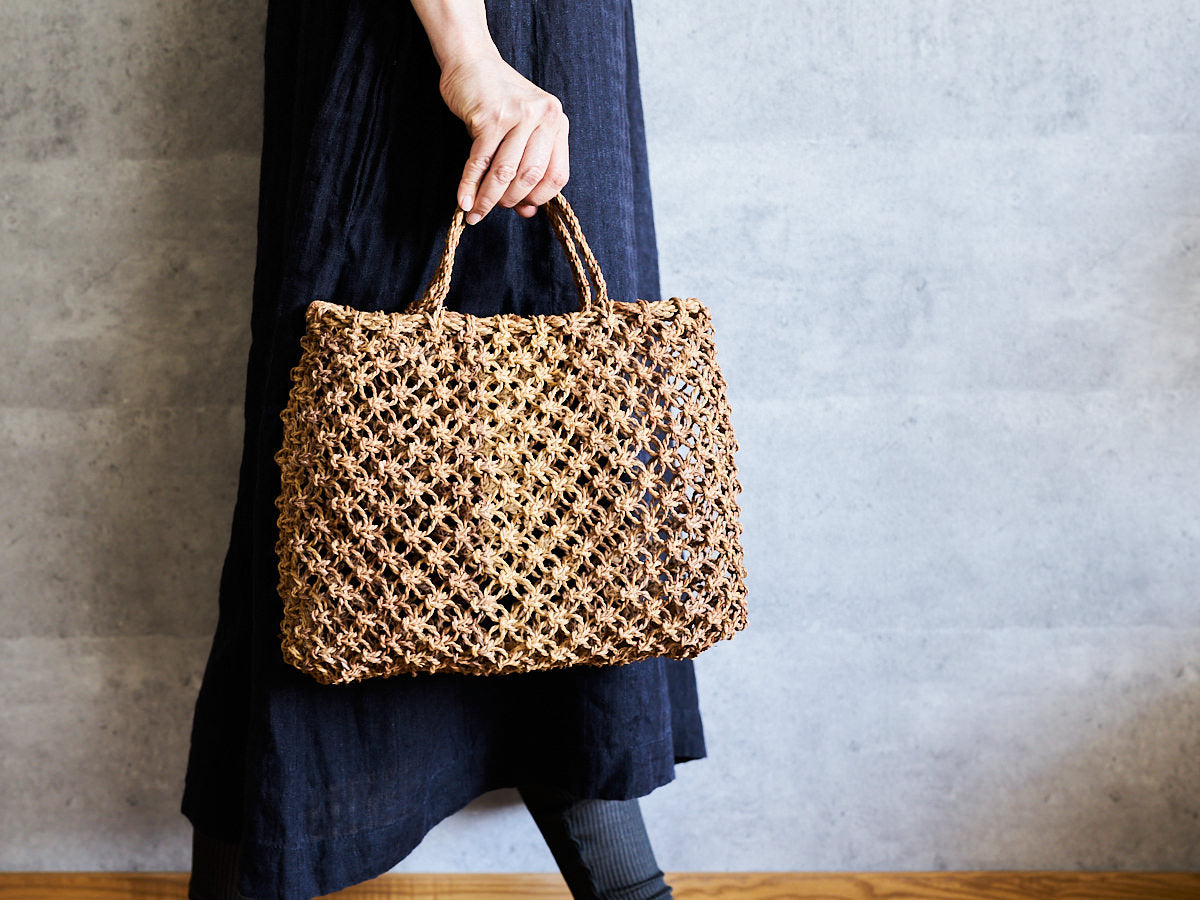
Approx. W 10.63″ × D 3.94″ × H 9.45″ (H 13.78″ with handle) / 8.47 oz
—
【 cm / g 】
Approx. 27 × 10 × H 24 cm (H 35 cm with handle) / 240 g


-
Note
The sizes shown above are the middle of the total quantity of items we receive, and are only a rough estimate.
Also, external dimensions are provided.
Some of them may be 2-3 cm (1inch) larger or smaller than the sizes indicated because they are handmade using natural materials.
If you have a specific place in mind where you would like to store the item, please order it with enough space to spare.
Also, the shape, texture, and color of each item will vary.
Please be aware of this before ordering. -
Caution
Please be careful not to damage your body or clothing with sprinters.
For all materials, please store in a well-ventilated place and avoid storing in cupboards, etc. as much as possible.
When storing, it is best to avoid direct sunlight and to place them in an elevated place where moisture does not accumulate.
If the product gets wet from rain or water, wipe it off with a dry cloth and dry it well in the shade or indoors in a well-ventilated location.
Regular brushing with a scrubber or brush is recommended to prevent dust accumulation.
-
Shipping
We deliver products worldwide. Shipping costs are automatically calculated according to your location and what you order.
We will ship with care and attention.You can see shipping policy here
-
How to care
These products are made from all-natural materials and if taken good care of they will last for dozens of years. Products made of natural materials also change beautifully over time.
Check "How to care" page here
In a region along the border of Yamagata and Niigata Prefectures, a traditional textile known as “shina-ori,” made from the bark of the linden tree, is still woven today.
It is regarded as one of Japan’s ancient textiles, alongside materials such as “bashofu” from Okinawa and “kuzufu” from Shizuoka.
Its origins are said to date back over a thousand years, and it was once made in many regions across Japan. However, with the spread of cotton and silk, and later the mass production of synthetic fibers after the war, many of these traditions disappeared.
Even so, the making of these ancient textiles continues today. It remains an important winter activity in mountain villages, and we feel that its simple warmth—created from materials gathered from the surrounding natural environment using time-honored techniques—continues to captivate people.
The process of making shina-ori can be broadly divided into around ten stages. It begins in June with the selection and cutting of linden trees, and the material is finally ready to be set on the loom around February of the following year. Although some of this time is shaped by the rhythm of agricultural work, the preparation alone takes several months.
Yet from this careful process emerges shina-ori, rich in the subtle fragrance and texture unique to natural materials, holding an indescribable sense of warmth and depth.
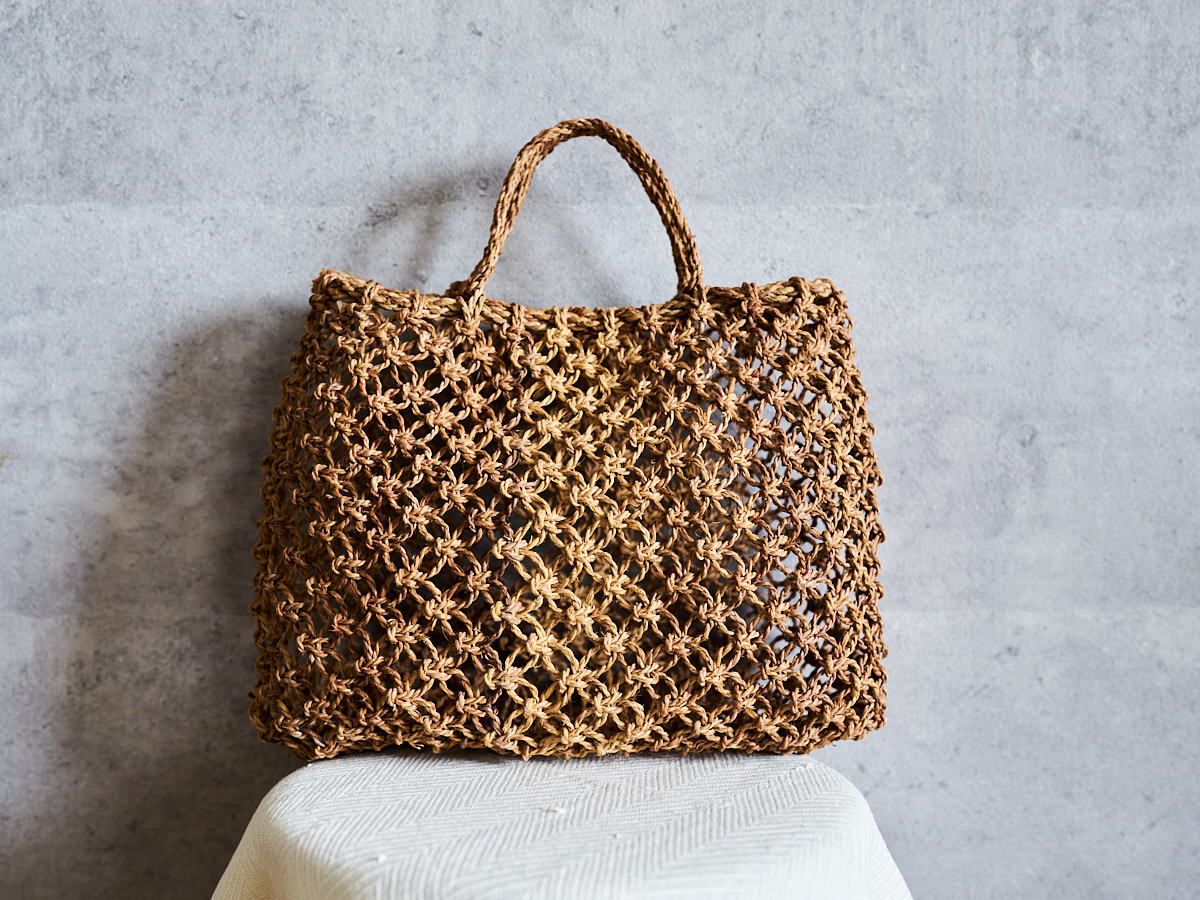
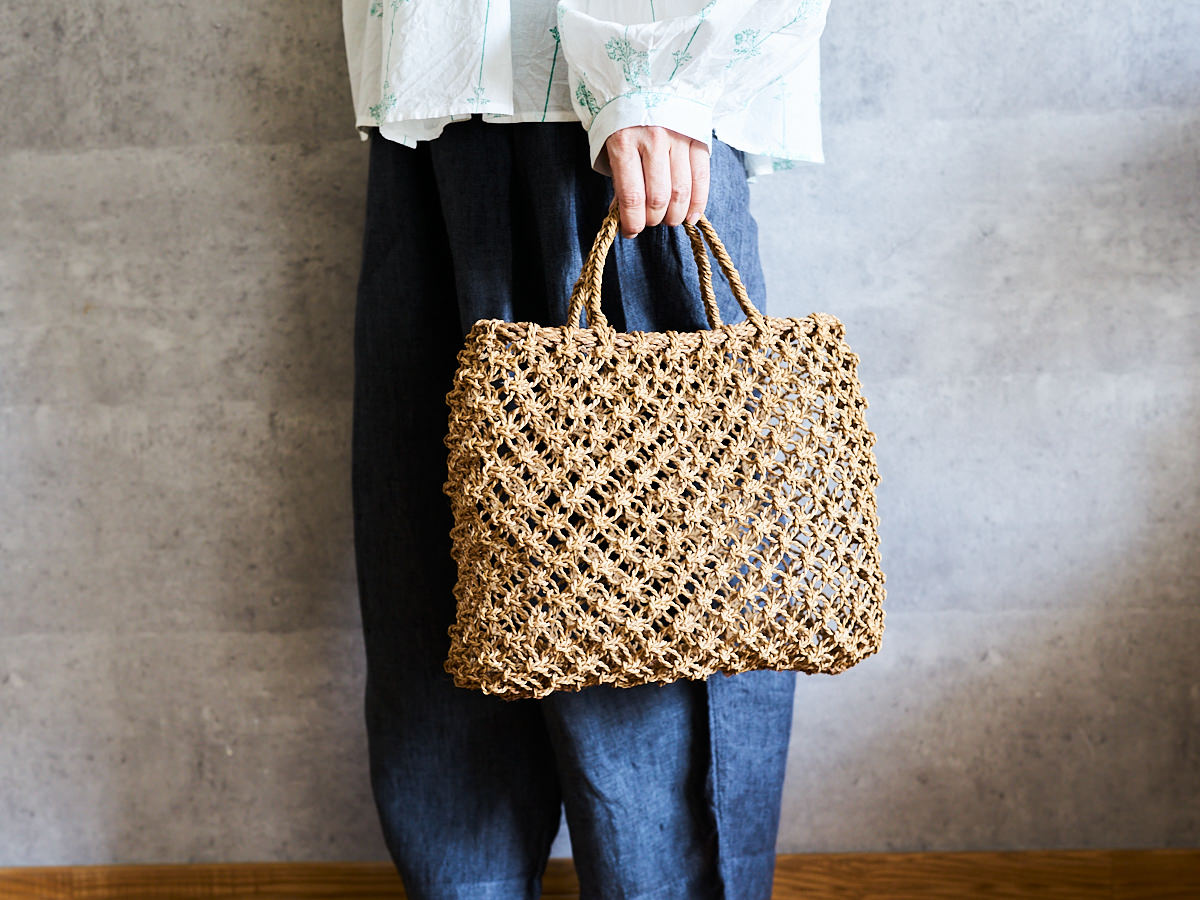
Linden trees grow throughout Japan, and their bark has been used in basketry in various regions, including Okayama and Fukushima.
This type of bag was originally made in larger sizes. As the material is resistant to water, it was valued for use in mountain work, particularly as a basket for gathering wild plants and vegetables.
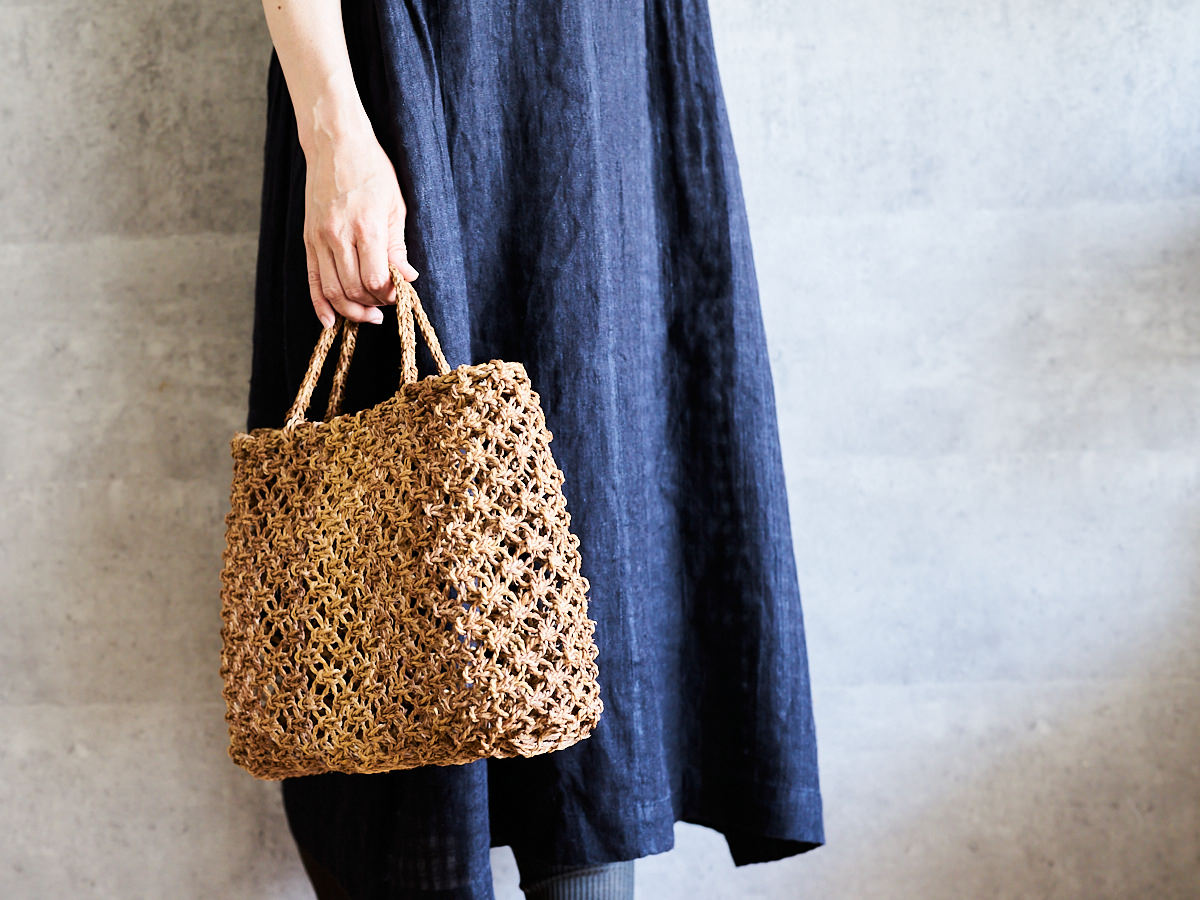
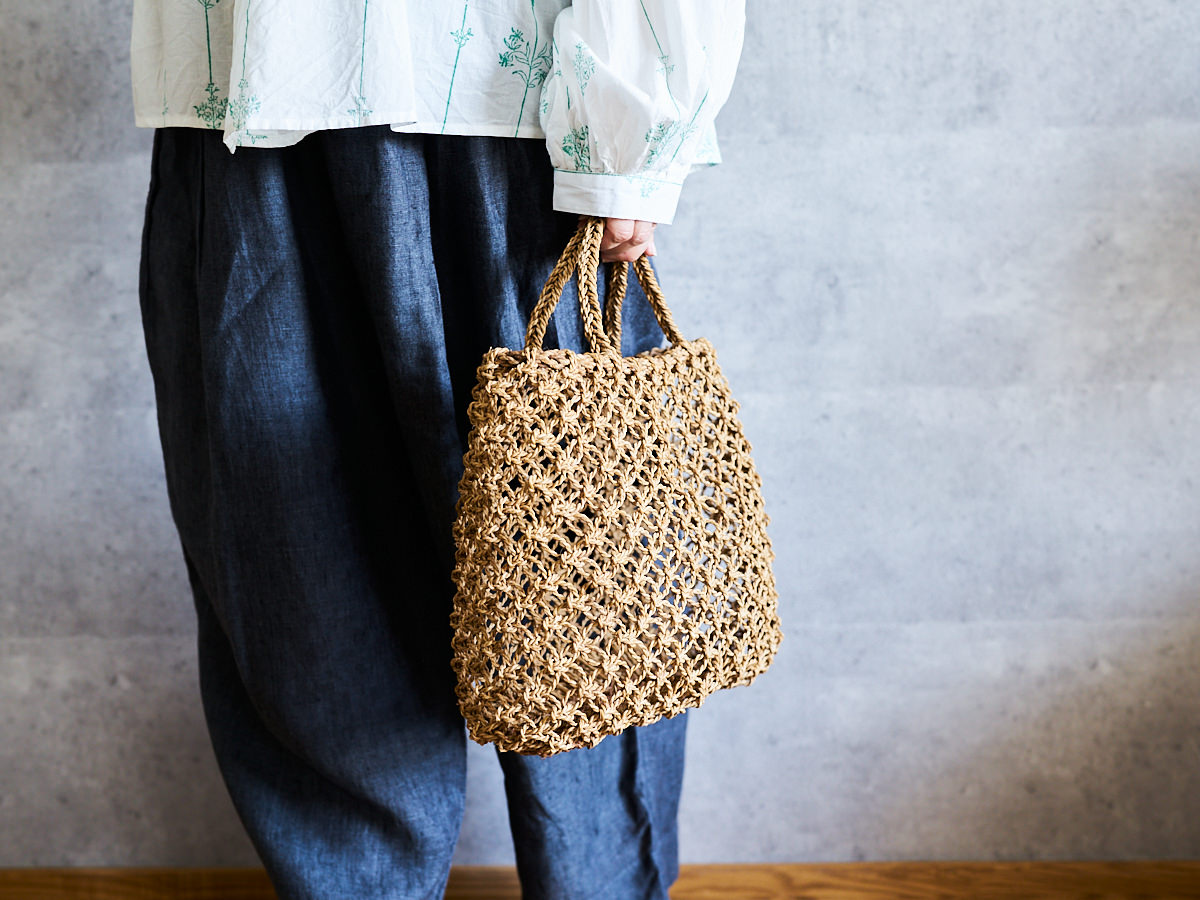
On this page, we introduce the Macramé-Style Tote Basket, adapted to a size suited to modern daily life.
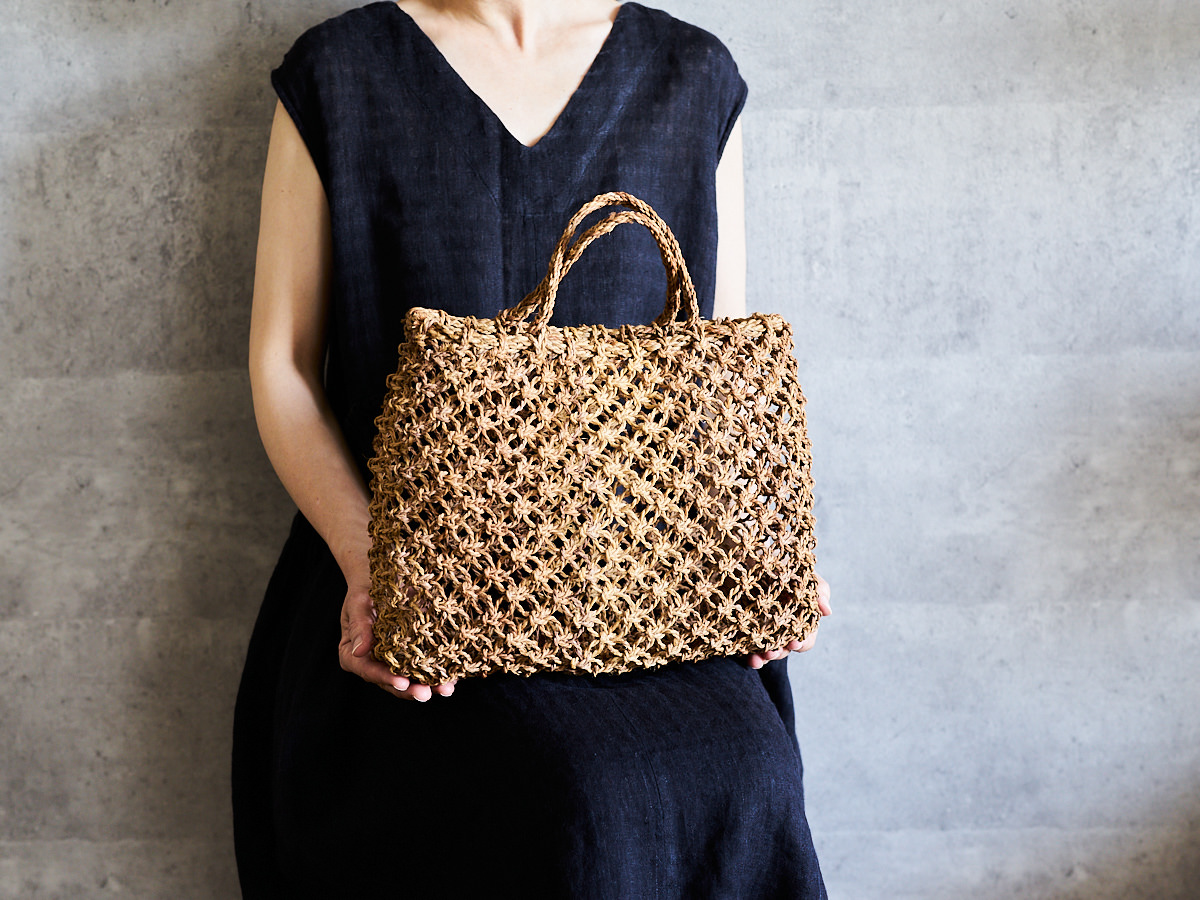
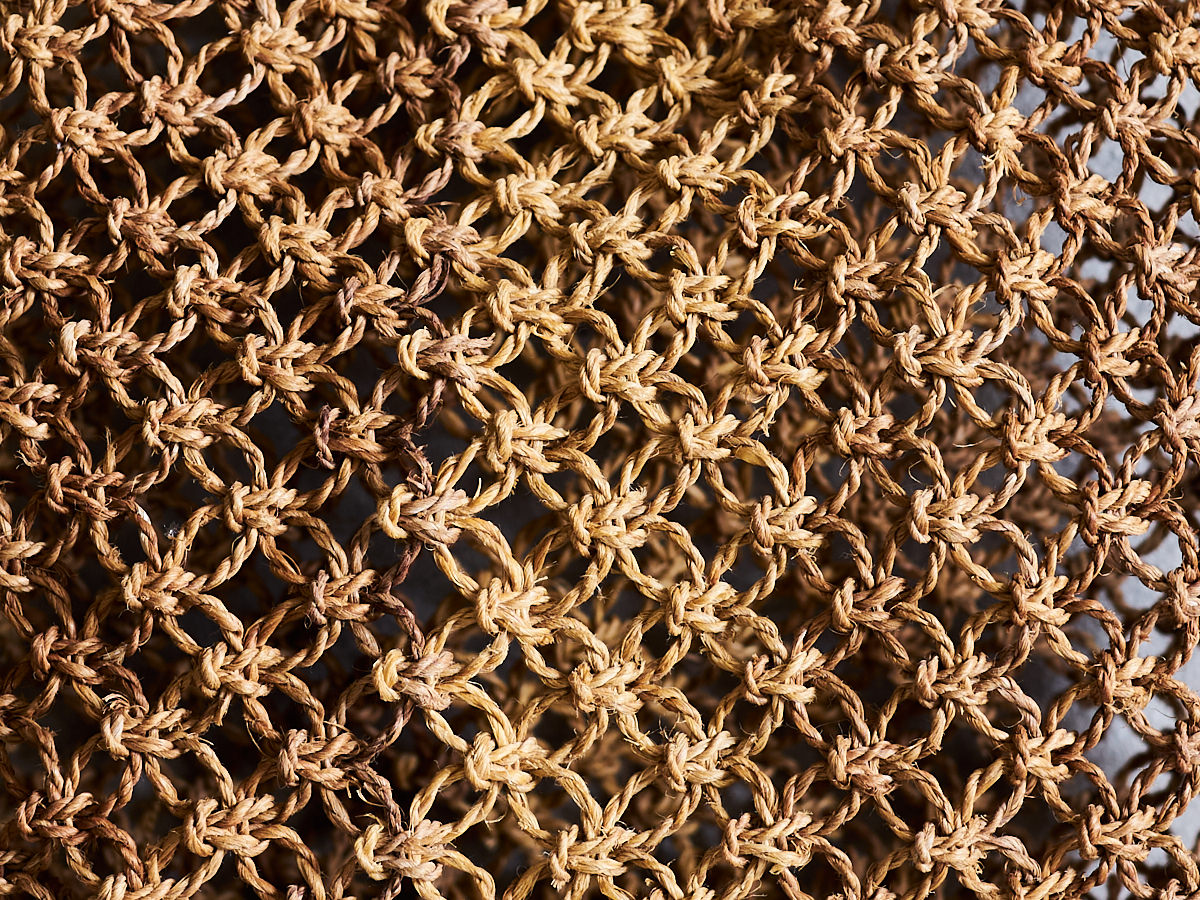
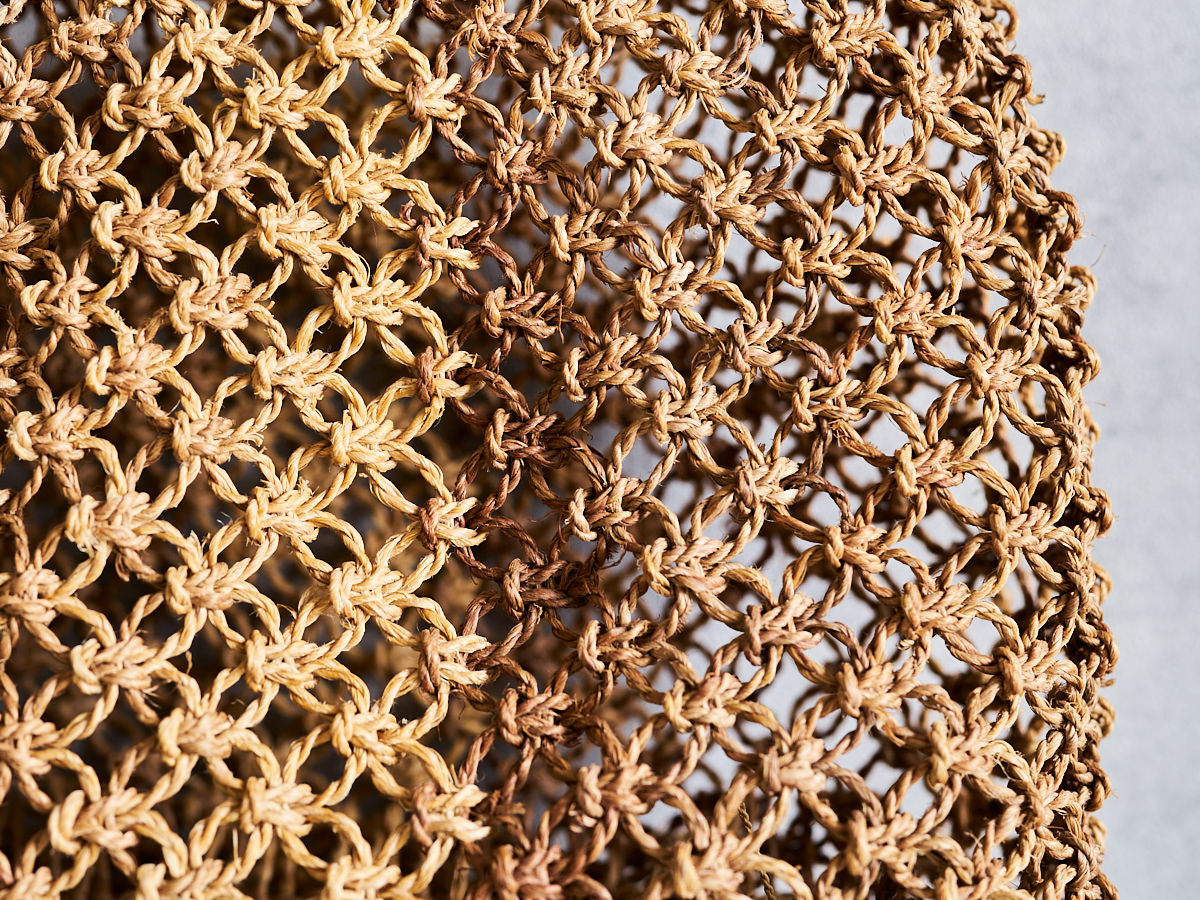
Please note that each piece is unique, and the item you receive will reflect the variations present at the time of arrival.
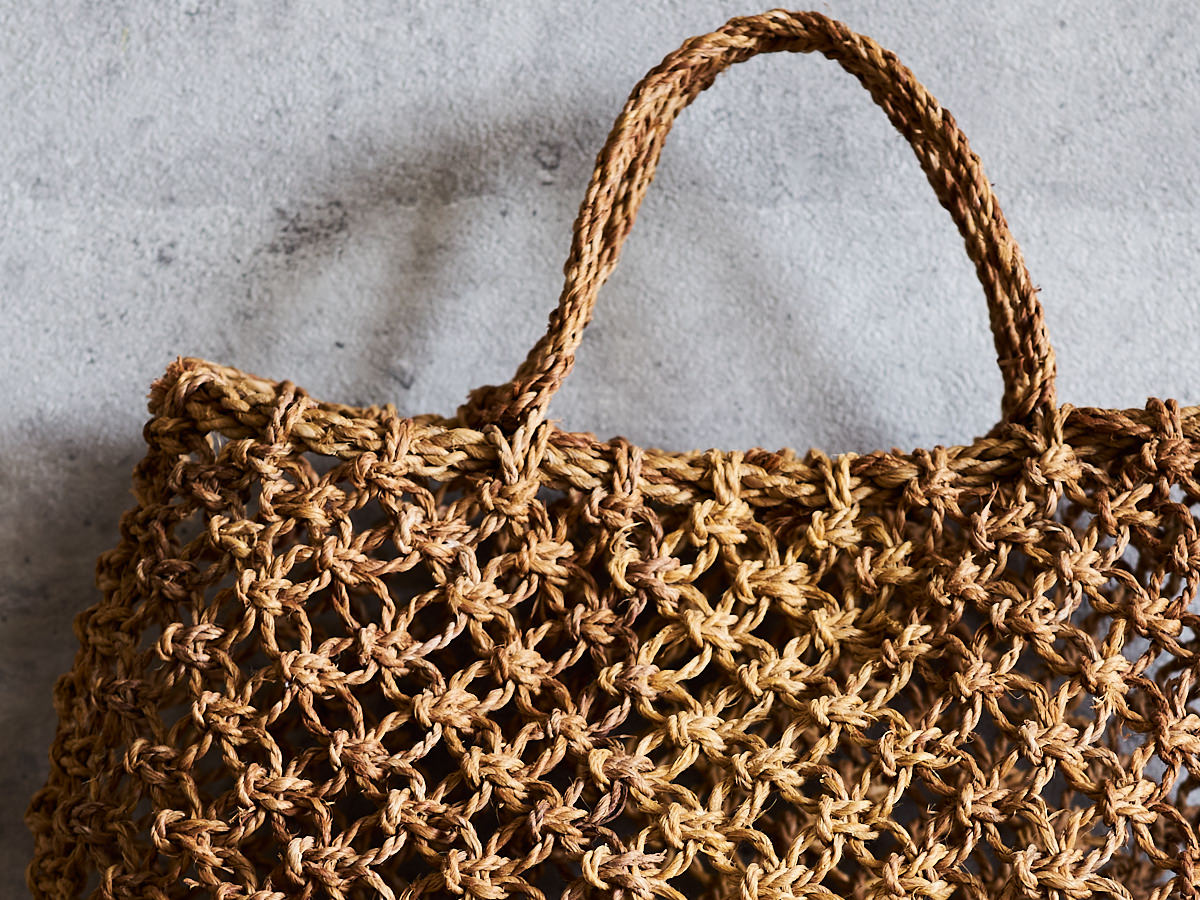
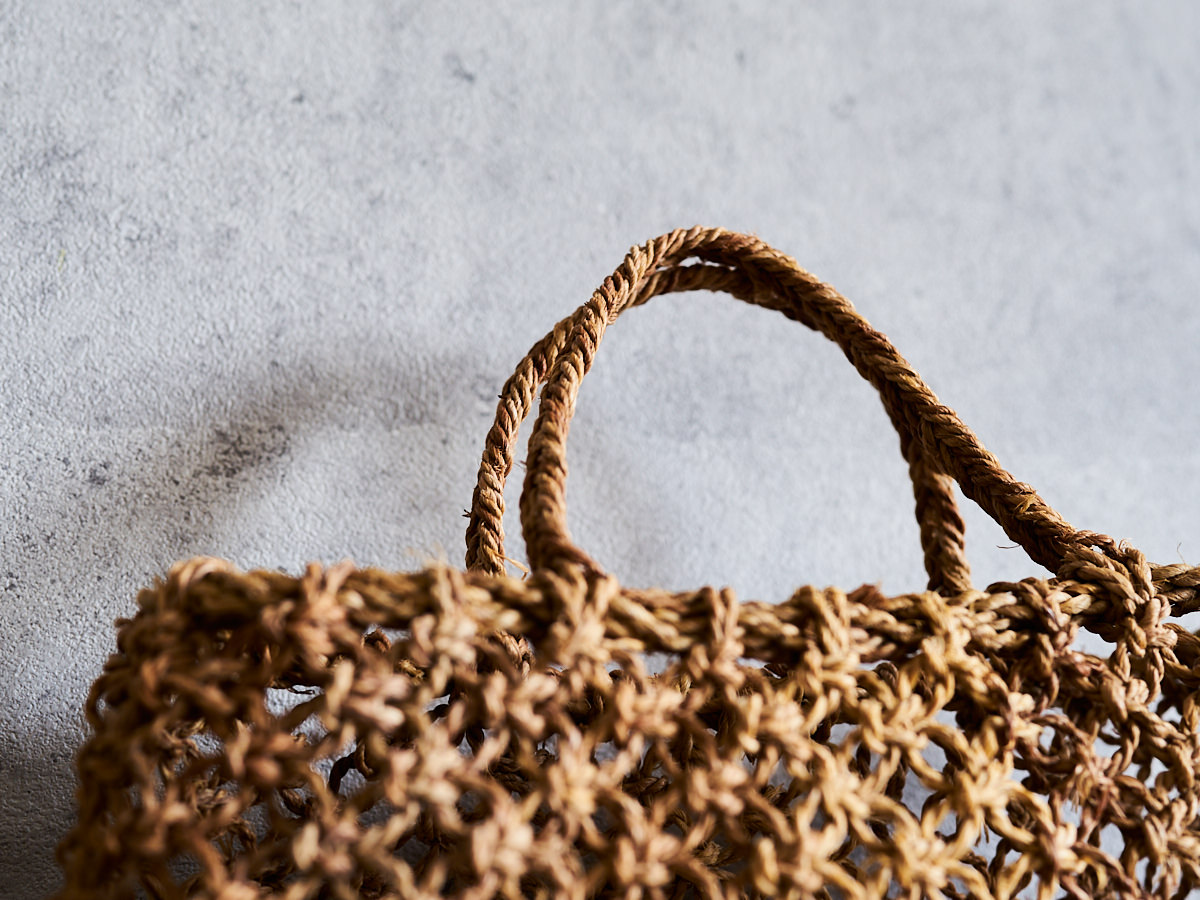
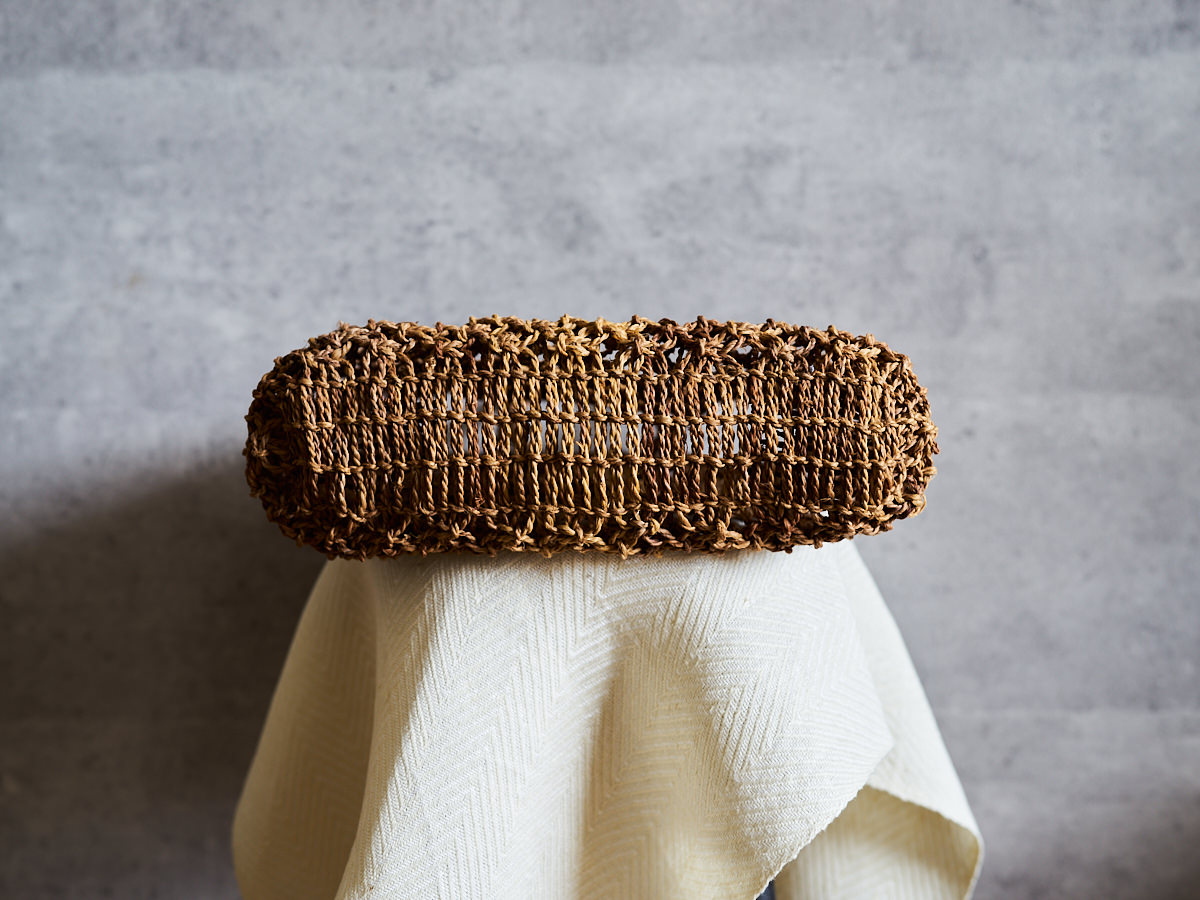
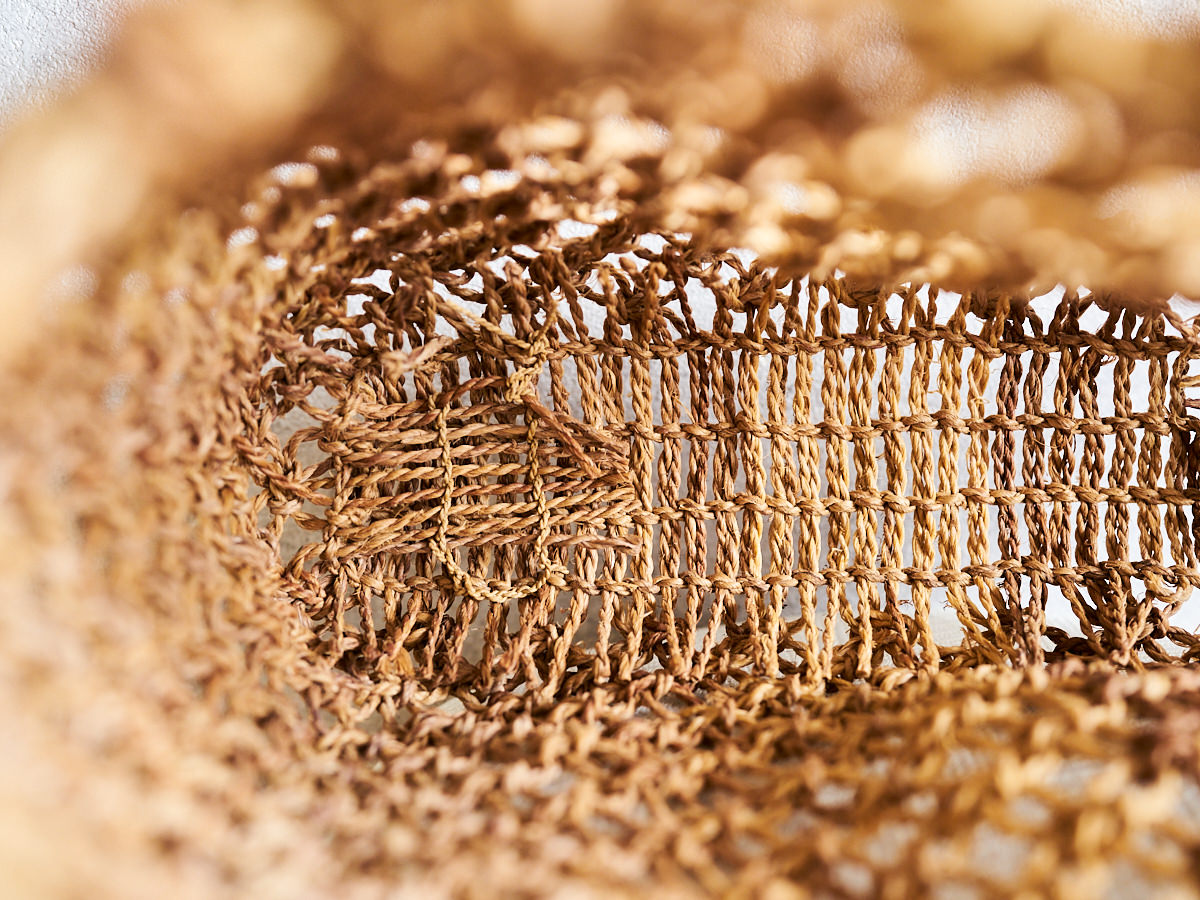
In some cases, a small amount of adhesive may be used to prevent the ends from fraying. Please note that this is not considered a defect.
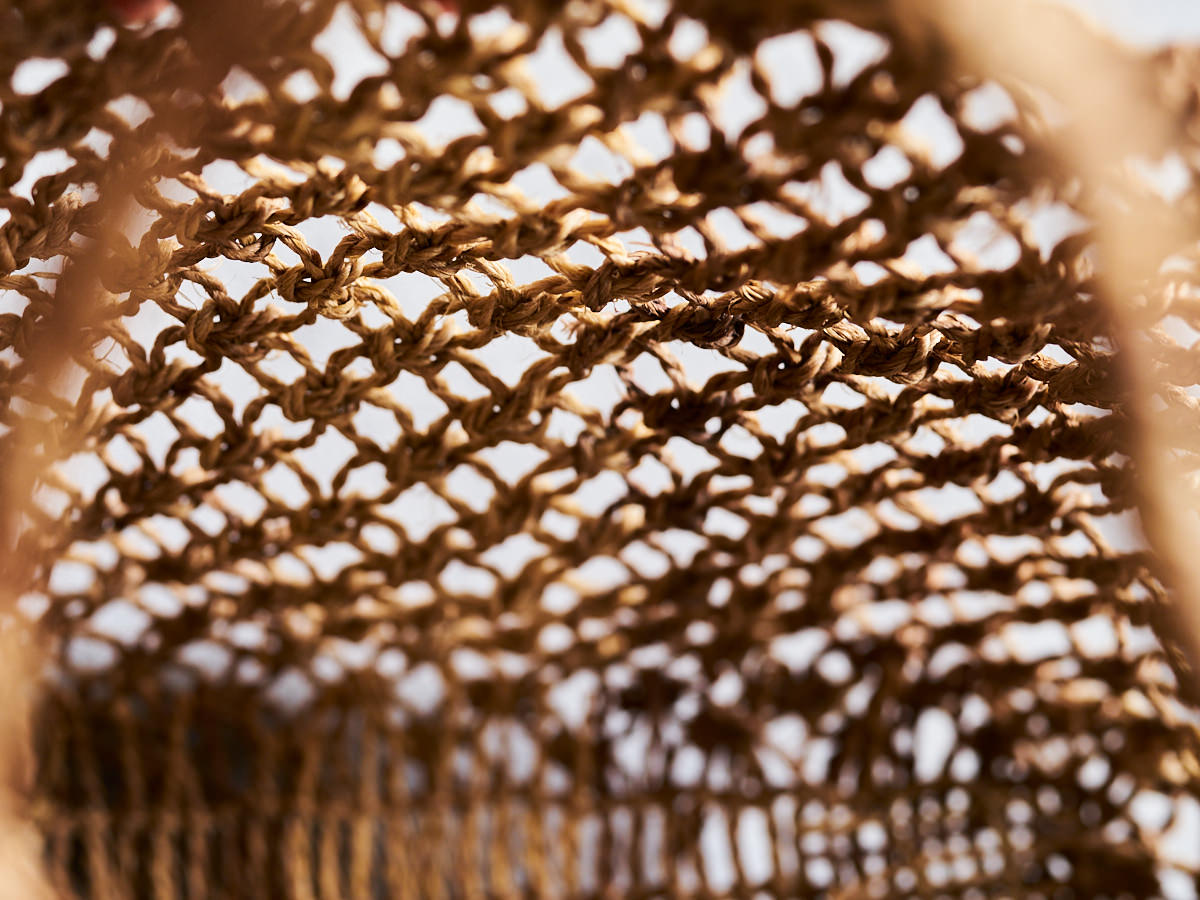
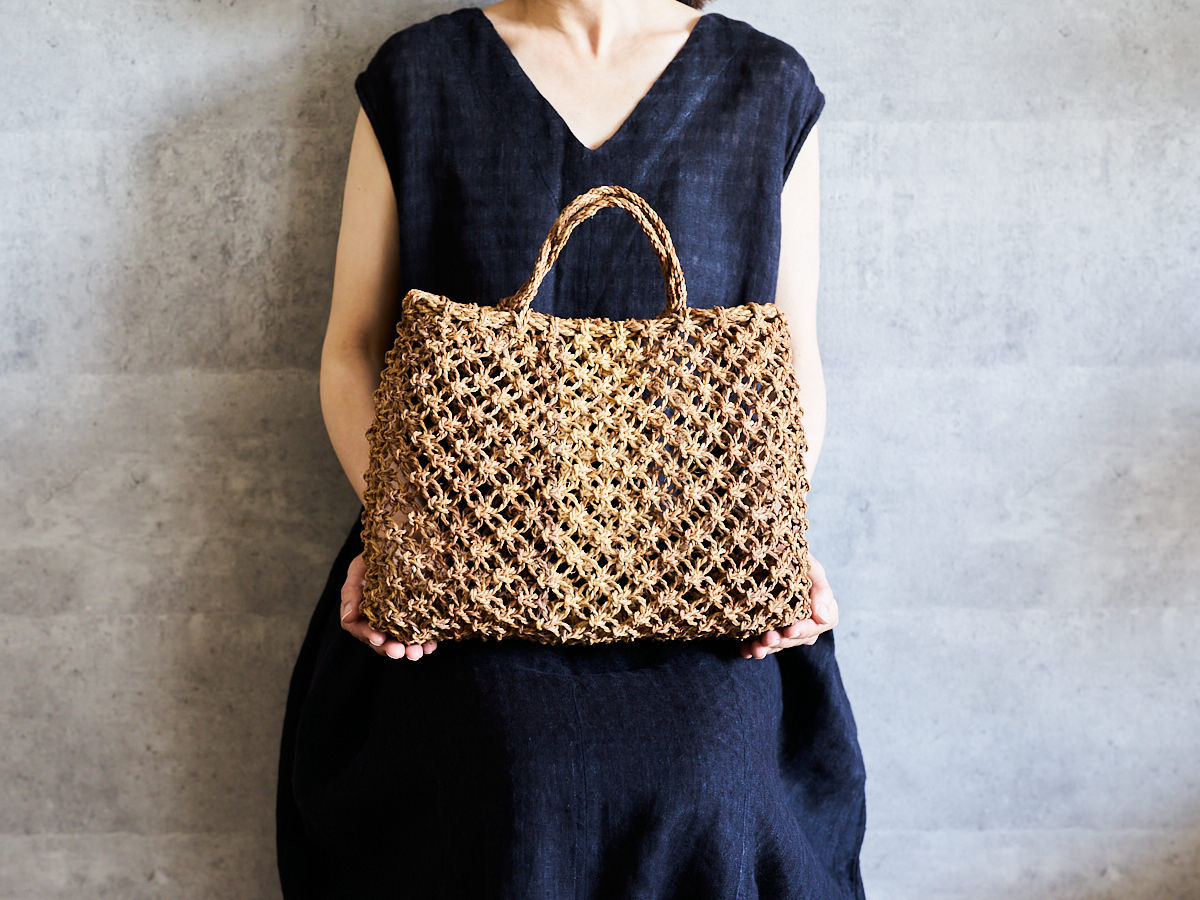
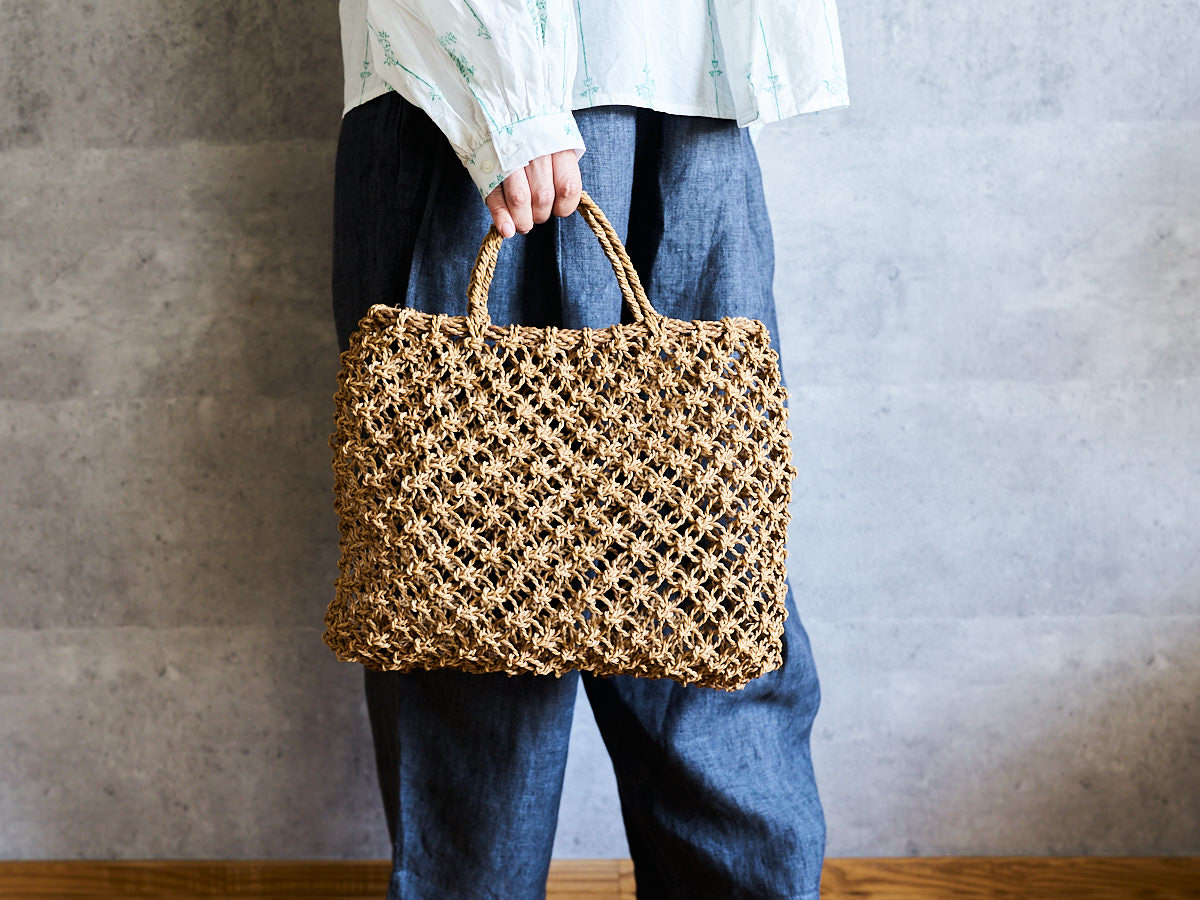
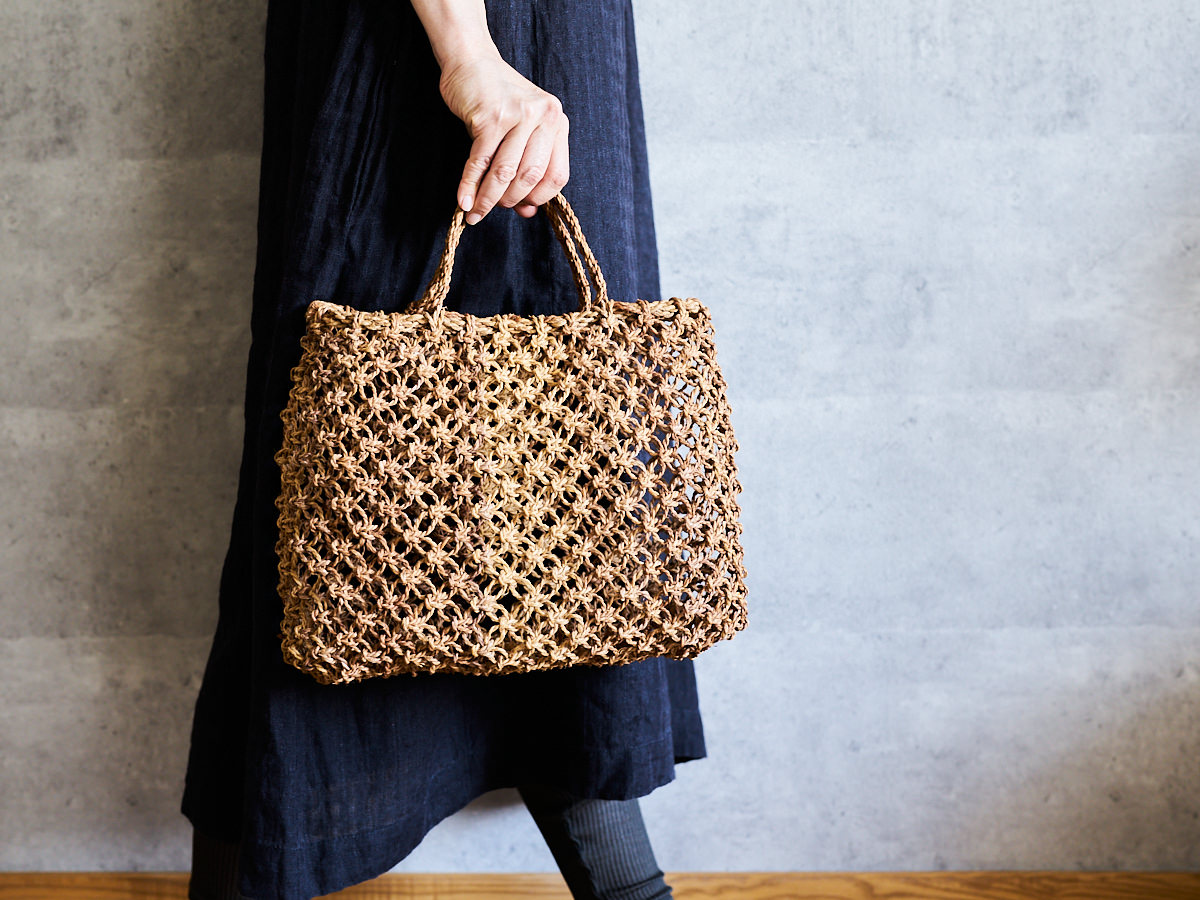
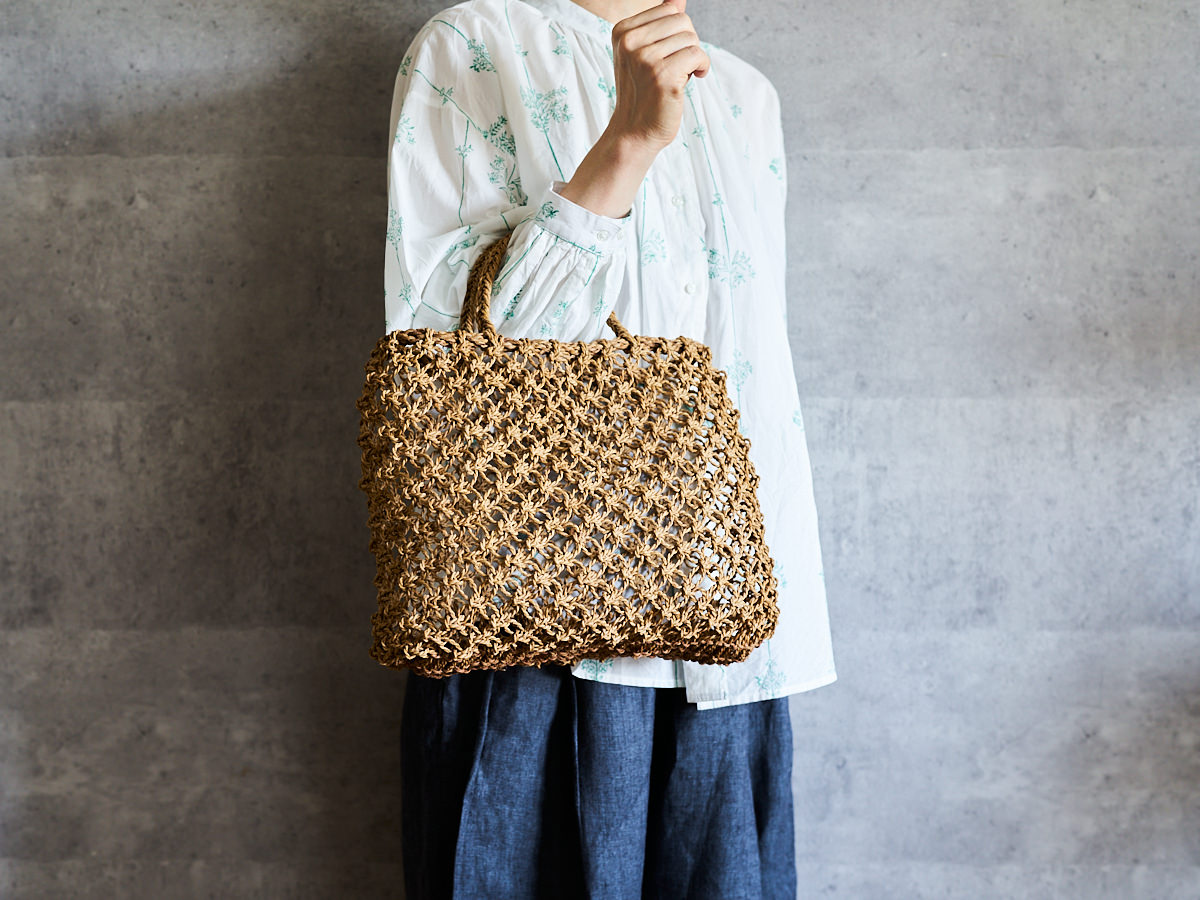

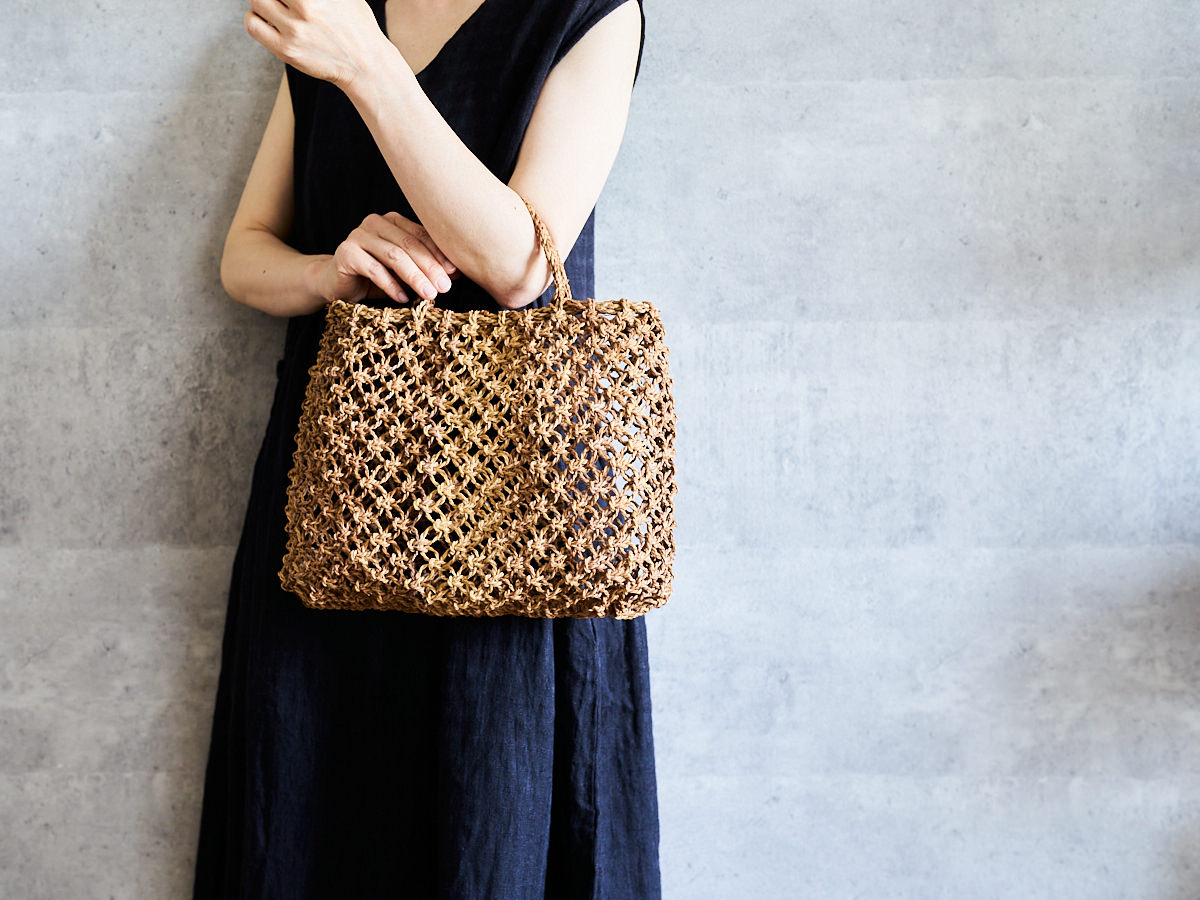
As you can see when comparing these two tote baskets, linden-bark fibers show a range of natural tones,
from deep brown to lighter, almost whitish shades.
These variations are not the result of dyeing; when the bark is stripped from the tree,
it naturally reveals different hues.
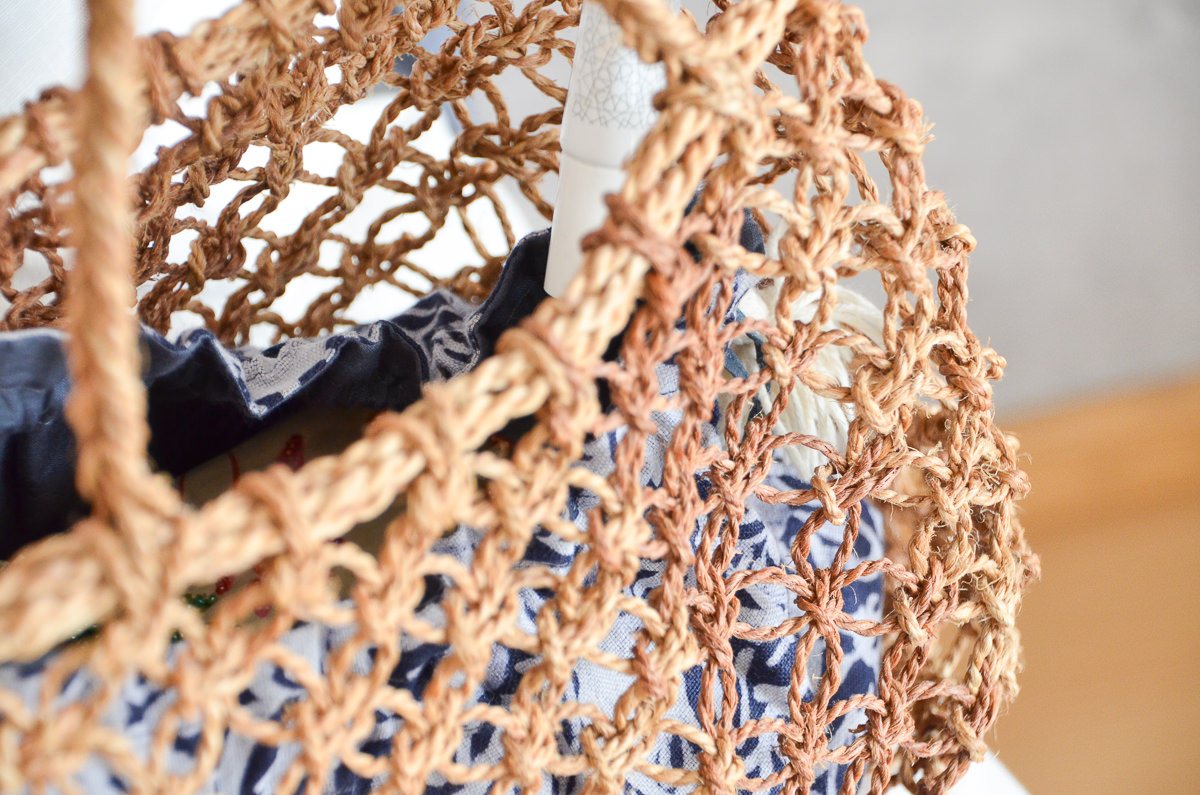
The resulting texture has a gentle quality that hardly seems to come from wood.
Each piece will be selected from current stock at the time of shipment.
Please note that requests for specific colors or patterns cannot be accommodated.
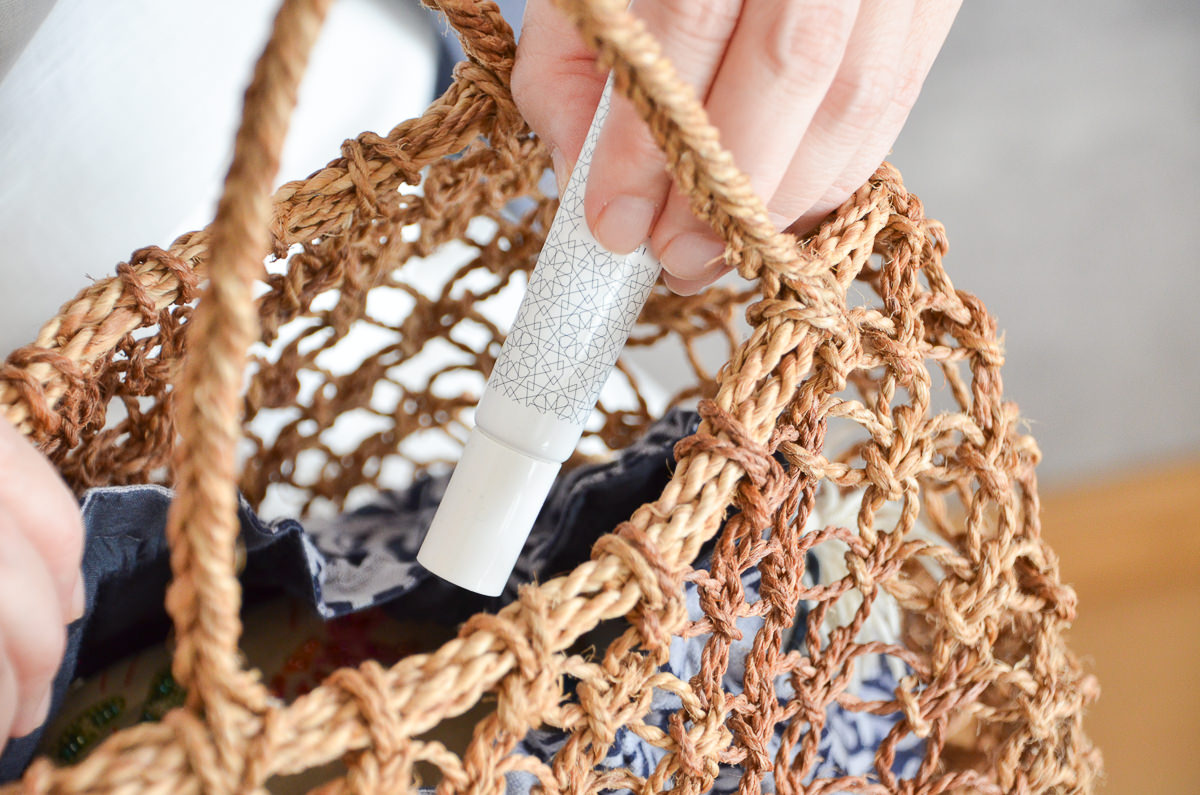
As this material was originally used for harvesting baskets and work baskets in the mountains,
it offers excellent strength as a basket.
This tote, woven from linden-bark fiber, may appear delicate at first glance, but it is sturdy enough for everyday use.
You can carry items such as a wallet, keys, smartphone, water bottle, pouch, or books without concern.
For the amount of belongings typically carried on a daily basis,
it provides reliable support even when there is some weight.
Due to the nature of this tote, the basket portion may stretch slightly under the weight of the contents.
When not in use, it is best to store it empty—either hanging or placed on a shelf.
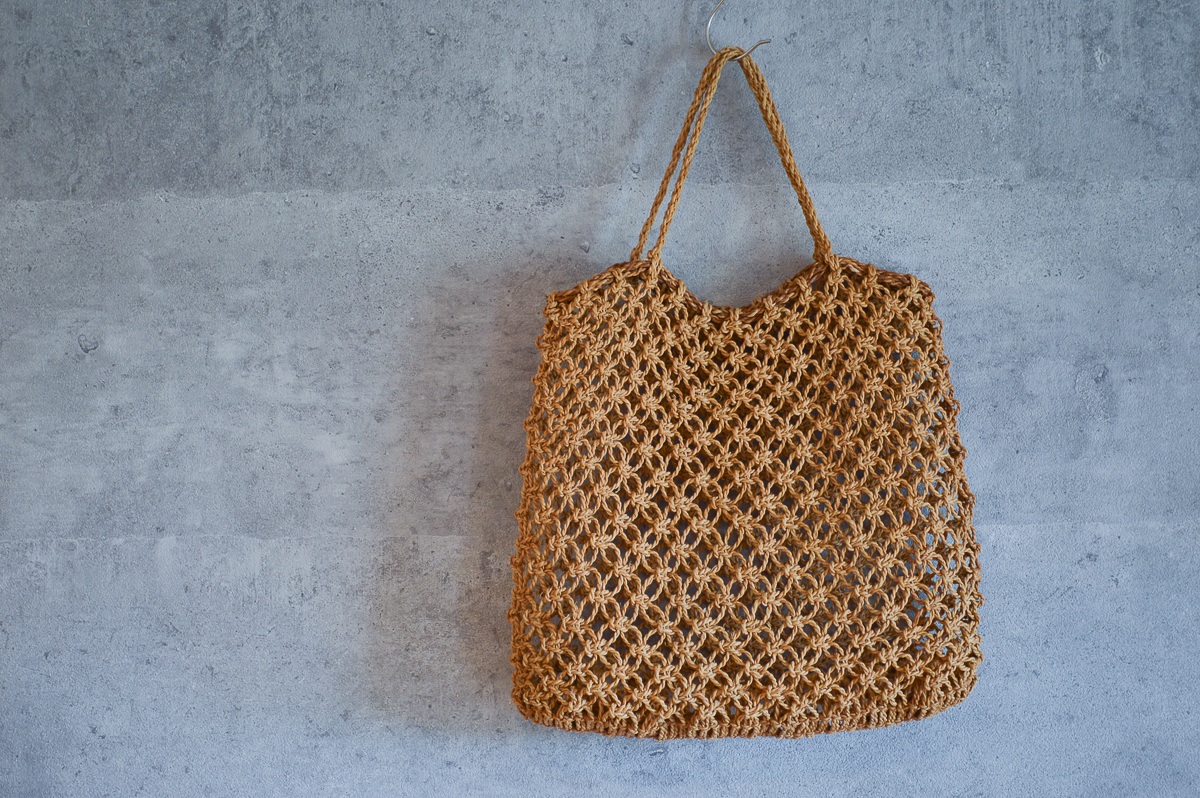
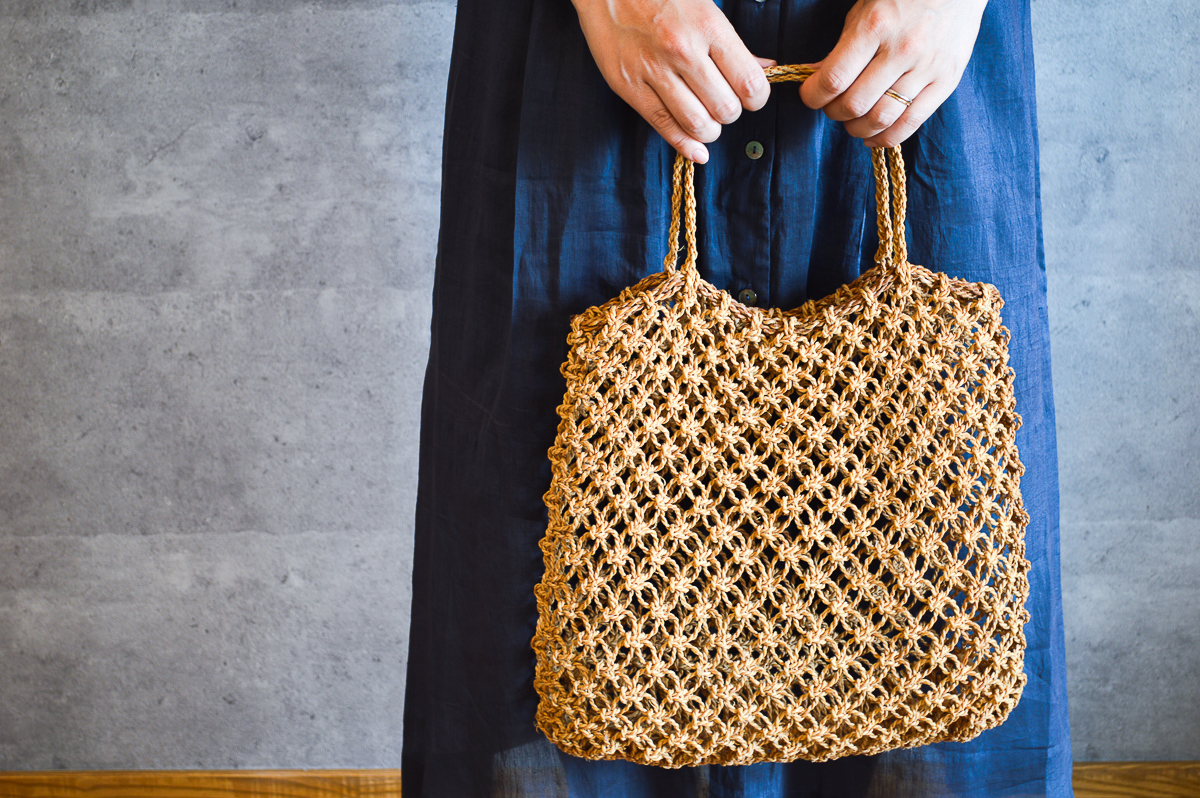

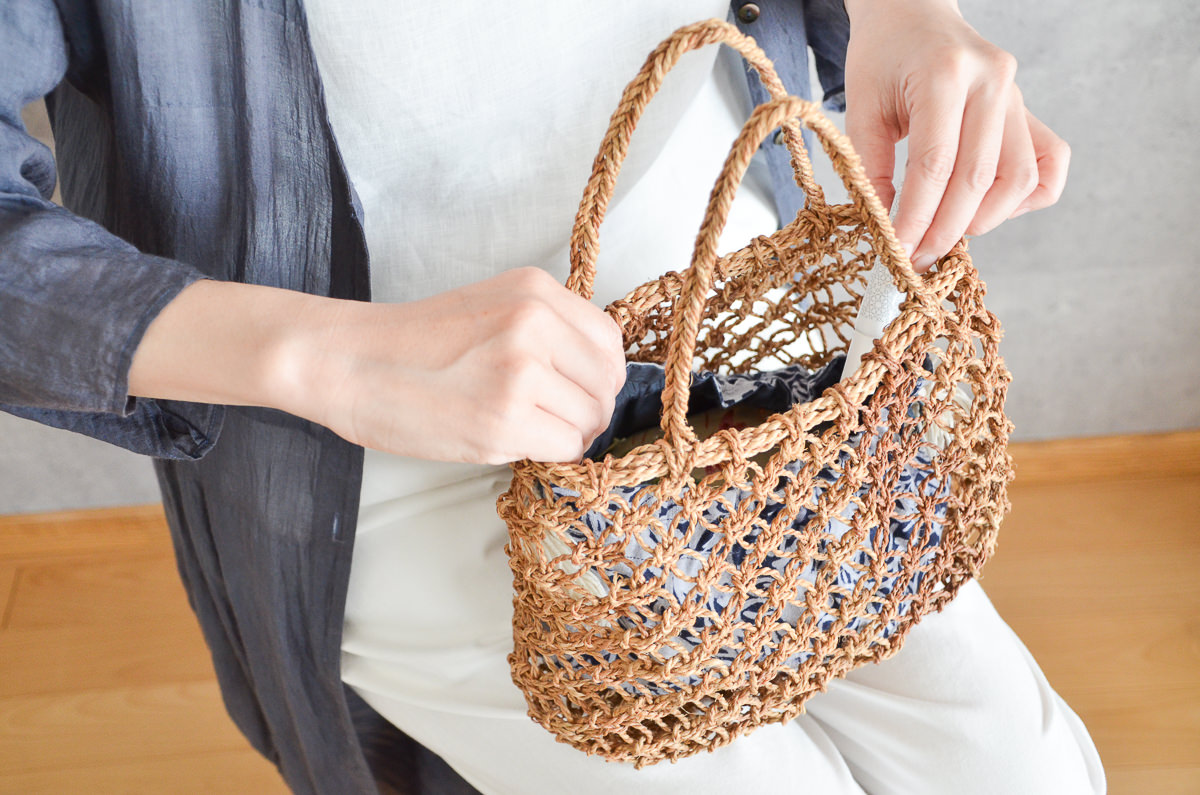
(The photo shows a smaller size that is no longer in production.)
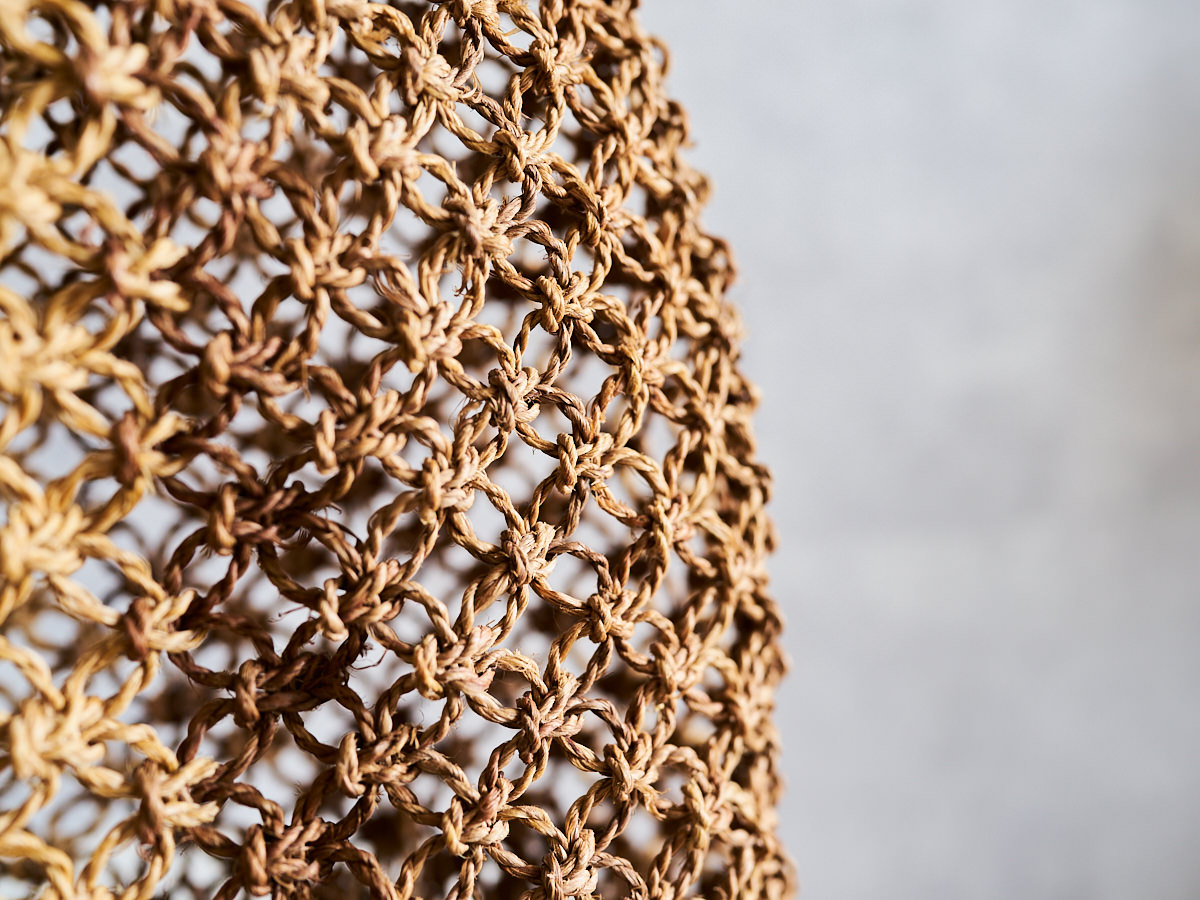
A tote made from linden-bark fiber, crafted using techniques passed down since ancient times.
Light in weight, with a beautiful weave and a soft, gentle feel, it becomes a reliable companion in everyday life.
The enduring nature of this craft is something we hope to carry forward, continuing to connect through use over time.
We hope you will enjoy this tote, made from linden-bark fiber, as part of your daily life.