
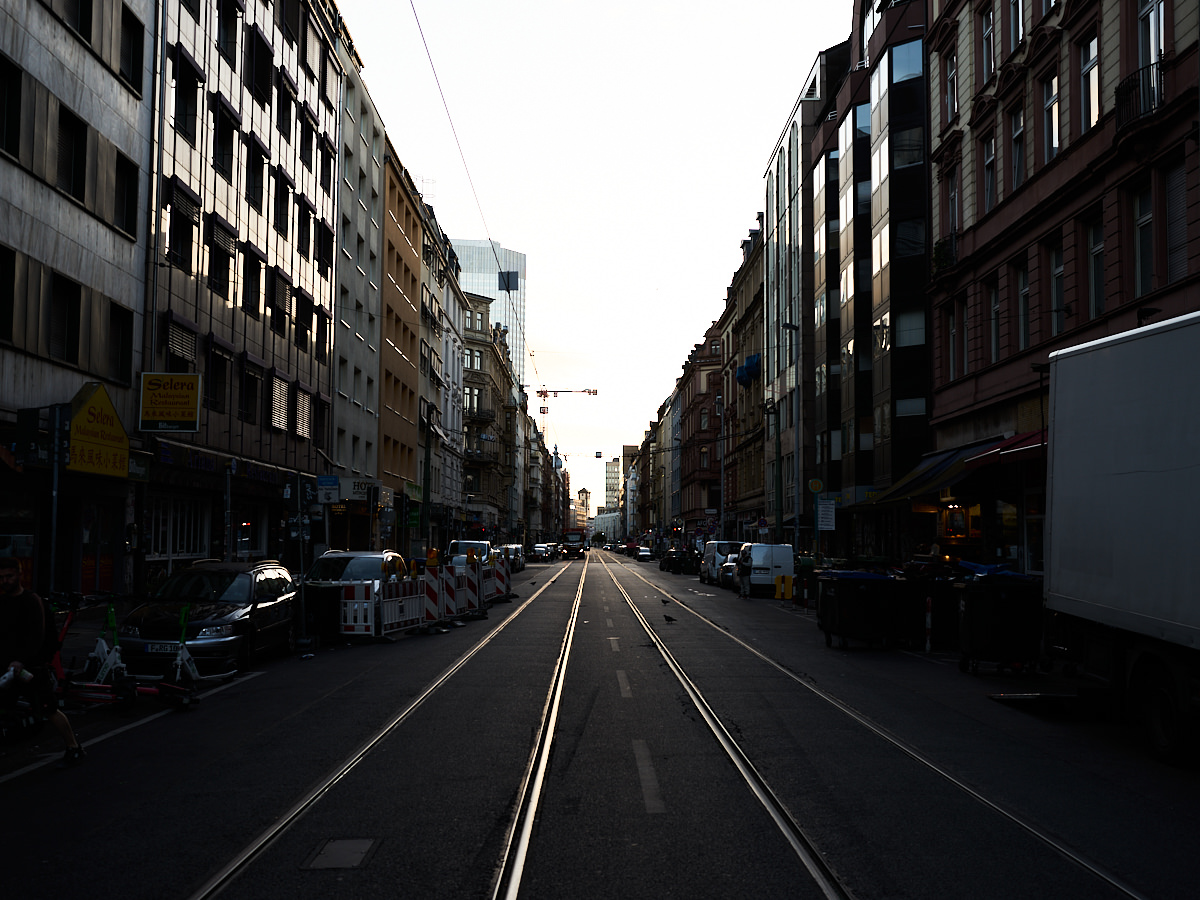
Guten Morgen!
Ich bin Tomotake Ichikawa, der Inhaber von 1basketry.
(Good morning! I am Tomotake Ichikawa, owner of 1basketry.)
Having fully shifted into “Germany mode” the night before,
I woke up early at my hotel in Frankfurt.
Fortunately, I felt almost no jet lag and was relieved to start the day with a clear head.
Before breakfast, I thought, since my stay in Frankfurt was short,
I should take a walk and explore the city.
With my camera in hand, I set out to wander wherever my steps led me.
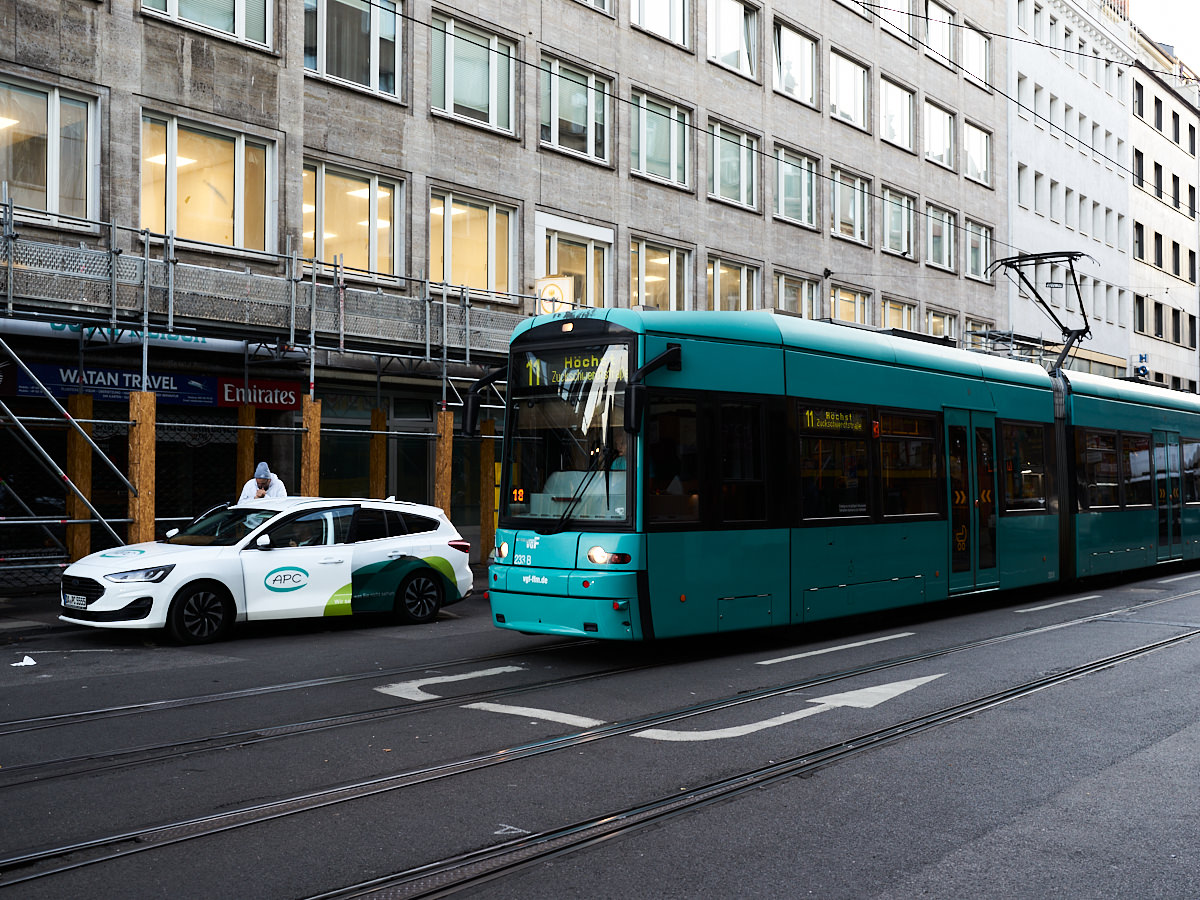
Around Frankfurt Central Station, trams were running everywhere throughout the streets. 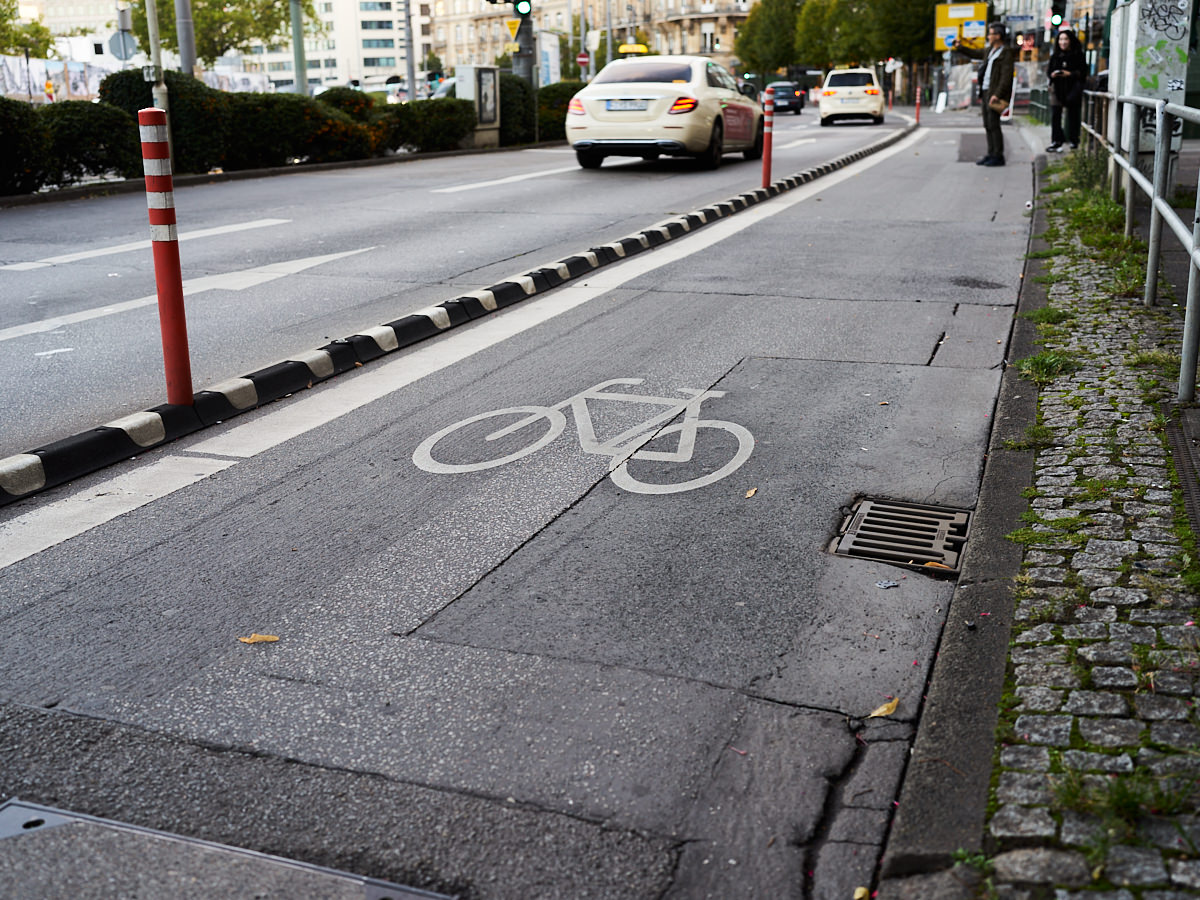
What caught my eye again and again—and felt refreshingly different from Japan—was the width of the bicycle lanes. They are given almost as much space as the car lanes themselves. 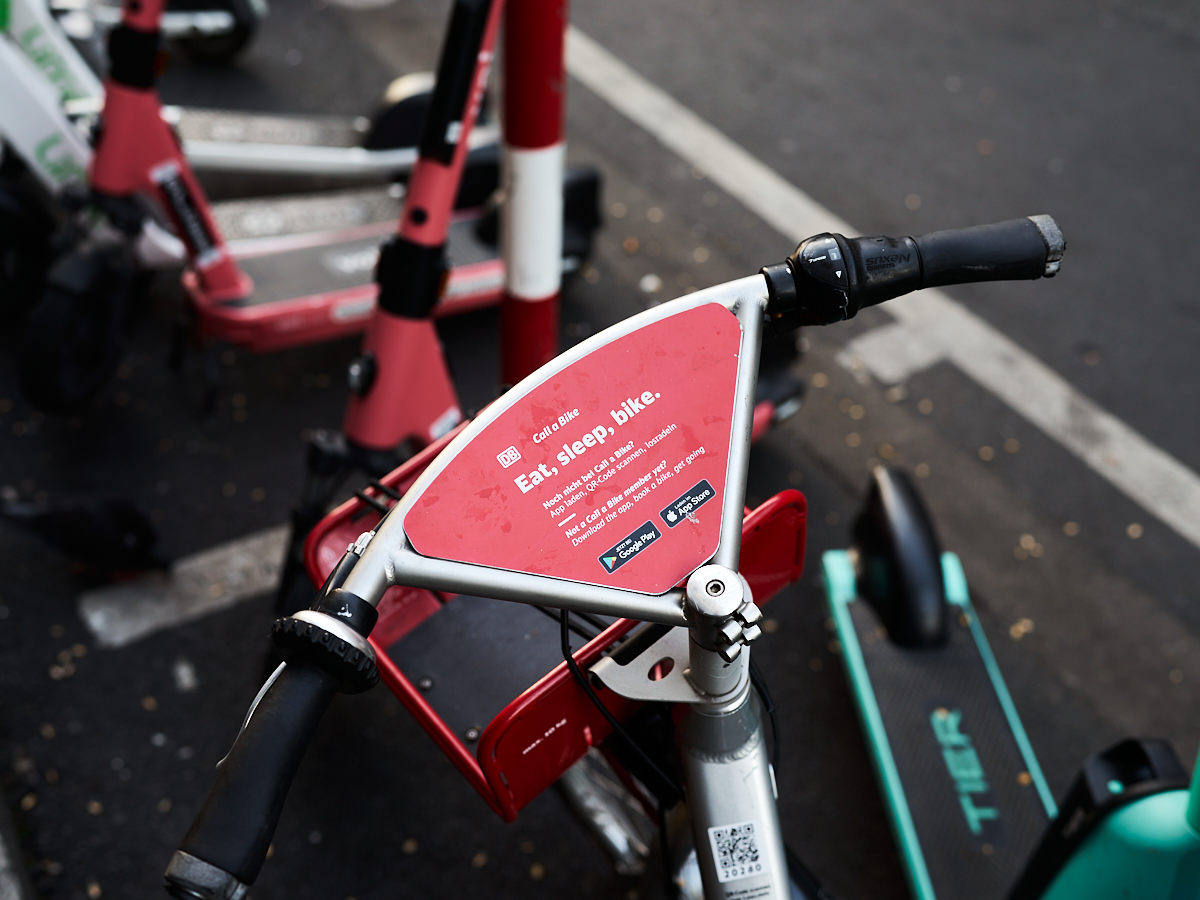
“Eat, sleep, bike.”
Literally, it means “eat, sleep, and ride a bike,” but it seems to carry the sense of “thinking about bikes all the time.”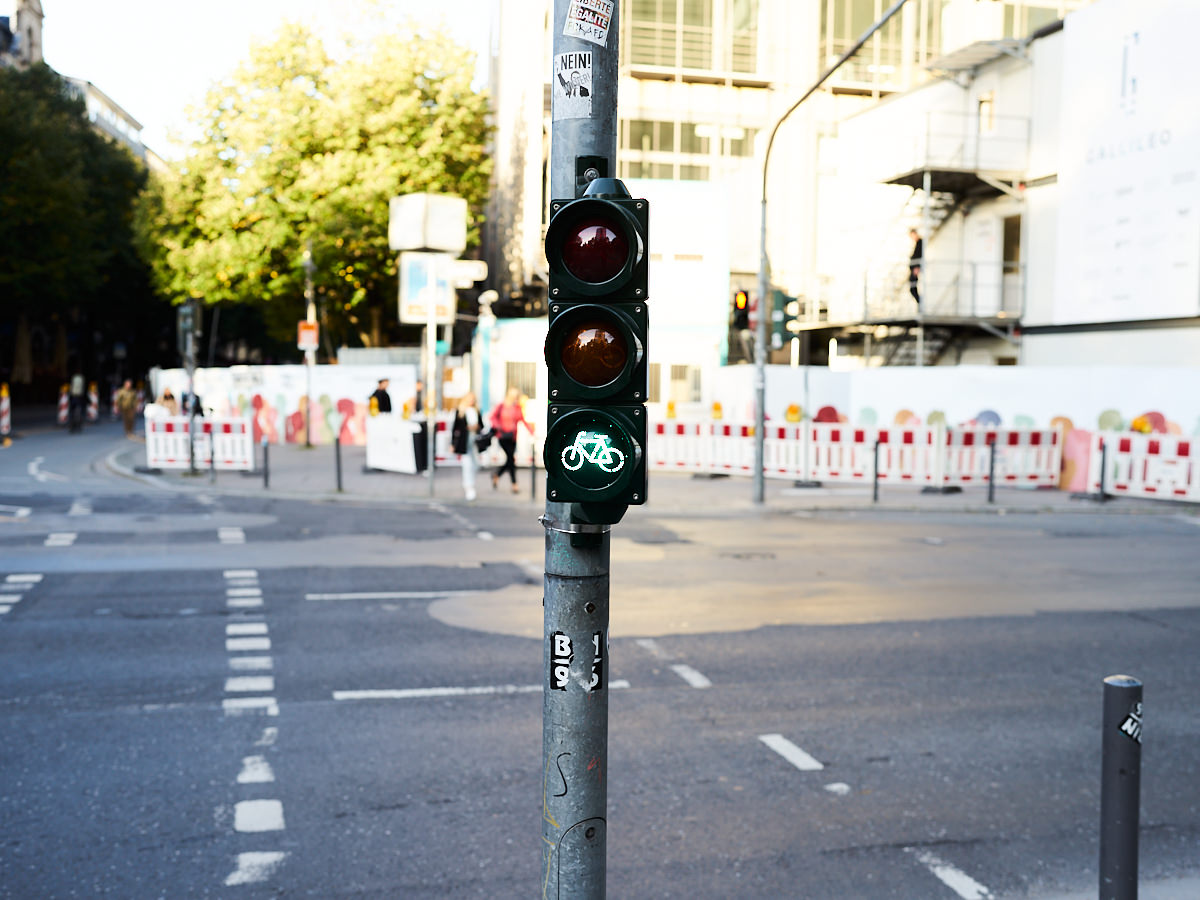
This is a traffic signal specifically for bicycles. 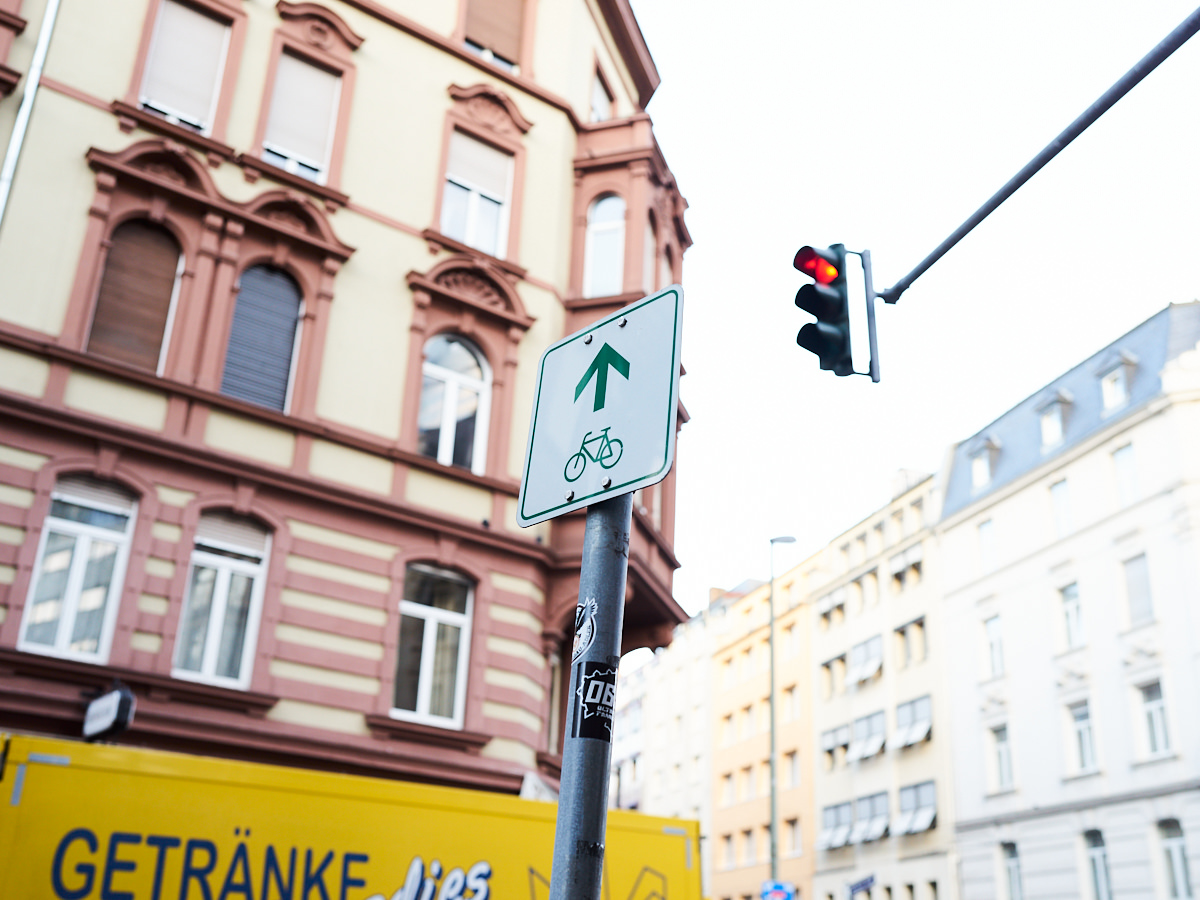
With dedicated bicycle lanes and signals carefully built into the city, there were clearly established routes for those who travel by bike—and I could not help but feel a sense of envy. 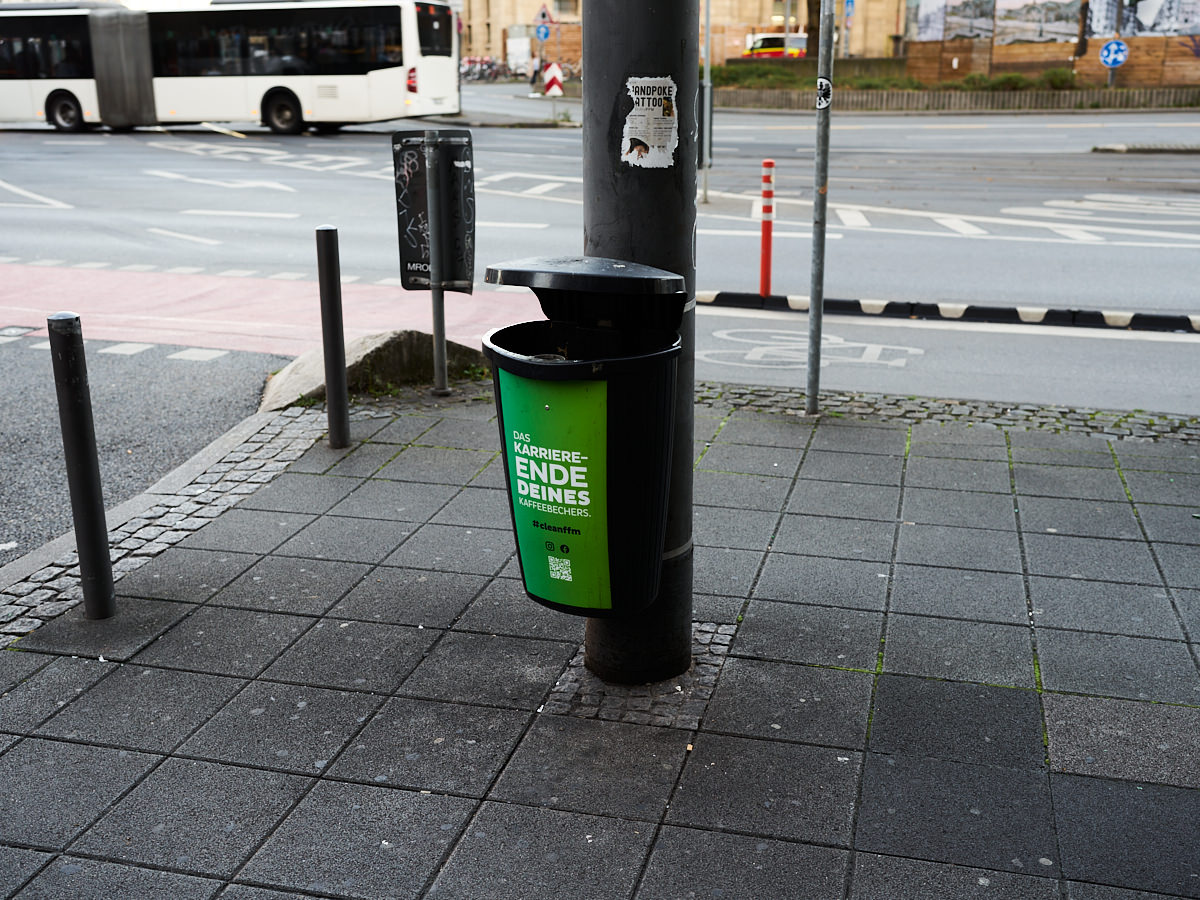
At each intersection, trash bins were thoughtfully placed. It gave me the impression that there was always a clear place for waste to go. 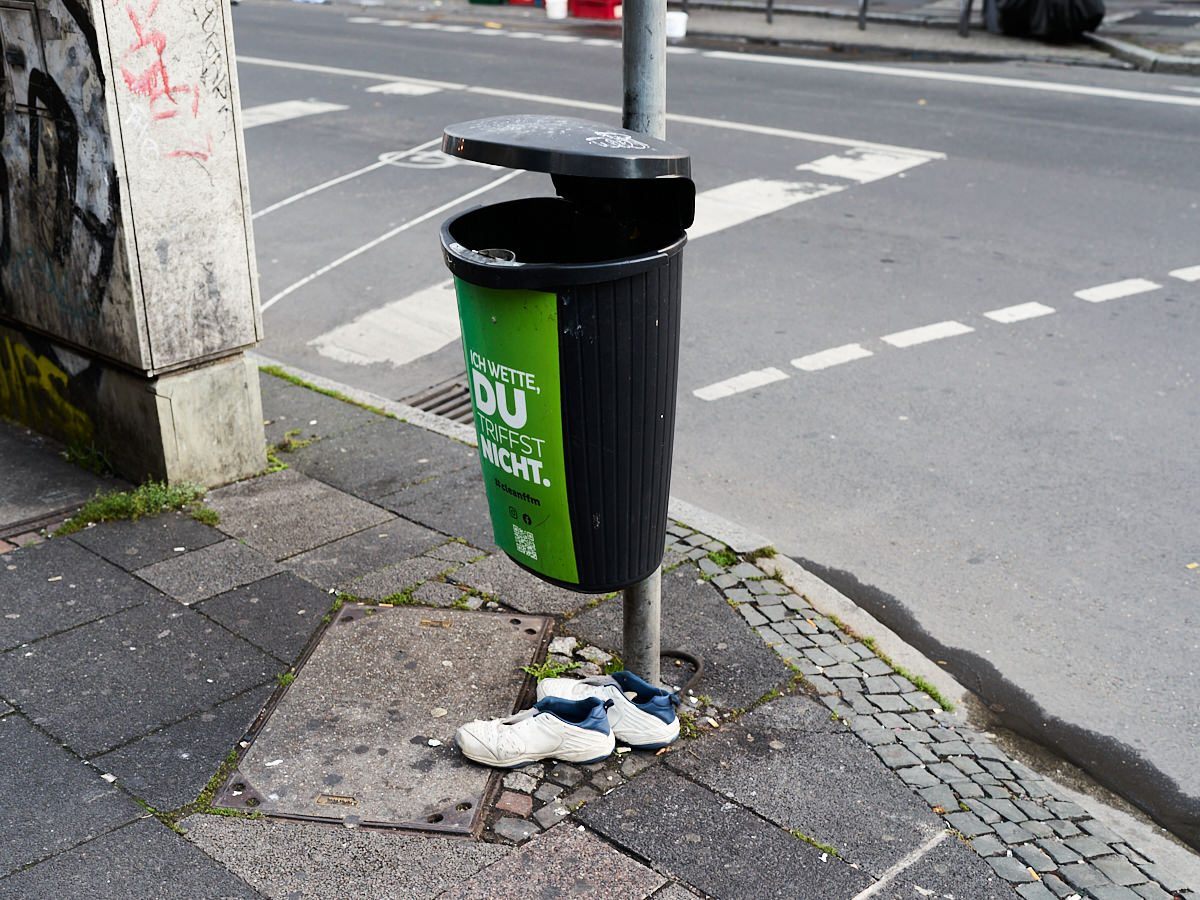
The shoes… what on earth happened to them? (laughs)
They almost look like walking trash bins.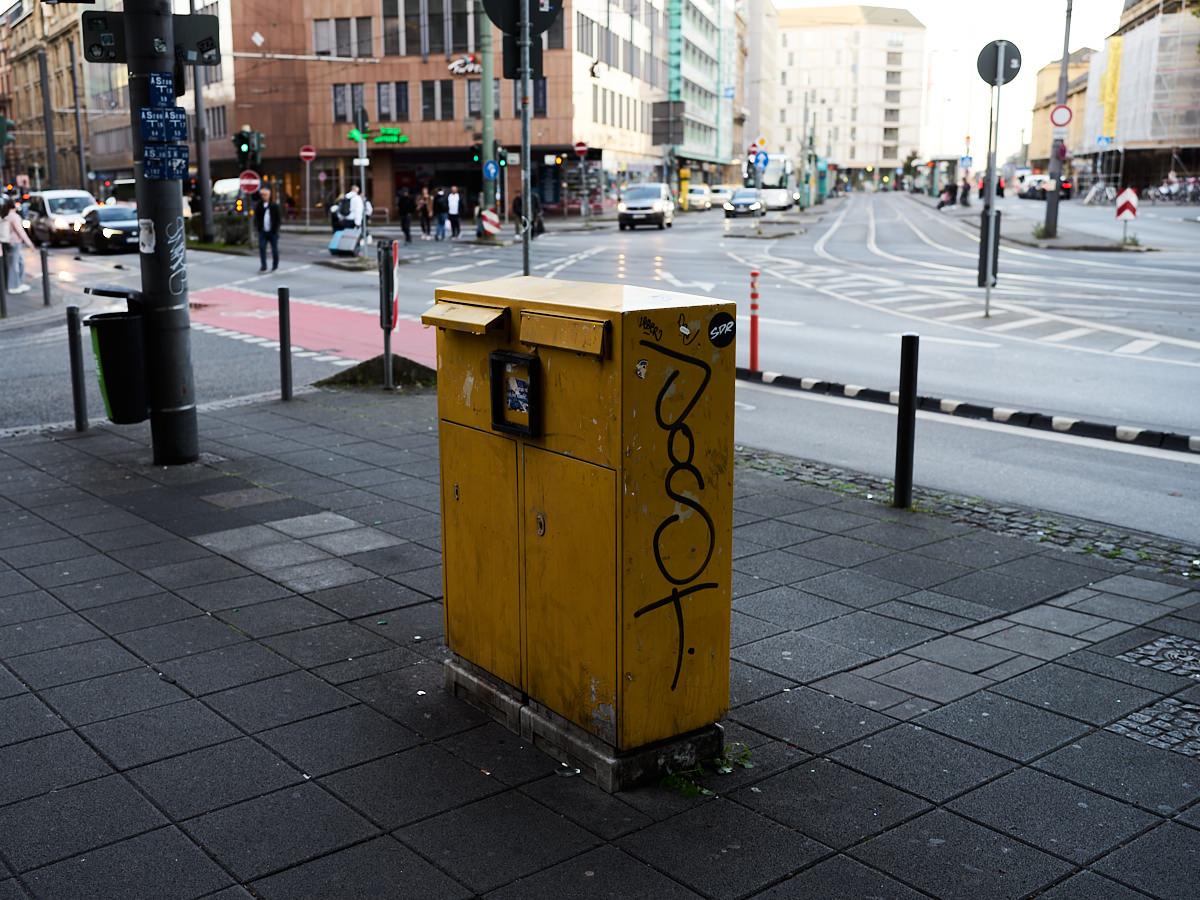
The postboxes were bright yellow. Even the graffiti kindly spelled out “POST,” so even as a traveler, I had no trouble recognizing what they were.
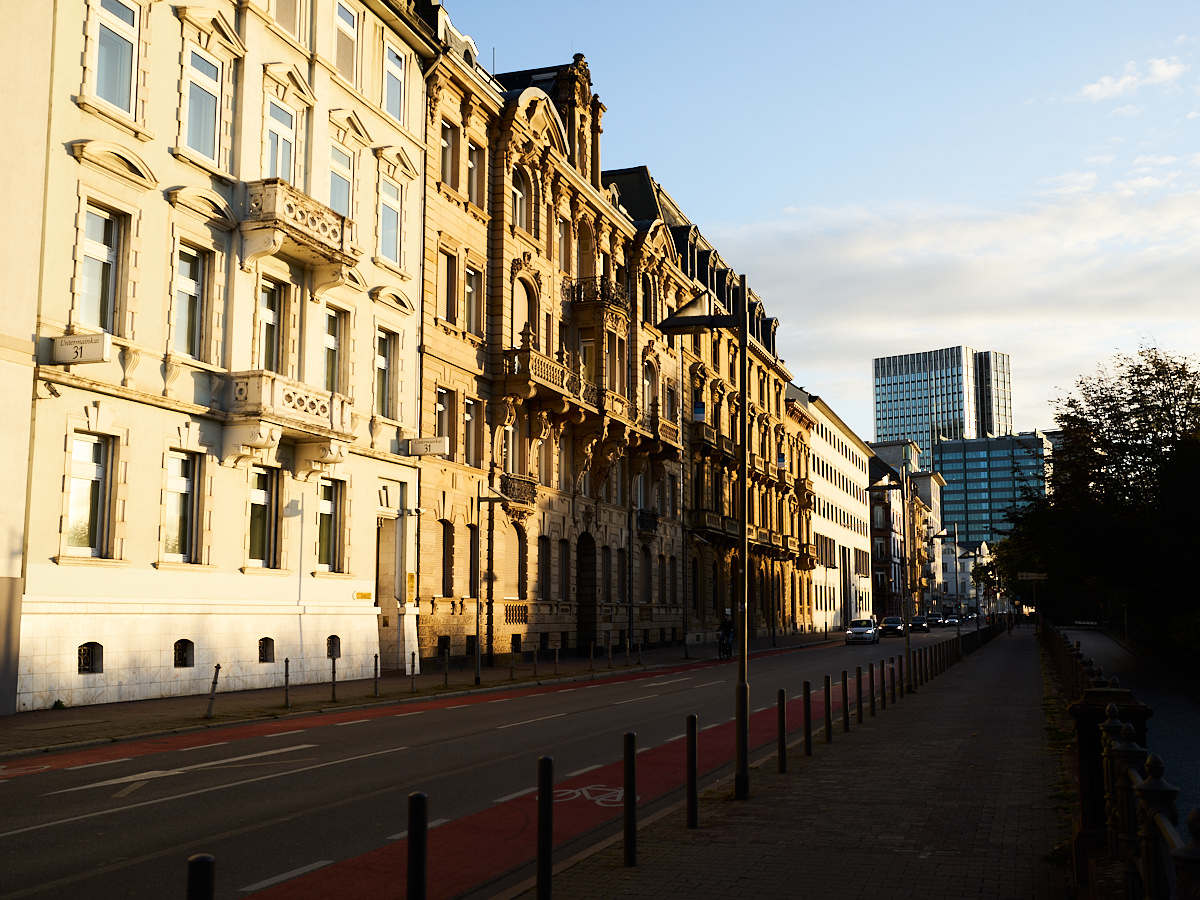
The early morning sunlight illuminated the bridges and buildings,
and the structures appeared almost like sculptures in their quiet beauty.
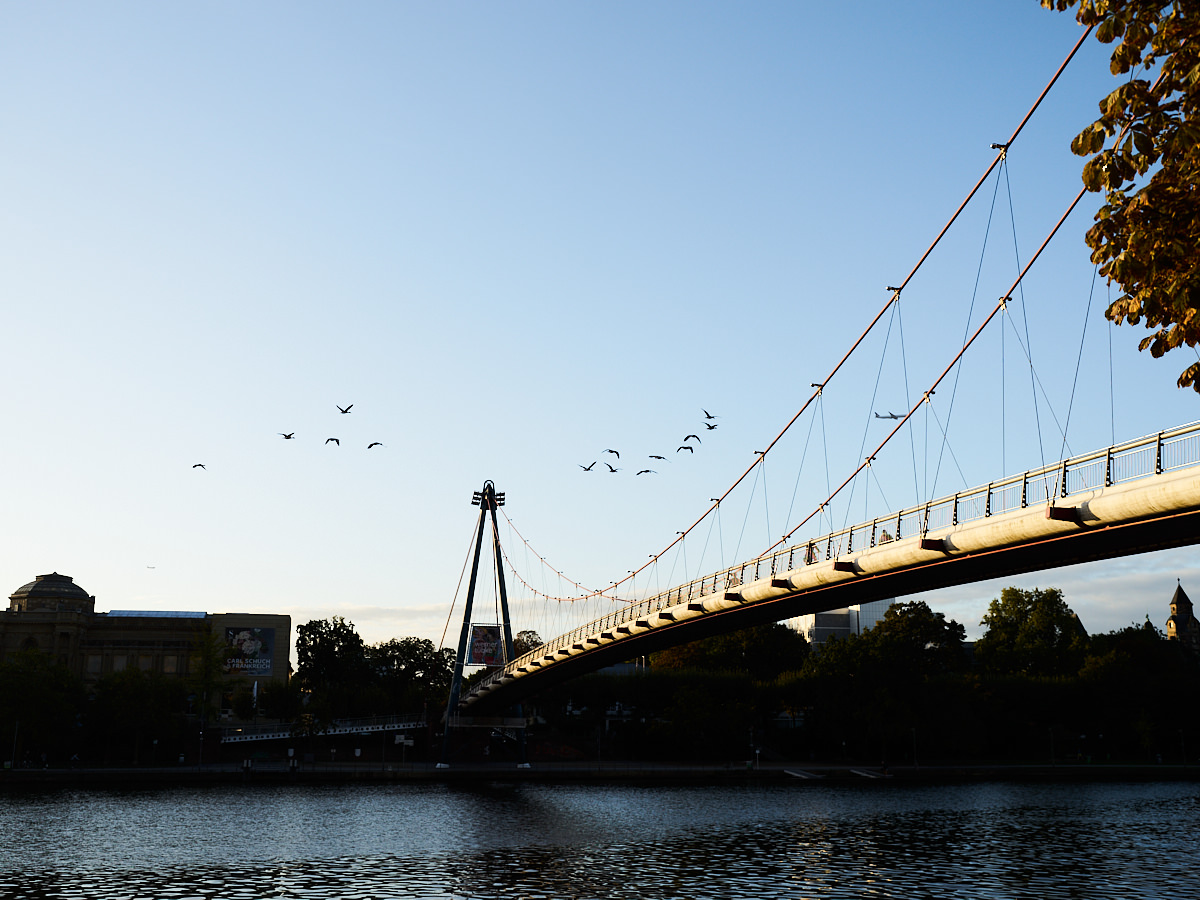
Walking south from Frankfurt Central Station, you come upon the River Main, which flows through the city. 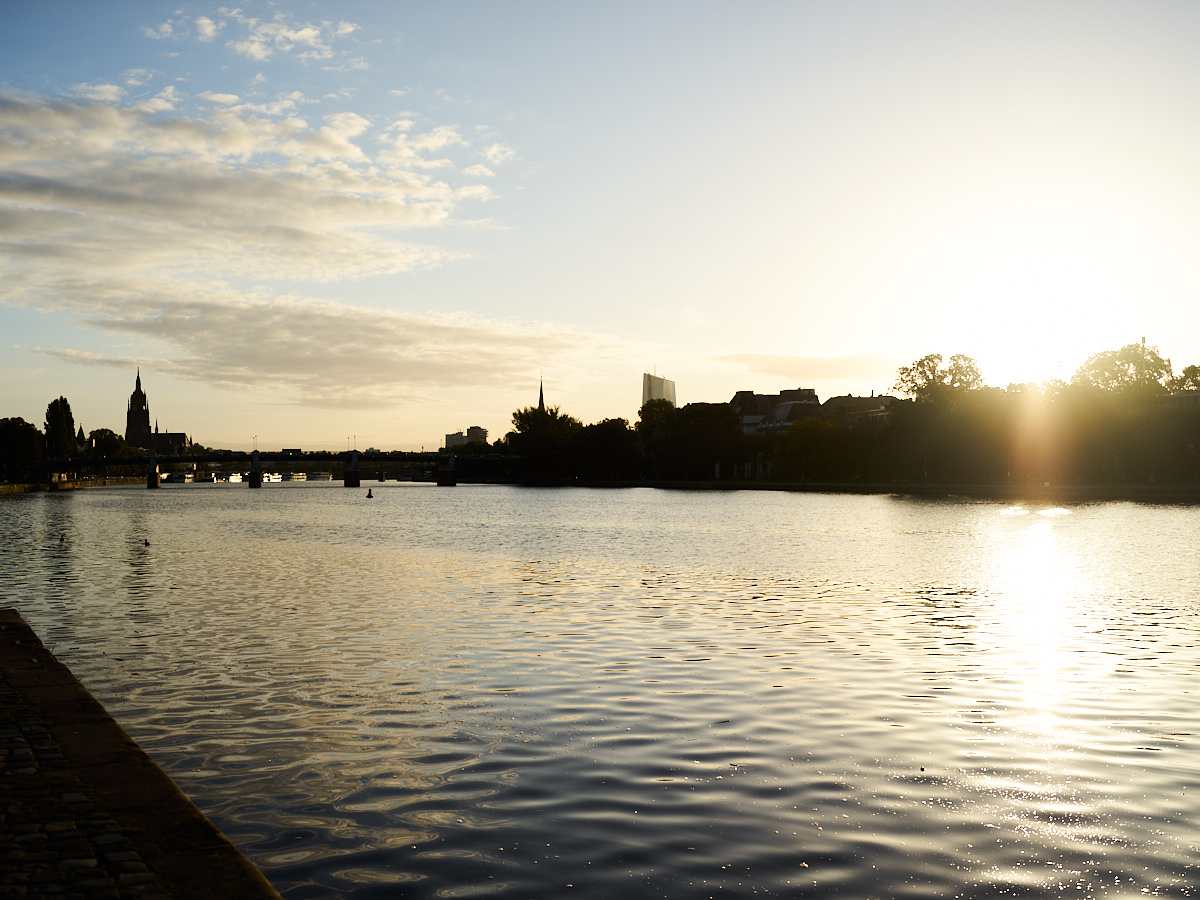
The River Main was bathed in the morning light. Its waters flowed gently and unhurried. 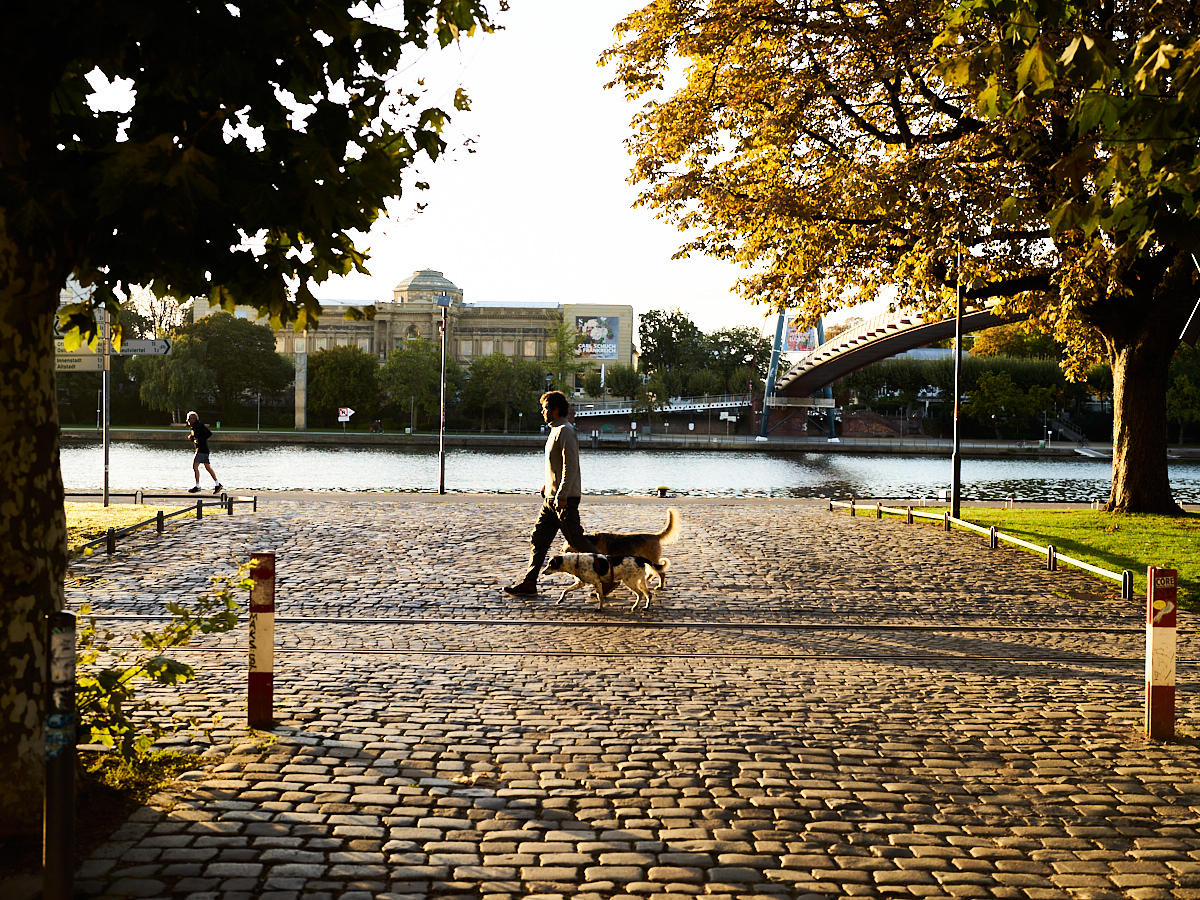
Along the River Main, I saw people walking their dogs in the morning light and others out for a run. It was a glimpse of the city’s everyday life. 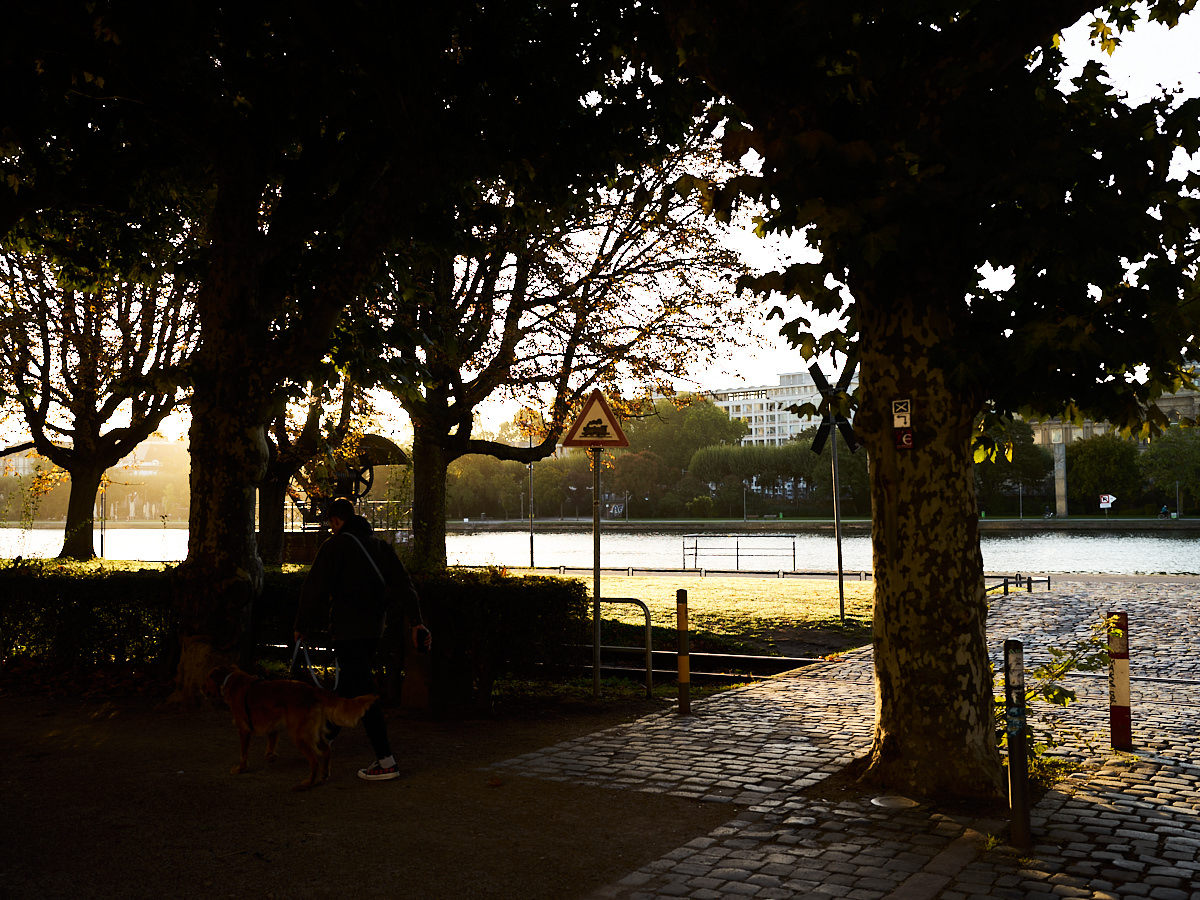
As I looked across the park along the river, my eyes were suddenly drawn to a small train symbol. 
The River Main is a tributary of the Rhine, which flows on to the Netherlands, and Frankfurt has long been an important center of river transport. Although this railway is no longer used in everyday life, it appears that special event trains still run from time to time. In the nineteenth century, it was used for transporting goods, and it remains a trace of how Frankfurt once stood at the intersection of railway and river logistics. 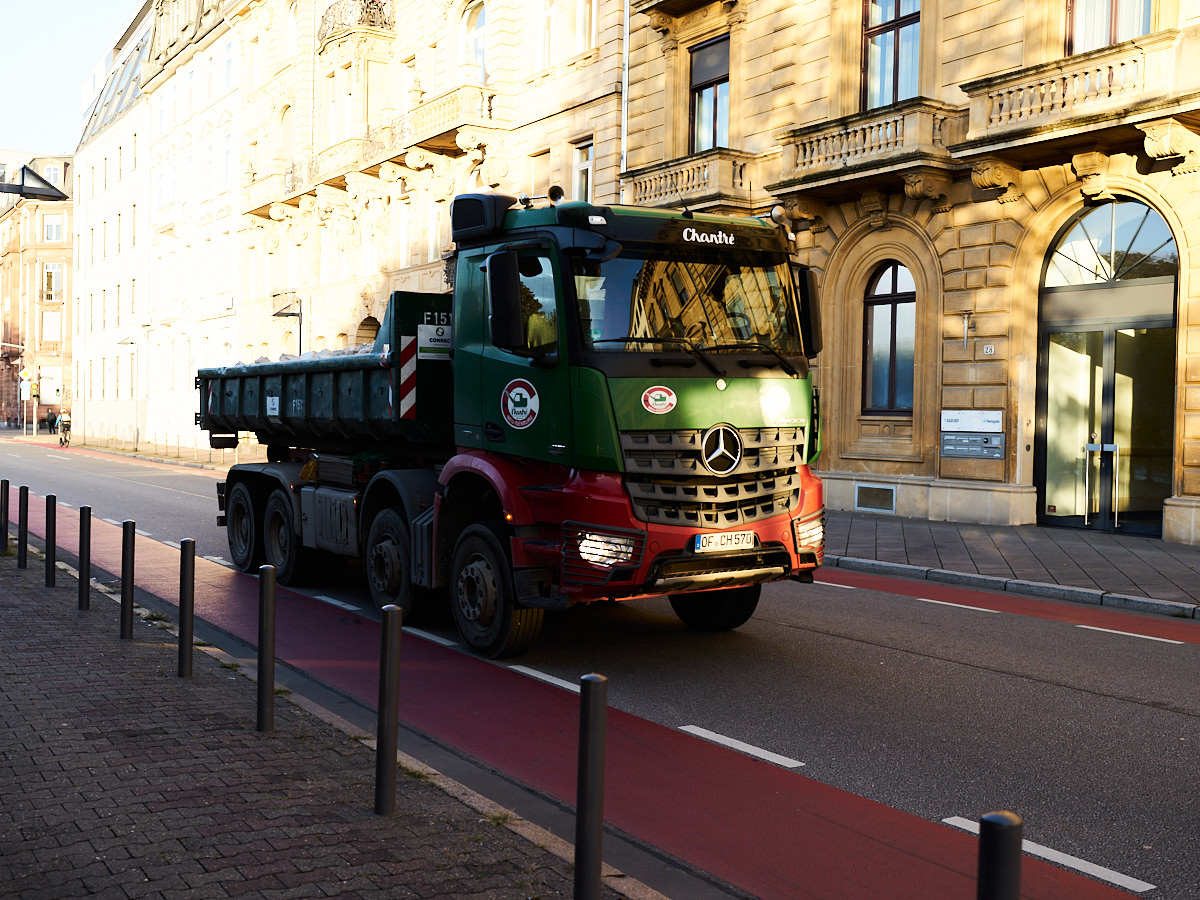
And here is logistics by land—a truck handling transport on the road. A Mercedes, of course. It looks impressive.
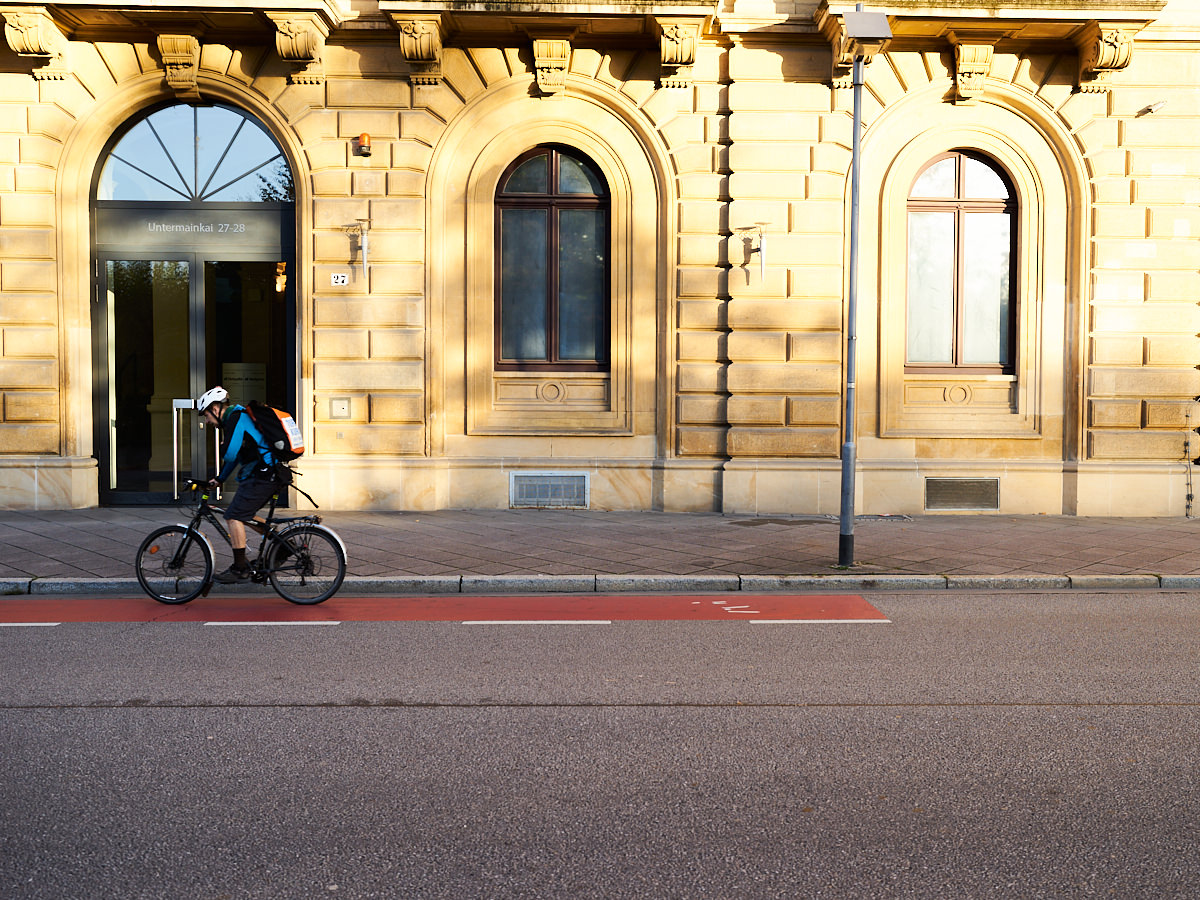
As I continued walking and the morning commute began, I started to see more and more people riding bicycles in every direction. 
Among them were people riding bicycles shaped like this. 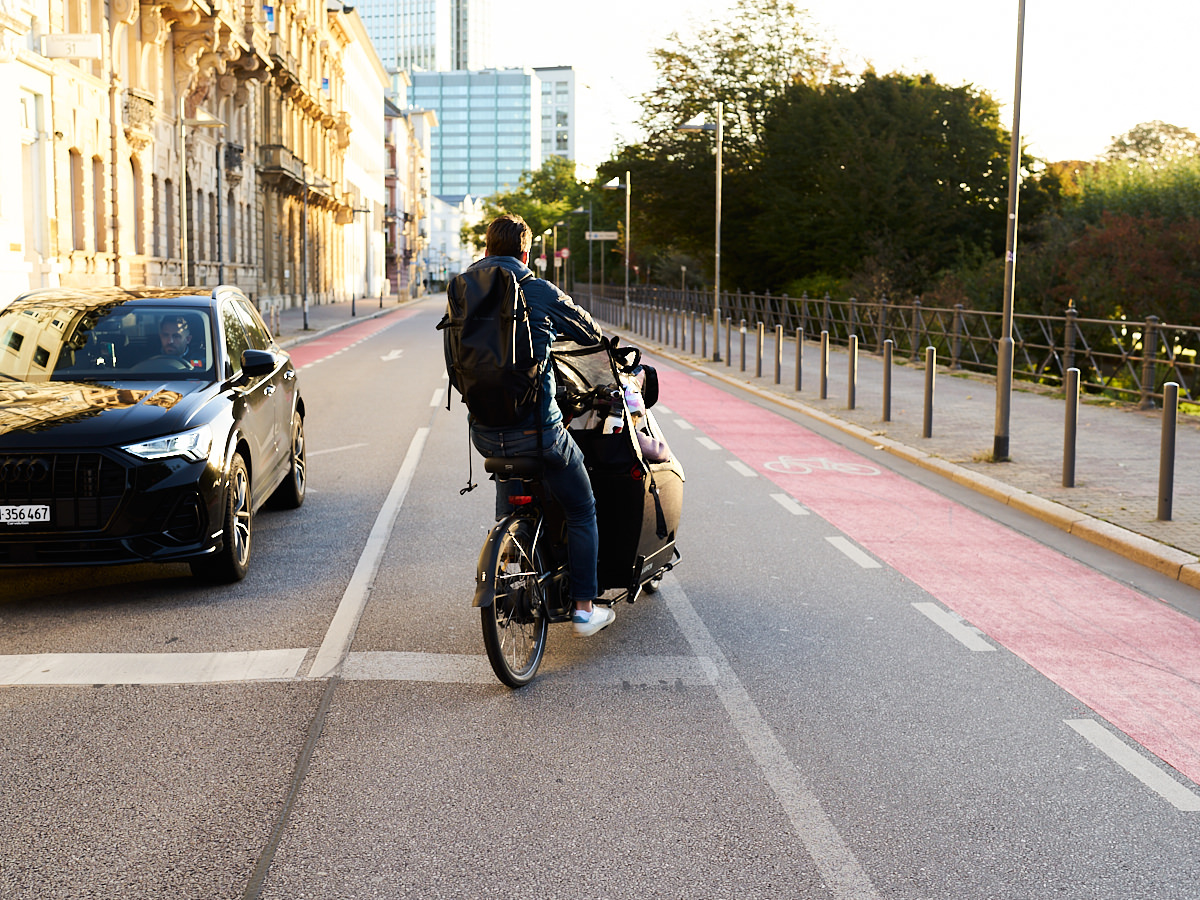
Attached to the front of their bicycles was a sidecar-like compartment, some of them even covered with a hood.
Most of the riders seemed to be in a bit of a hurry.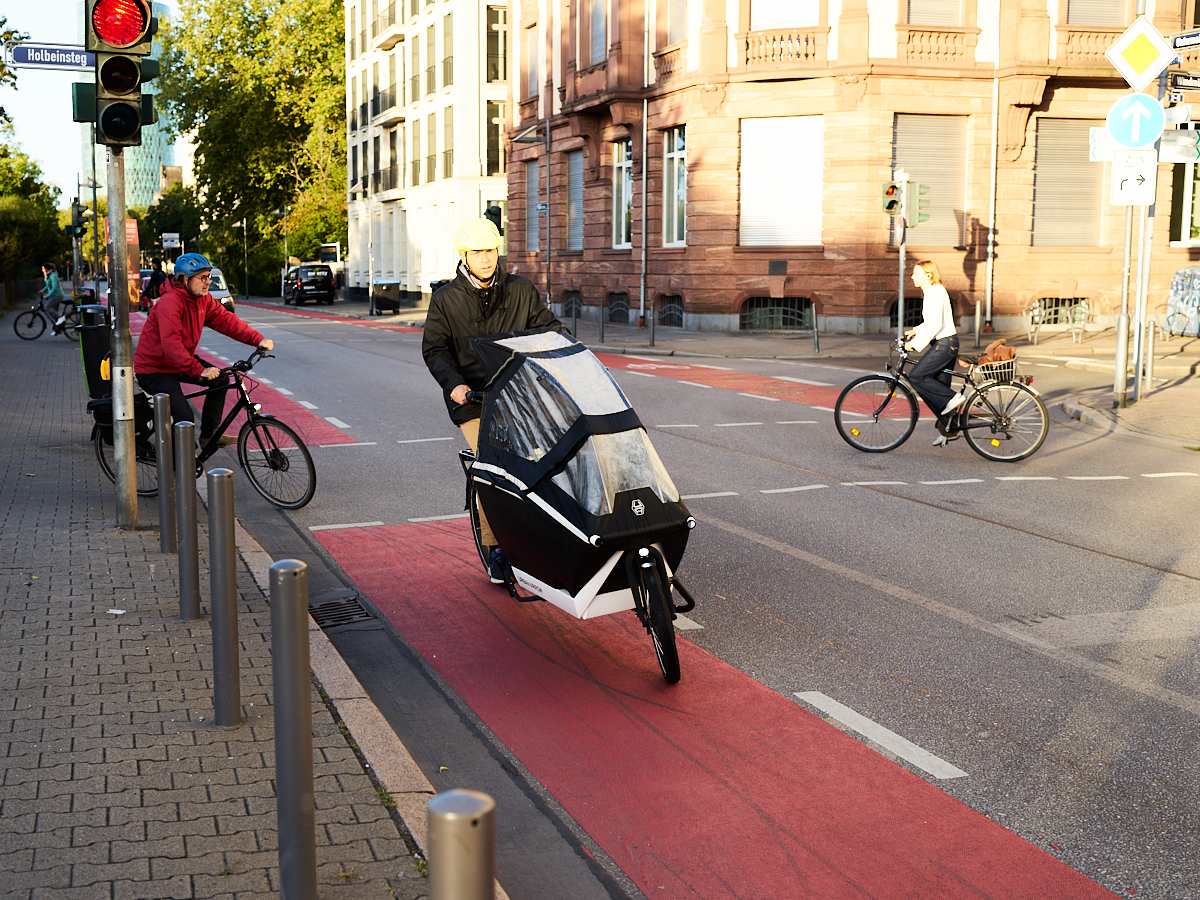
That’s right—these bicycles are designed for carrying children. In Japan, when there is only one child, it is more common to seat them in the back, but in Frankfurt I often saw this front-box style, with children riding in the compartment at the front. Being able to see the child directly may offer a greater sense of reassurance. The construction felt solid, and the sleek design almost resembled a piece of racing equipment—it looked remarkably cool.
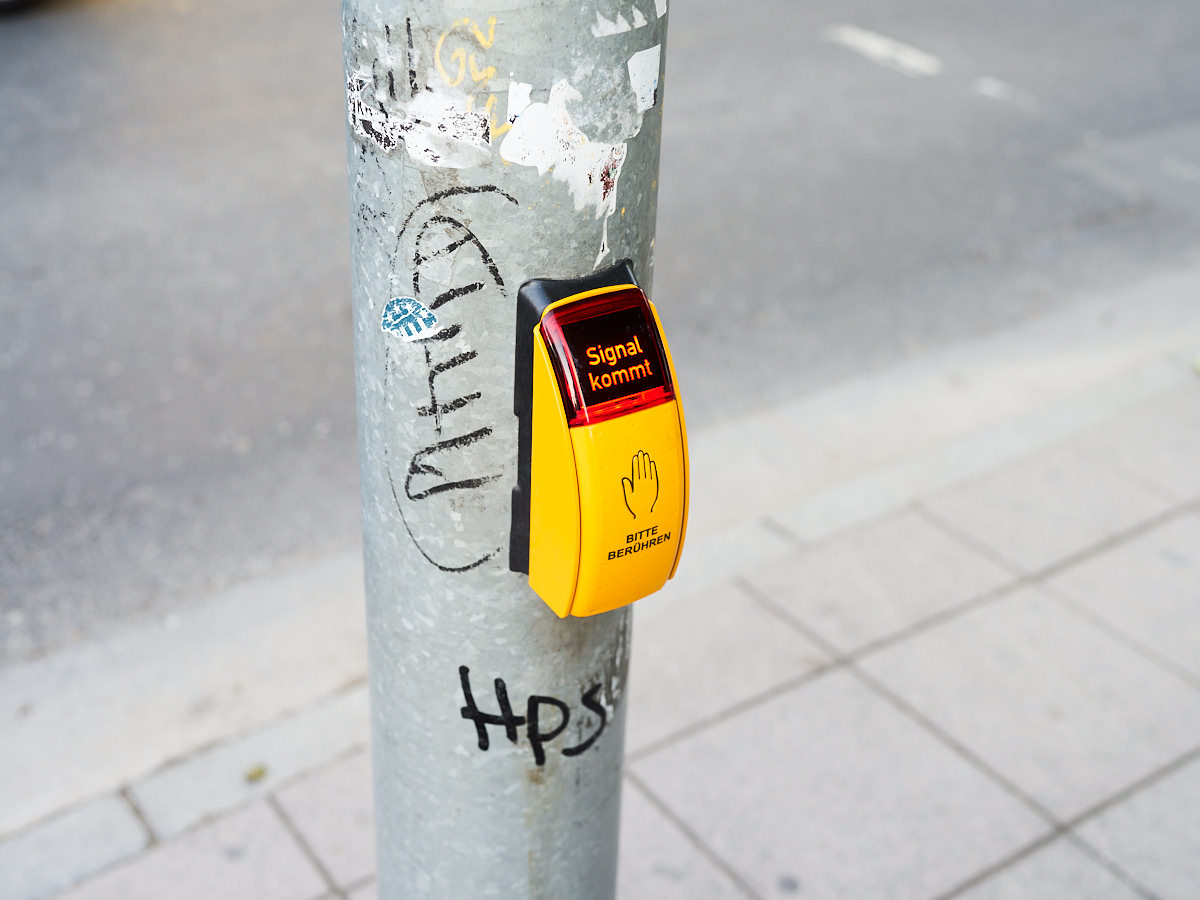
This is the pedestrian crossing button.
“Signal kommt” means “the signal is coming,” in other words, that the light will soon turn green.
Below it reads “Bitte berühren,” which means “please touch.”
Now, let me return once more to the city streets and continue my walk.
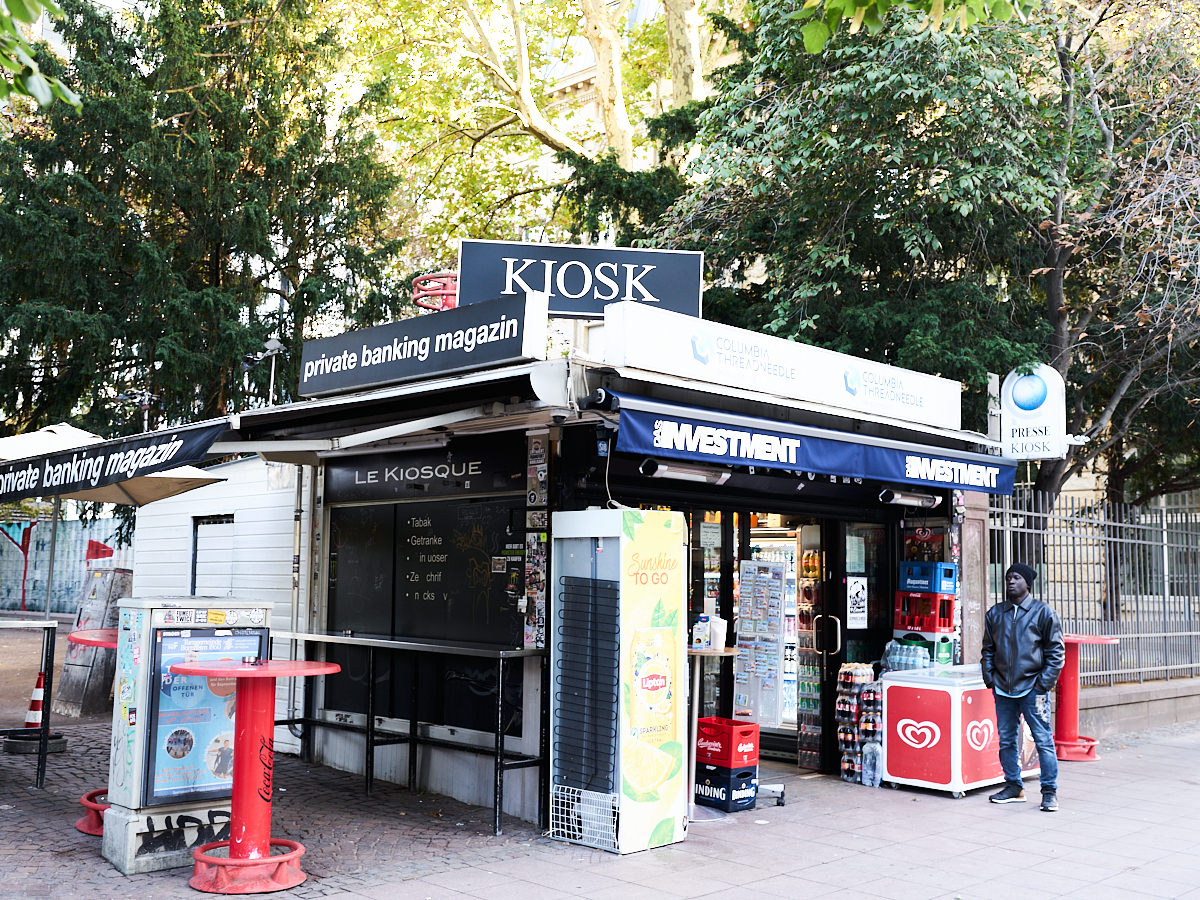
A kiosk in the square. 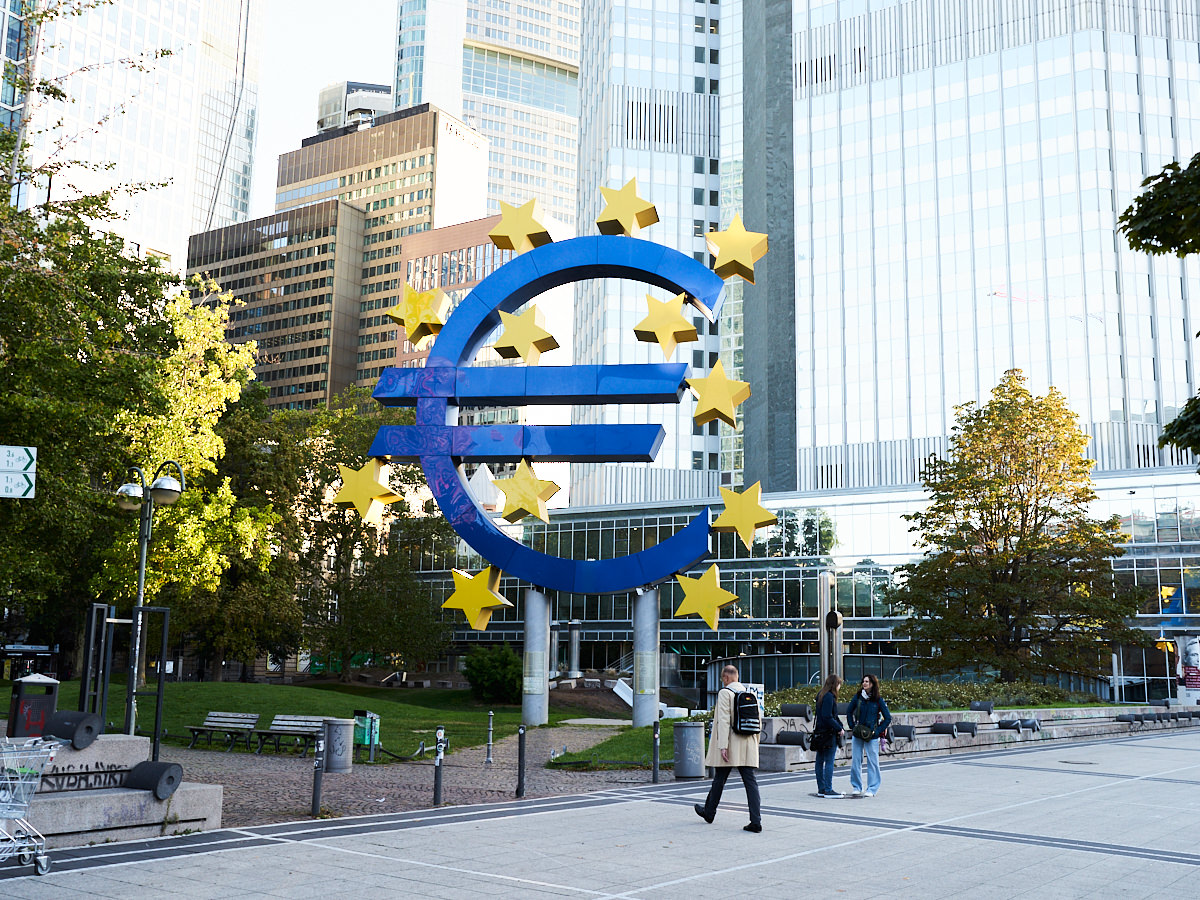
This is the euro monument of the European Central Bank. Frankfurt once played an important role as a hub of river and land transport, and today it is also known as a major financial center. 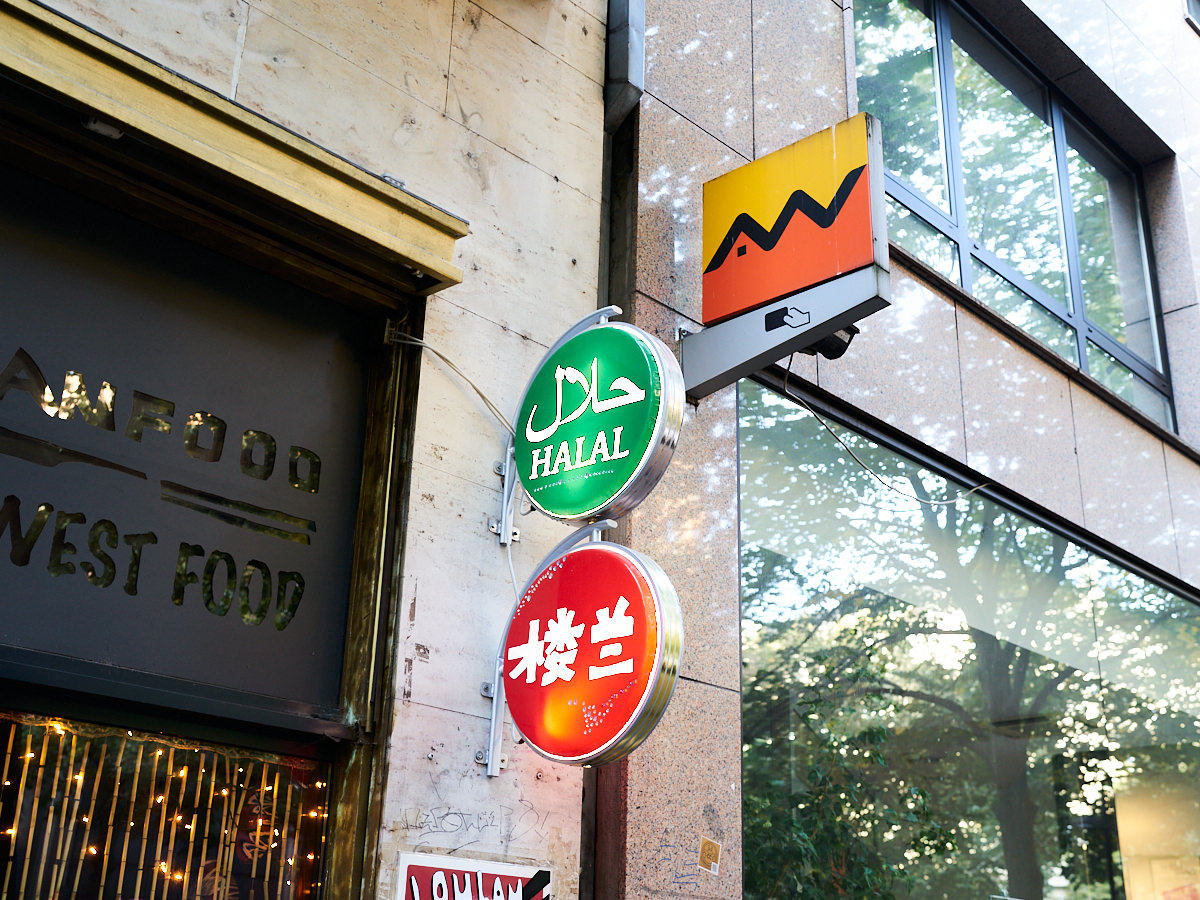
As a major terminal city and an international hub, Frankfurt was filled with restaurants displaying “HALAL” signs, as well as many Chinese eateries. It left me with a renewed sense that this is truly a city where diverse cultures come together. 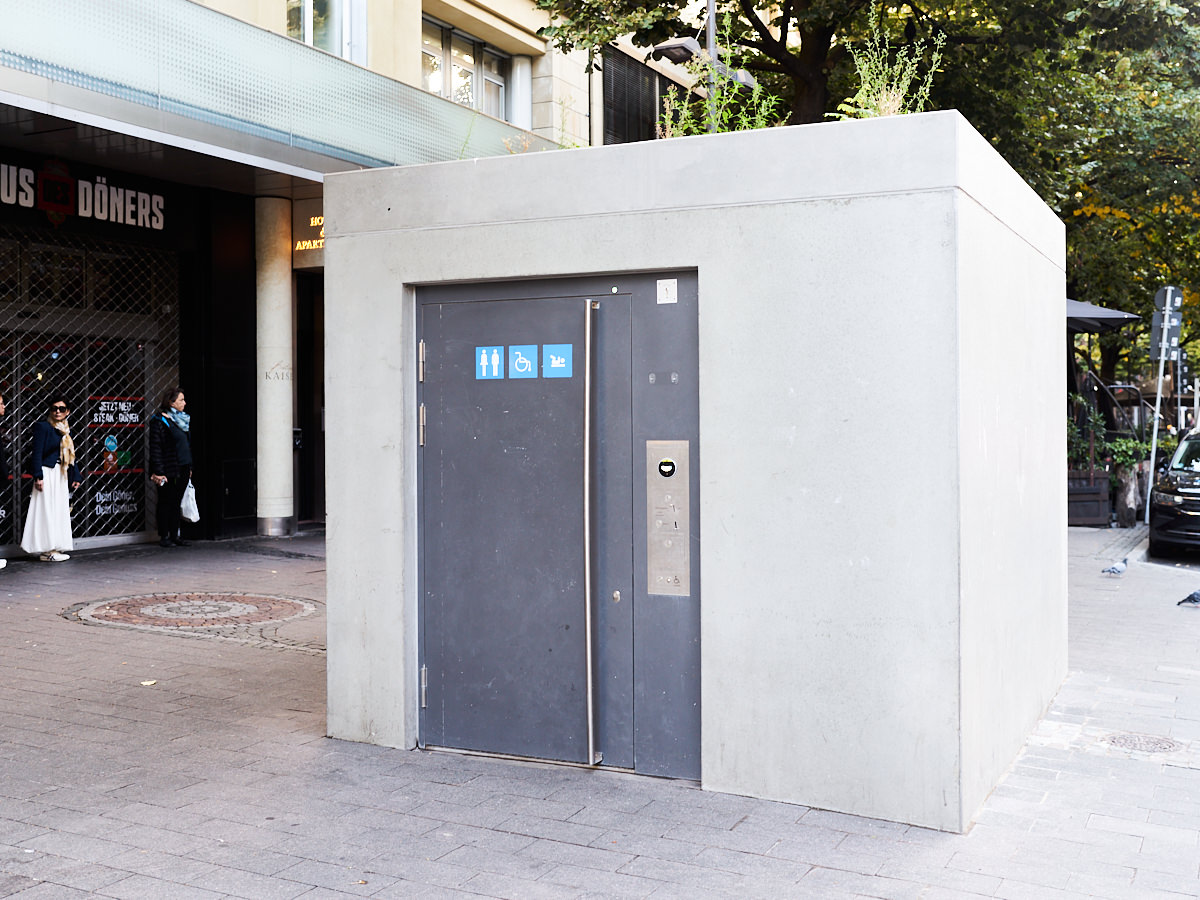
In the city center, there are public restrooms that require payment.
They appeared to accept both credit cards and cash. Curious to see what they were like inside, I tried several times with my credit card. Perhaps it was my mistake, but no matter how I pushed or pulled, the door would not open. (And yet, the charge certainly appeared on my credit card statement later.)
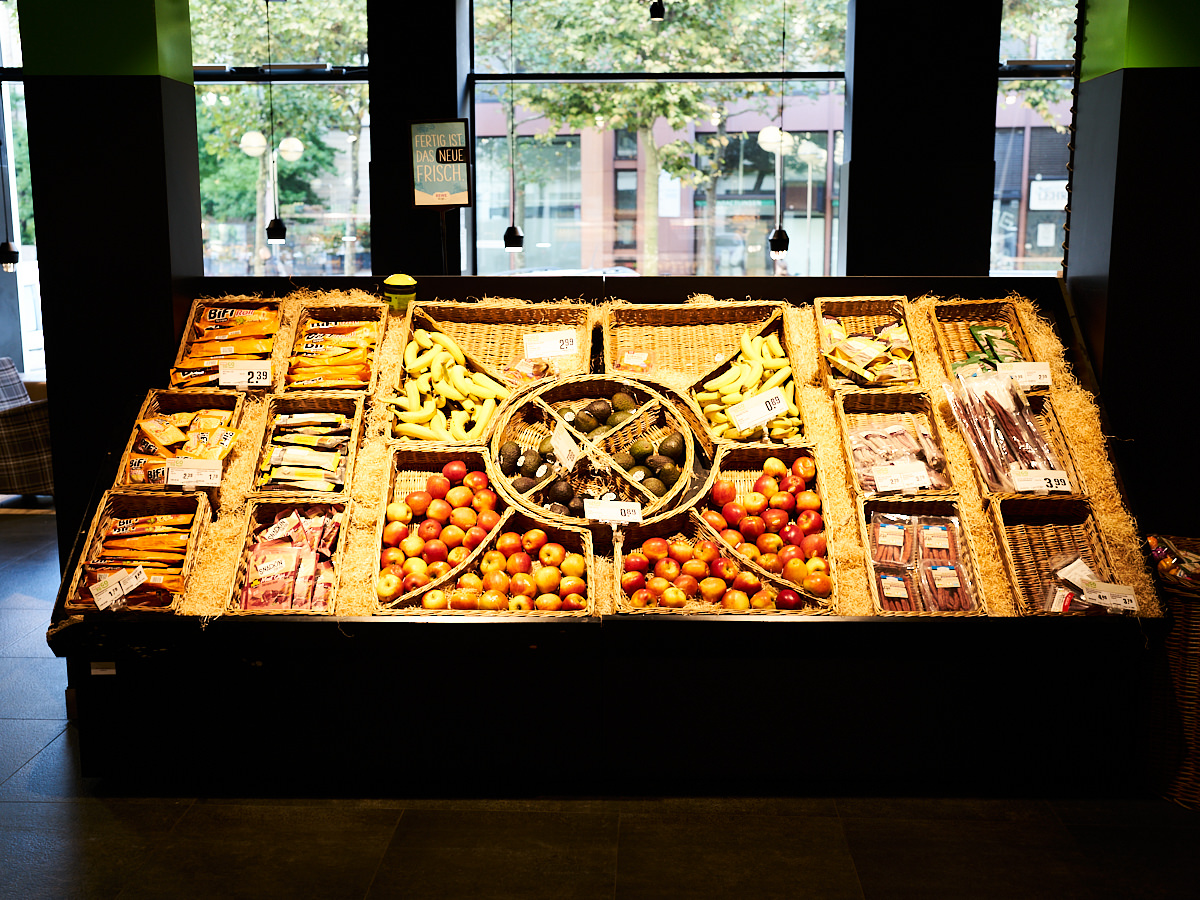
After that, I stepped into a supermarket called “REWE.” 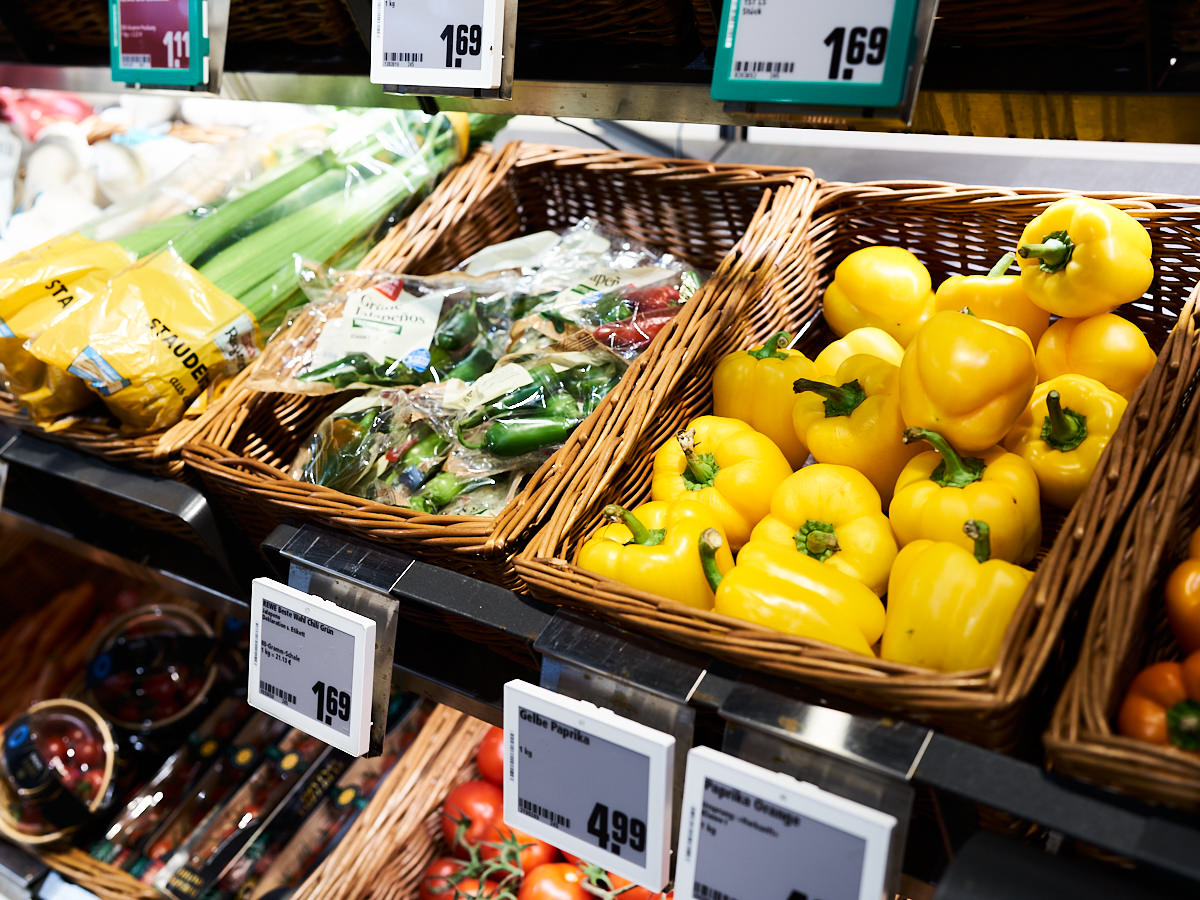
Colorful displays of fresh vegetables, meat, and other ingredients. 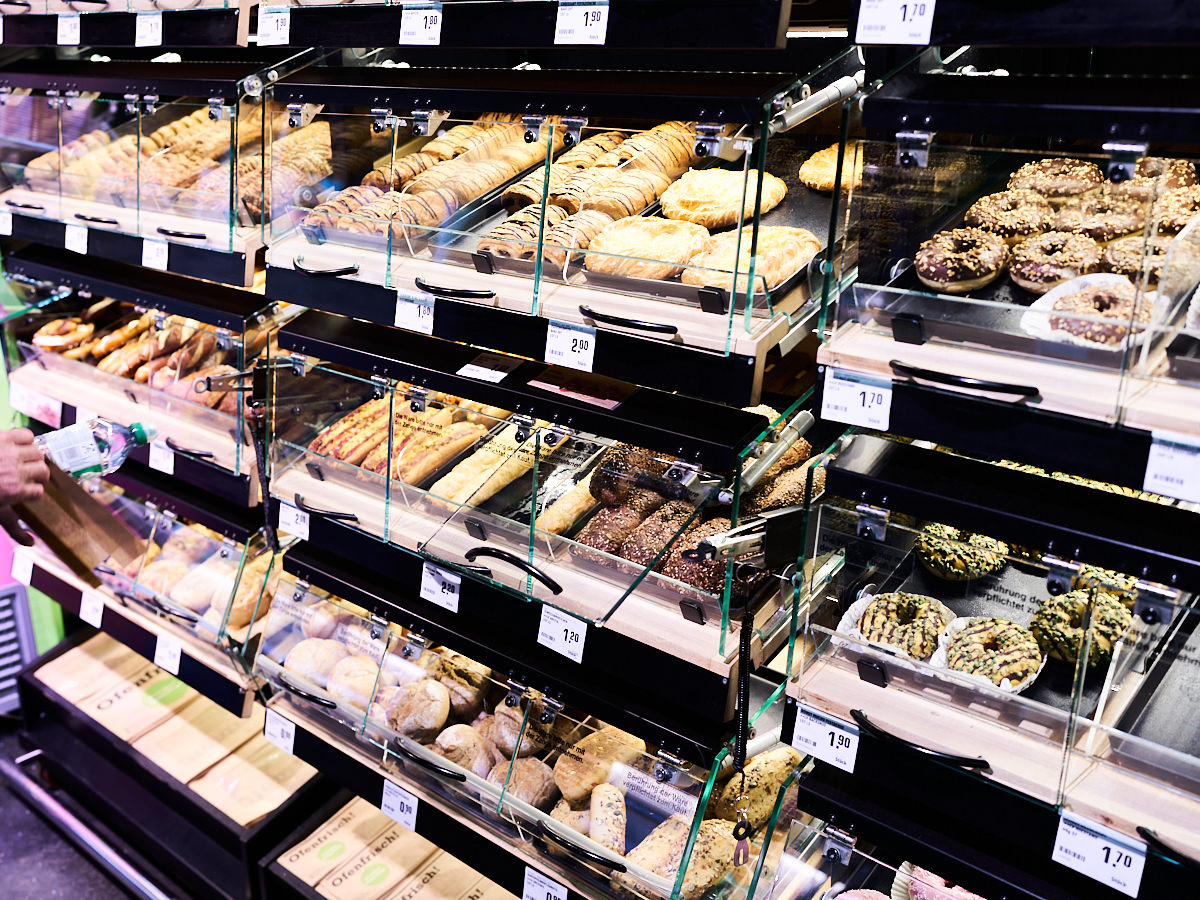
A wide variety of breads. 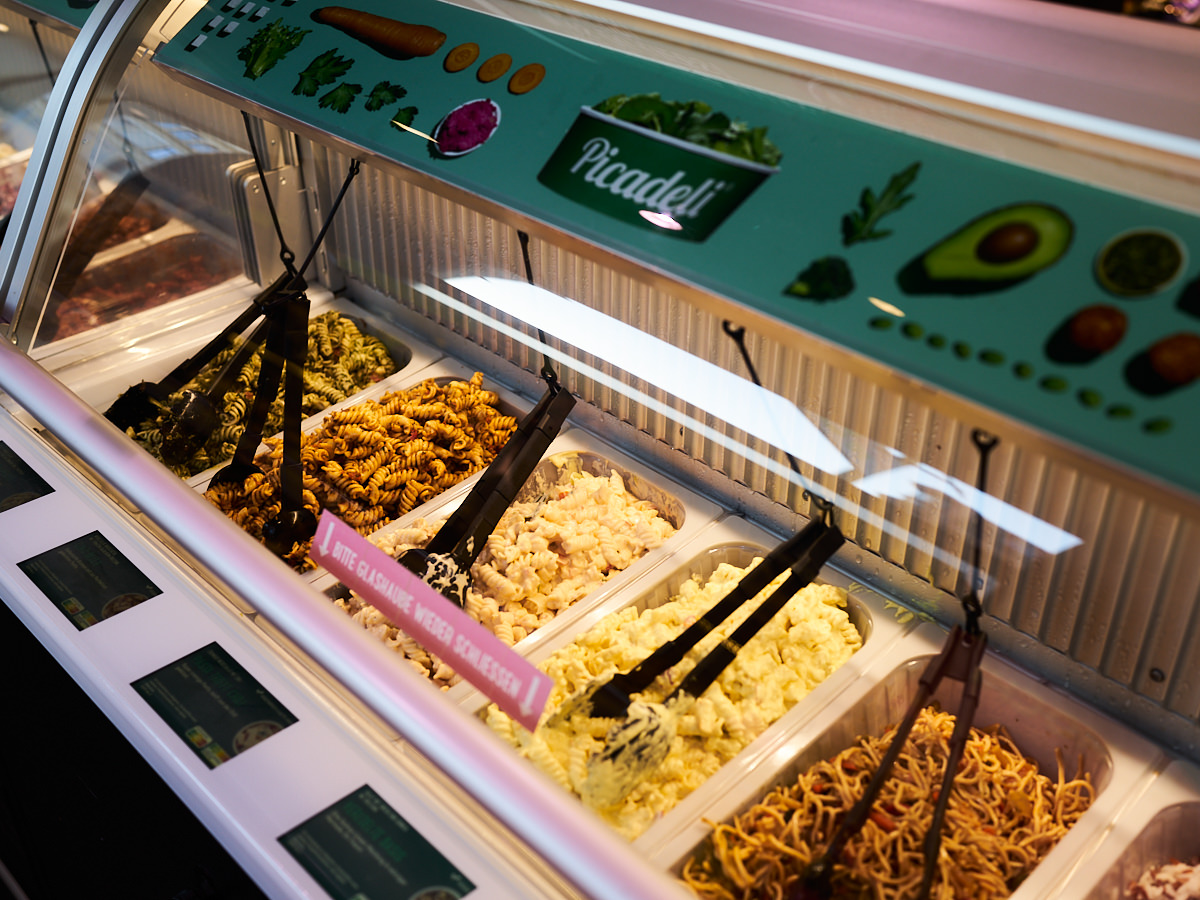
Salads sold by weight, where you can help yourself to as much as you like. 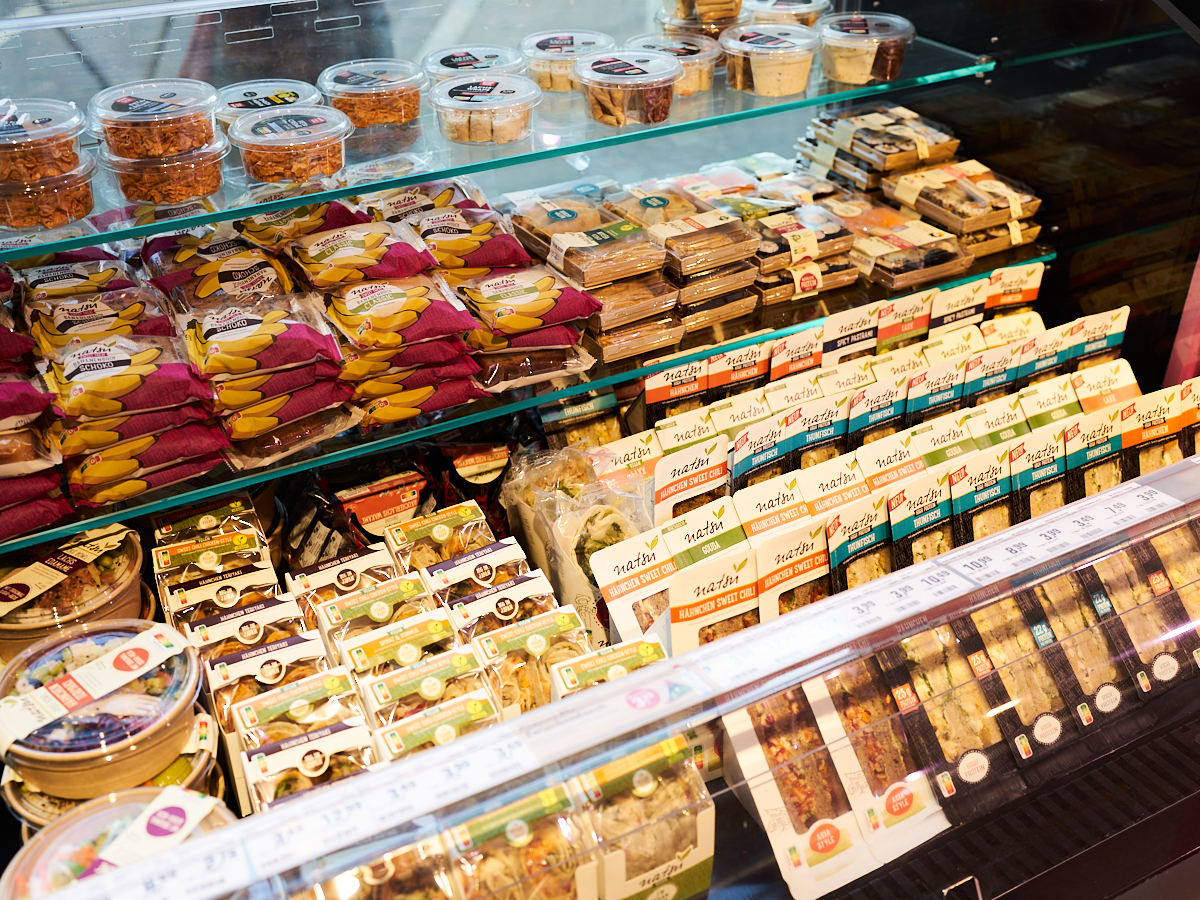
Sandwiches and other ready-made light meals. 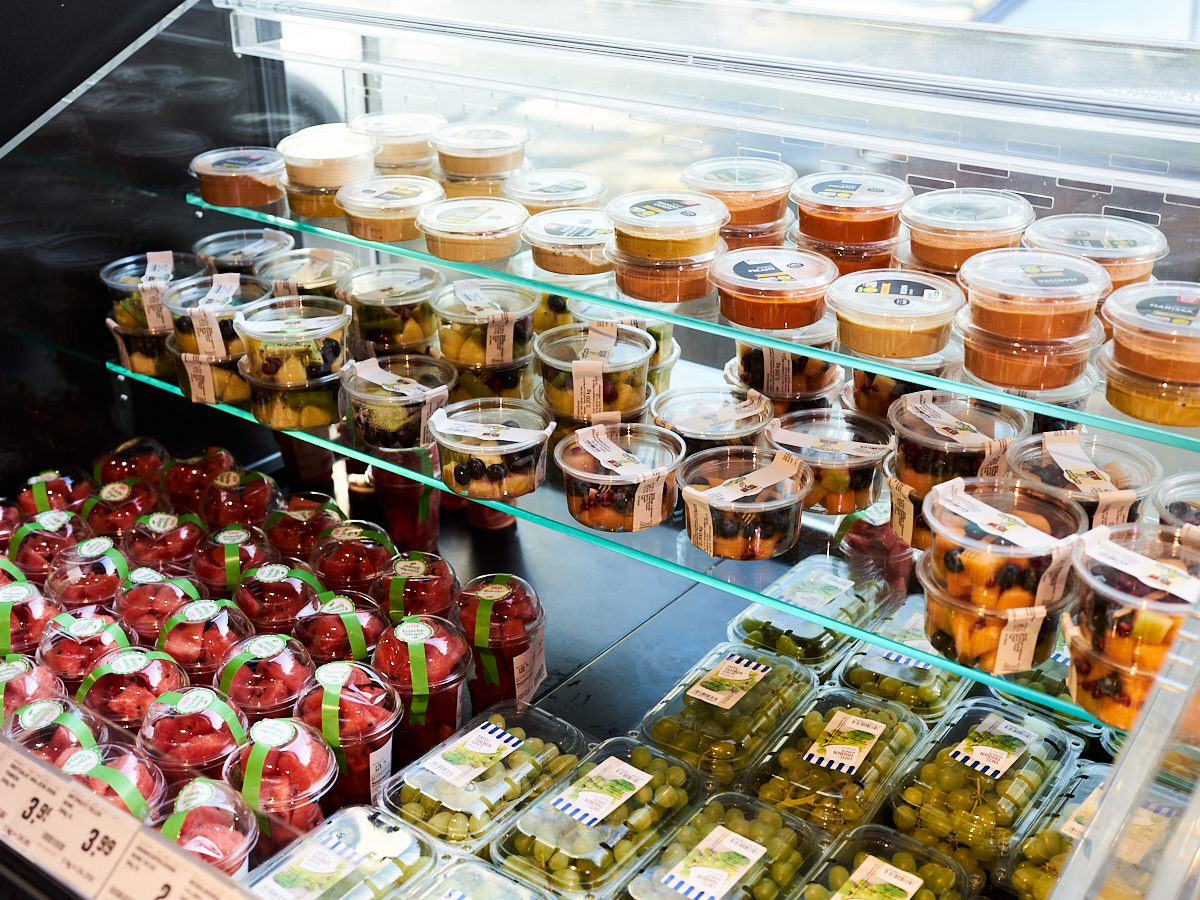
Cups filled with fresh fruit and assorted desserts. 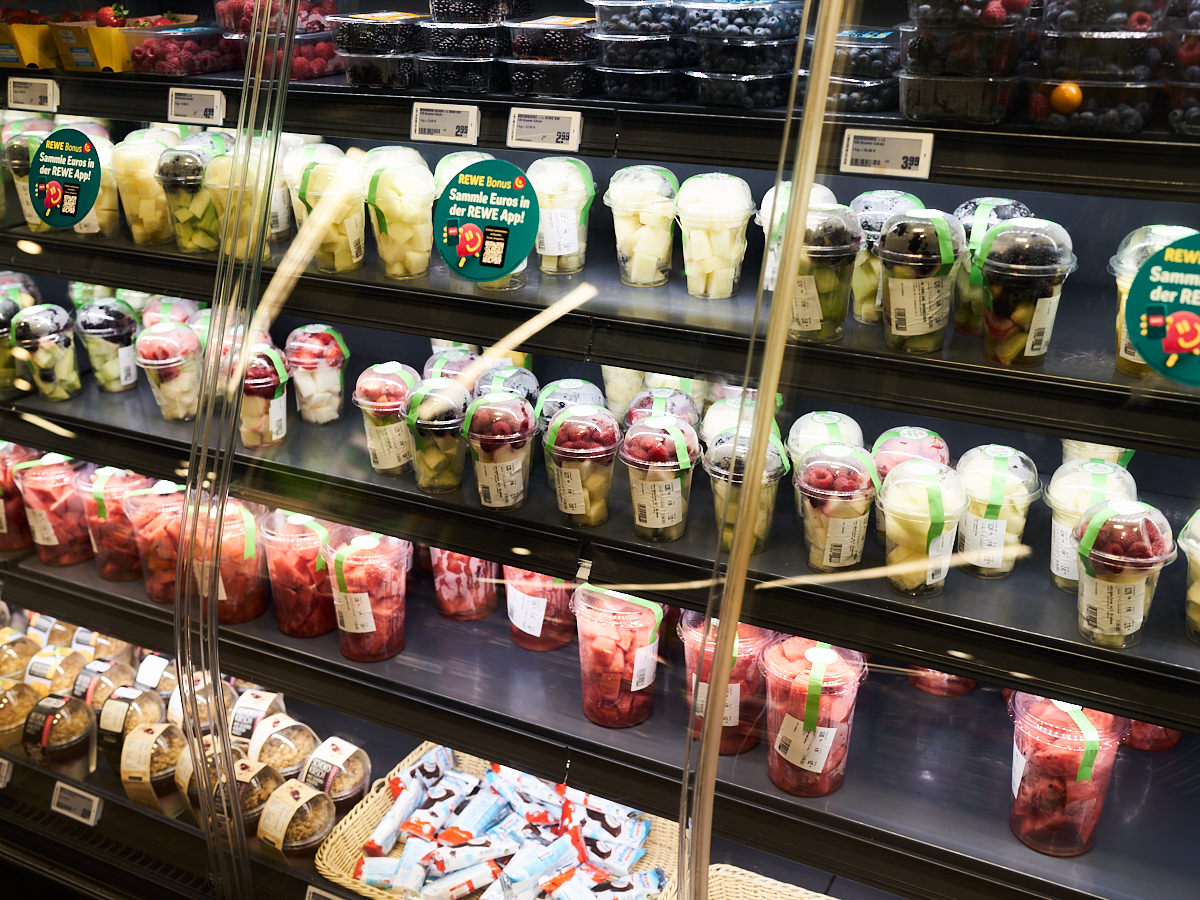
In particular, the selection of cut fruit was remarkably abundant. 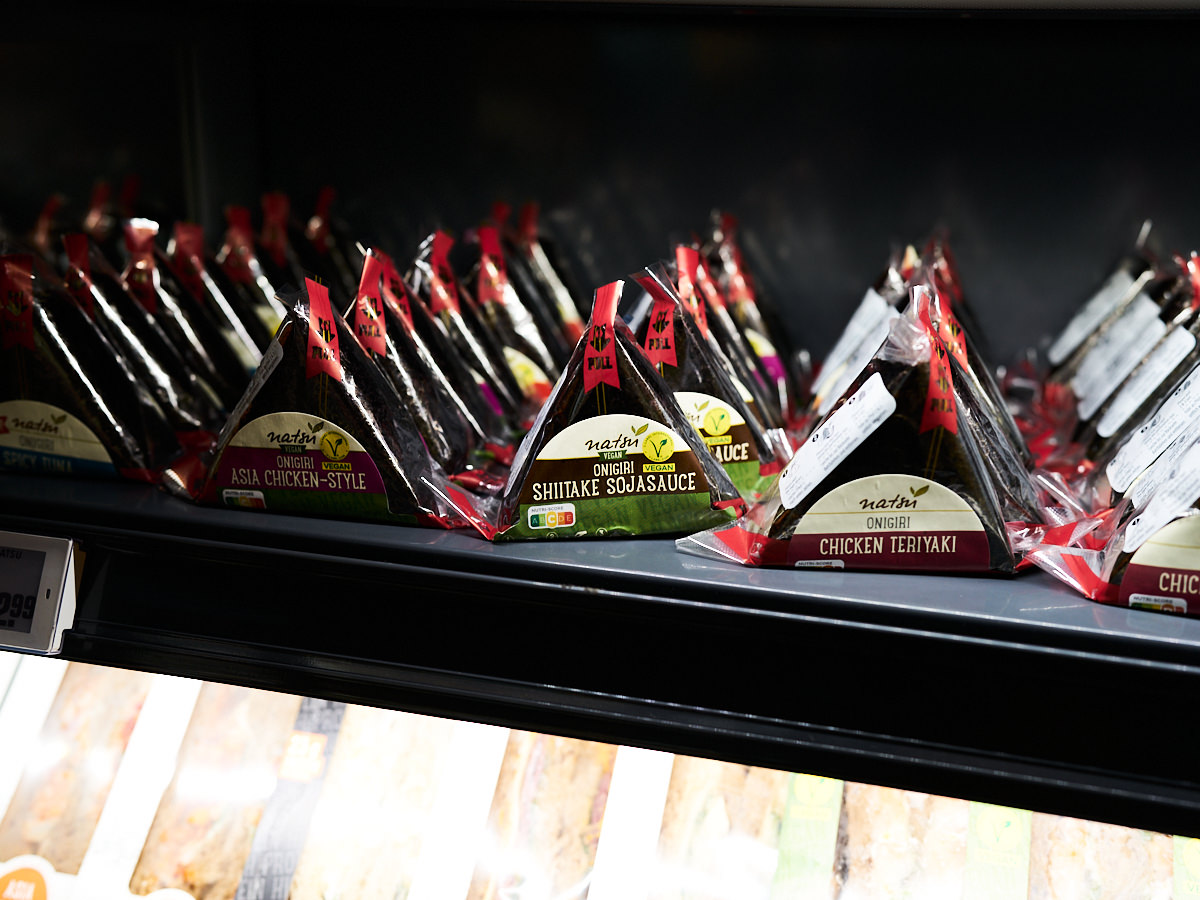
And then—what a surprise—there they were: onigiri! Seeing the familiar triangular packaging, I could not help but let out a small “Ah!” To my amazement, there were five or six different varieties.
With a long journey ahead of me, I decided to buy one to try. It would give me something to look forward to during the trip.
Please take a moment to watch Frankfurt on this early morning.
(Music begins to play.)
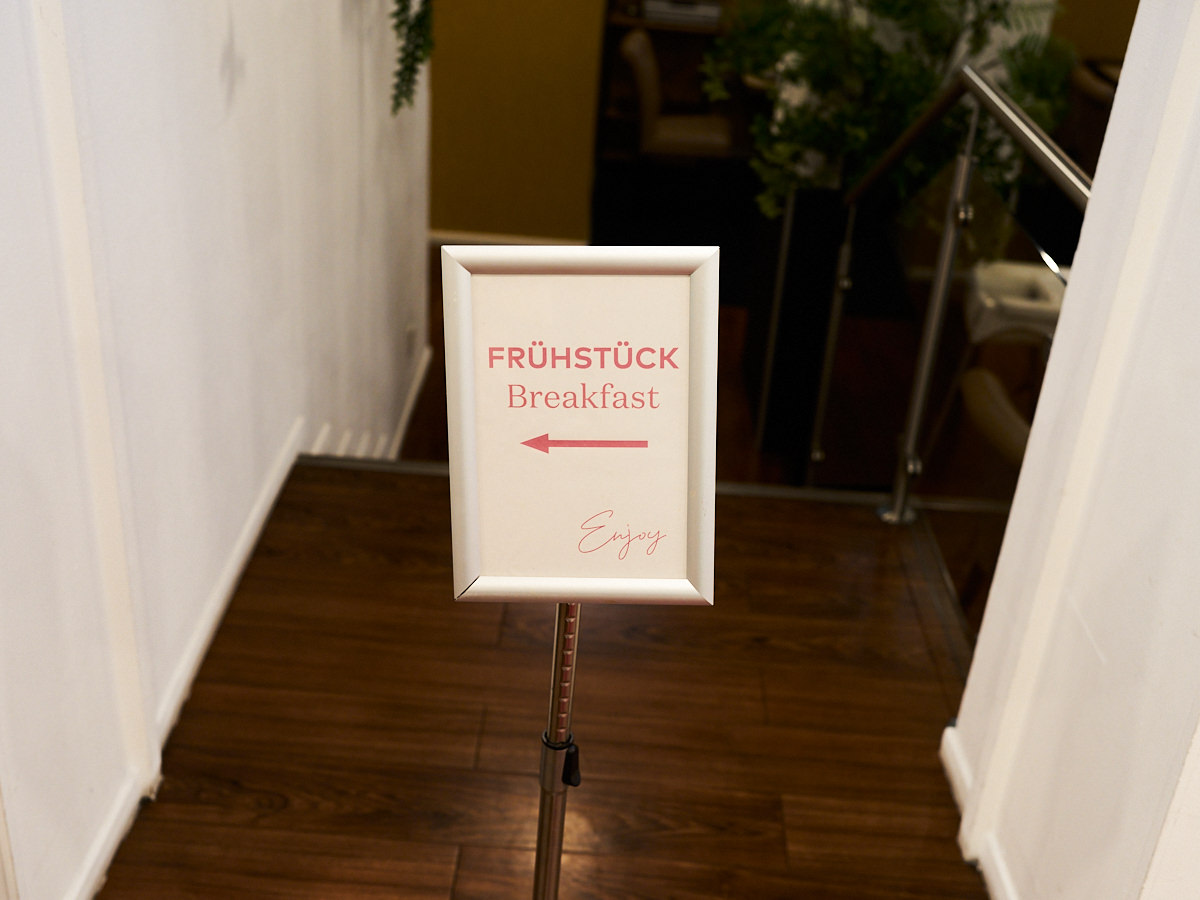
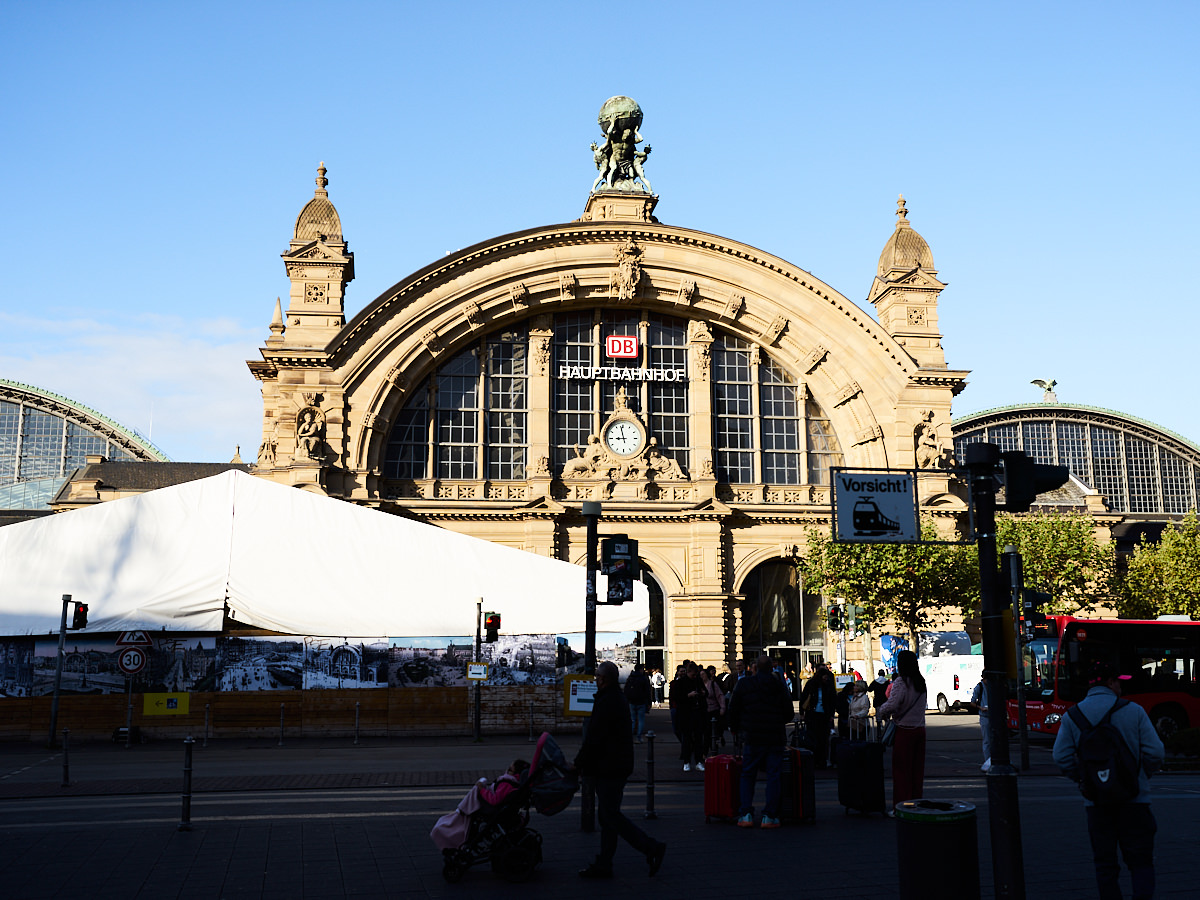
After finishing my enjoyable morning walk, I had a simple breakfast,
returned to my room, and packed my belongings.
Then, to board a long-distance train, I made my way once again to Frankfurt Central Station.
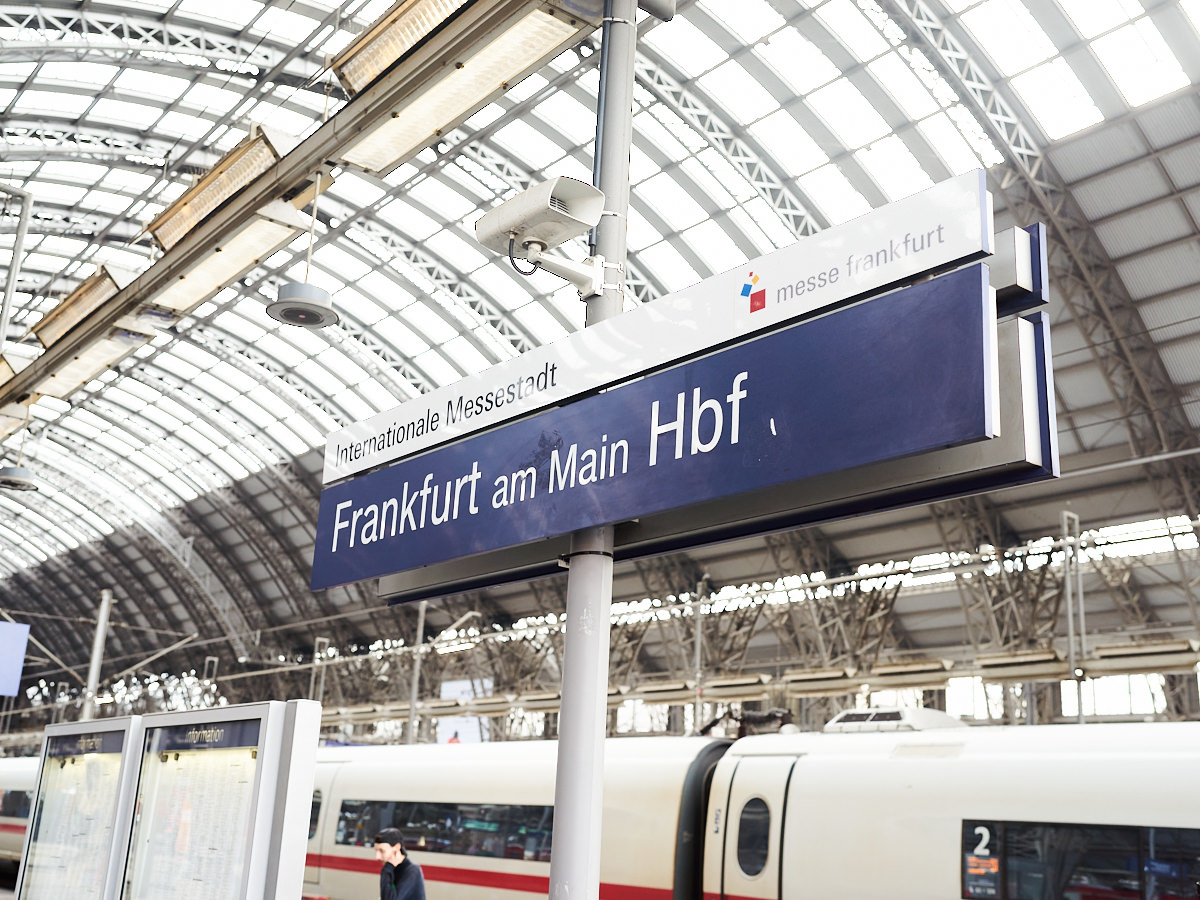
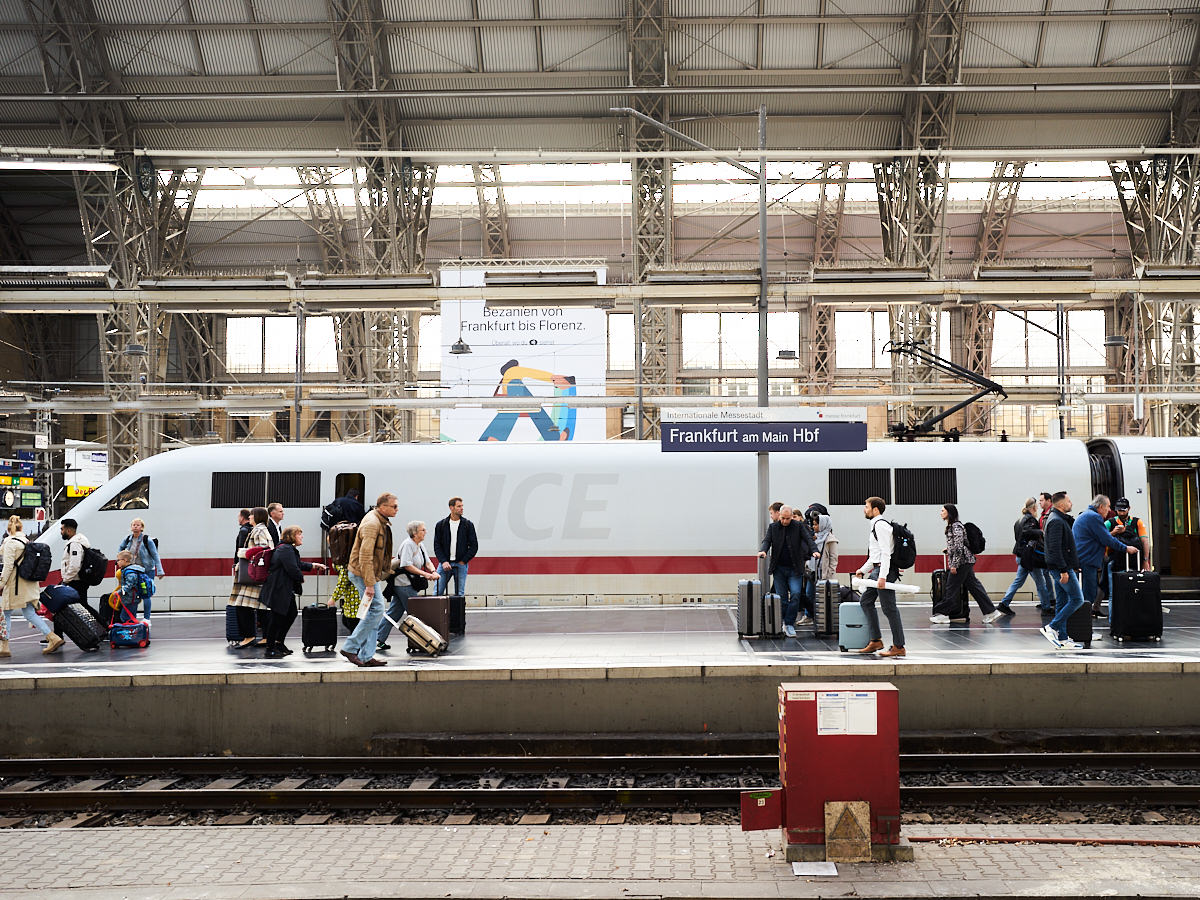
The station’s official name is “Frankfurt am Main Hbf,” meaning Frankfurt Central Station by the River Main. The phrase “am Main” lingered with me, evoking the quiet image of the river I had just seen. 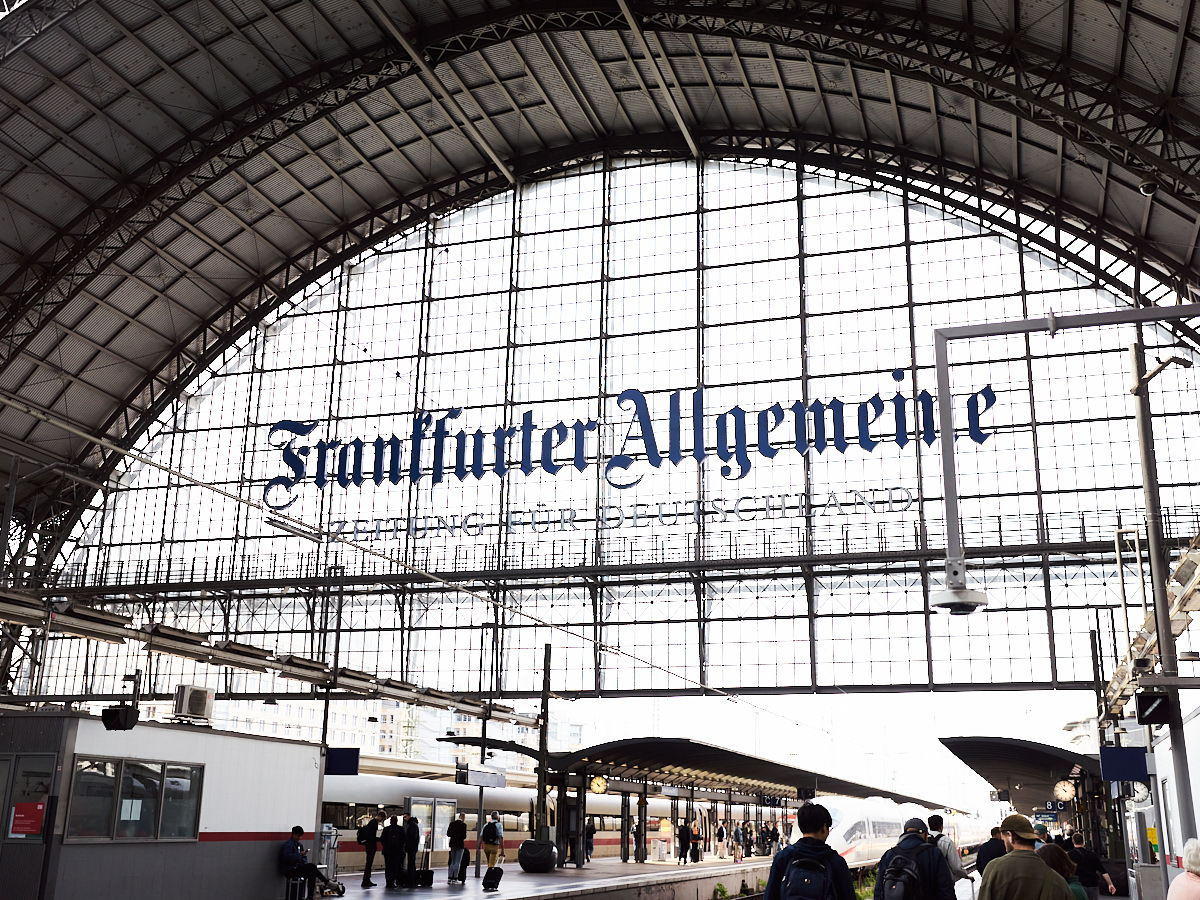
From Frankfurt Central Station, trains were arriving and departing every few minutes. Incidentally, the sign here reads “Frankfurter Allgemeine Zeitung,” one of Germany’s major national newspapers, and appears to be part of an advertisement. 
The departure boards showed trains bound for Paris in France, Amsterdam in the Netherlands, Milan in Italy, Prague in the Czech Republic, Brussels in Belgium, and Vienna in Austria. It seems that most major cities can be reached either directly or with just a single transfer. 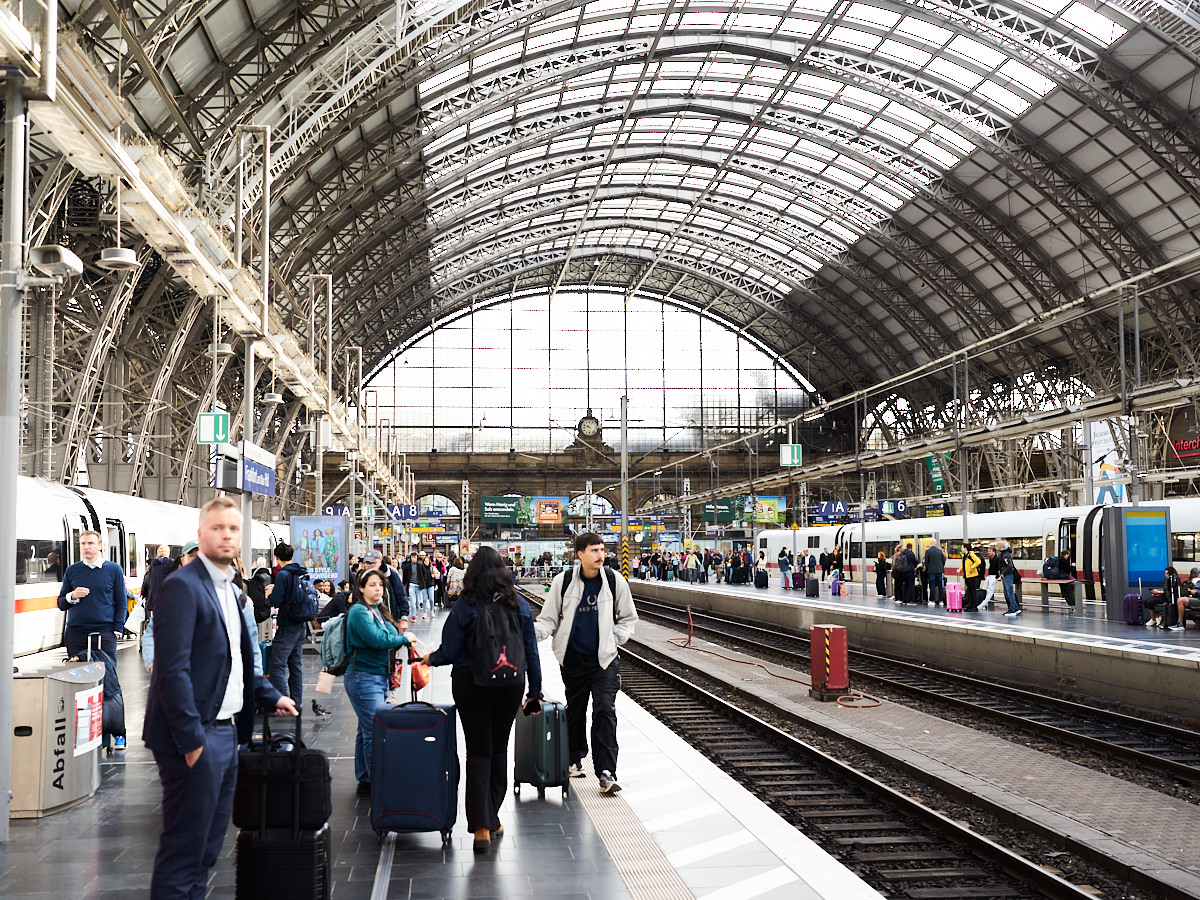
The passengers themselves were just as diverse, with people from many different countries and cultural backgrounds passing through the station. It truly felt like a gateway to Europe. 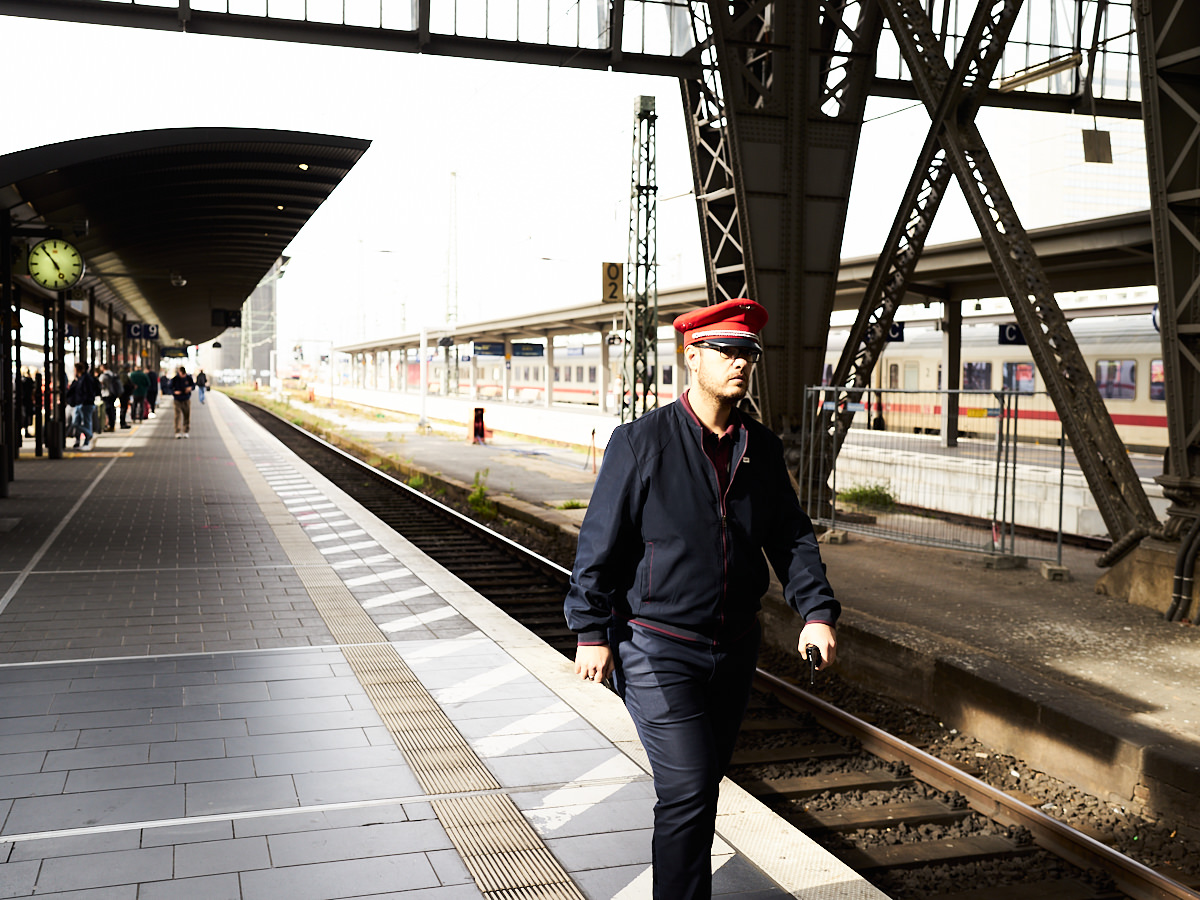
In Germany and many other European countries, the Schengen Agreement has removed routine border controls, making it possible to cross national borders by train almost as easily as traveling within one’s own country. For me, living in Japan, the idea that crossing into another country by land is an everyday experience felt both refreshing and quietly enviable. 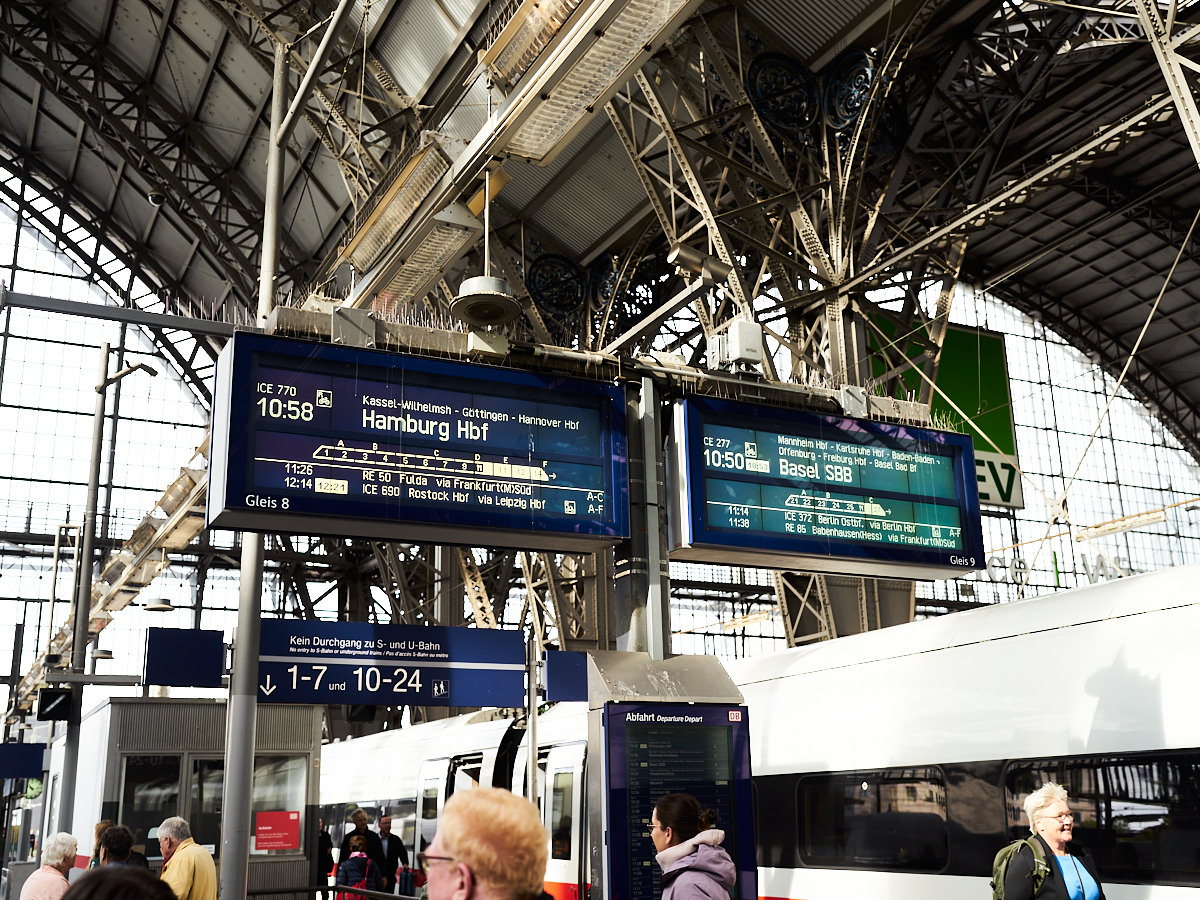
From here at Frankfurt Central Station, I would soon head north aboard the ICE—Germany’s high-speed train, much like Japan’s Shinkansen. With a few transfers along the way, I was bound for Warburg Station, where I was to meet someone special.
To be continued.
*
In the next journal,
I will finally reunite with a German maker I have long hoped to meet again.
Please look forward to it.
— Bis bald. (See you soon.)
Tomotake Ichikawa
___________________________________________
“The One Table” Special Exhibition
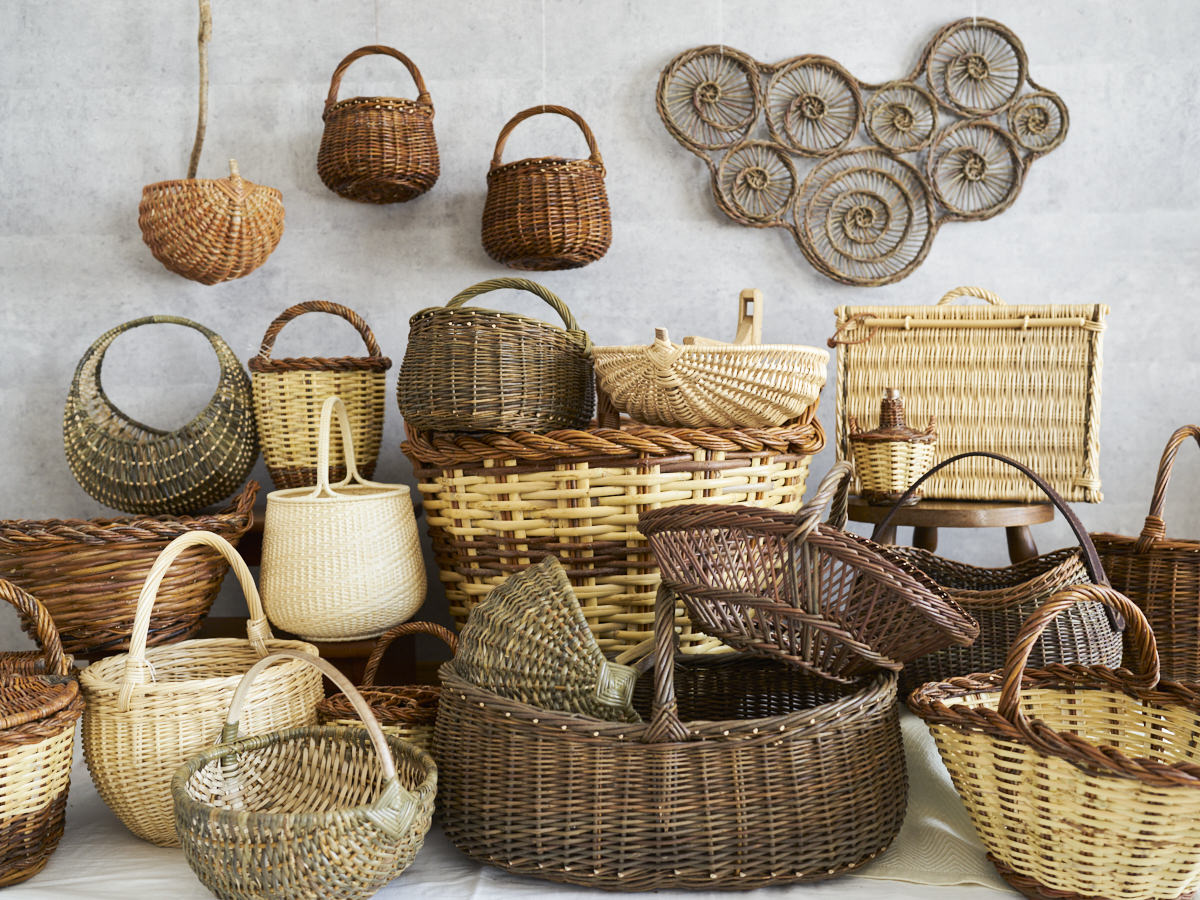
European Baskets We Discovered in Germany
2026
February 19 (Thu), 20 (Fri), 21 (Sat), 22 (Sun), 23 (Mon, Holiday)
26 (Thu), 27 (Fri), 28 (Sat)
March 5 (Thu), 6 (Fri), 7 (Sat)
Open | 11:00–16:00
In-store | 1basketry, Minami-Senju, Tokyo
*Answer to the previous journal (Germany Business Trip 1) quiz*
It was a cigarette vending machine!
Although this is no longer a sight you would see on station platforms in Japan,
this particular machine had a certain artistic presence, and I found myself naturally taking a photo of it.
In Germany, I also noticed people smoking on the station platforms.