
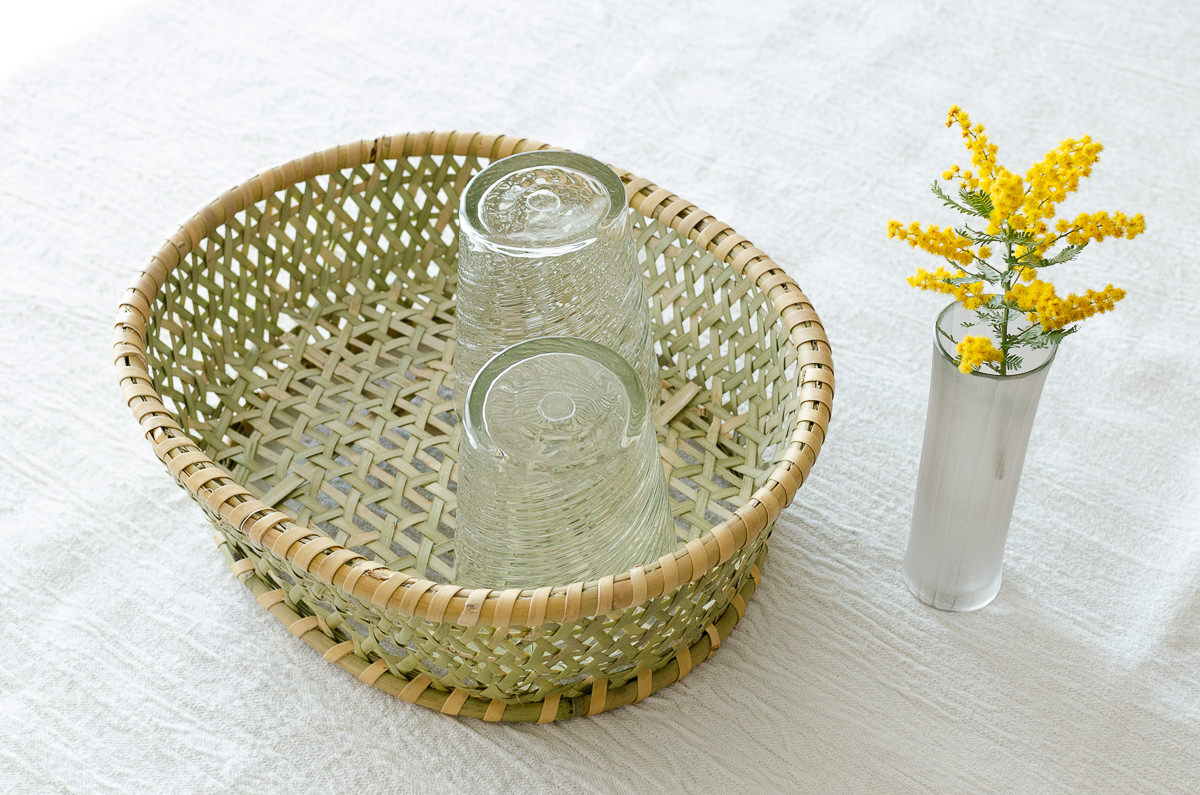
In this column, published after some time, we introduce wan-kago—bowl baskets that have arrived from various regions across Japan.
These bowl baskets were traditionally used to hold washed tea bowls, serving bowls, and plates.
While details varied by region, many were made from the culms of a bamboo known as okamé-zasa,
or from the stems of a plant called shida.
Rather than being split, several stems were often bundled together,
and baskets made in this way were once quite common.
One of the defining qualities of both materials is how well they let water drain away.
The smooth surfaces of okamé-zasa and shida stems repel moisture,
making it less likely for water to soak into the material itself, where mold or rot could develop,
and this quality may be why they were valued as durable, long-lasting materials.
Today, however, bowl baskets made from okamé-zasa or shida have become extremely rare,
and even in our shop, they are seldom available.
Even so, when you look around the shop today,
bowl baskets of different shapes and materials still stand with a quiet but unmistakable presence.
At our shop, we carry pieces made from bamboo and sasa (a type of Japanese bamboo grass).
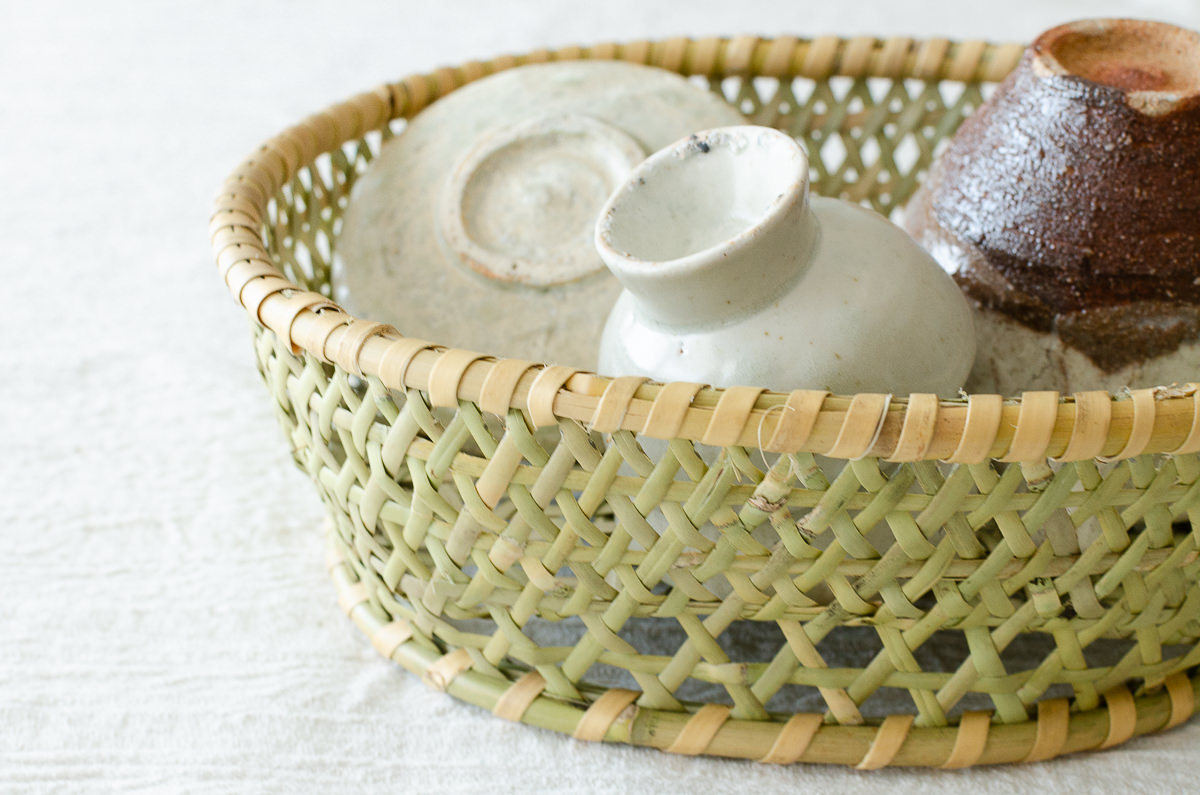
We are often asked by customers looking for bowl baskets, “Can they be used to hold washed dishes as they are?”
Since this was how chawan baskets were originally used,
it is natural that many people have this image in mind.
However, unfortunately, with the exception of a few pieces,
most of the bowl baskets we offer are not suitable for use as dish-draining baskets.
This is due to the nature of bamboo and sasa, as well as the construction of the baskets themselves.
Both materials are sensitive to moisture, and if left damp, mold can develop,
leading to deterioration of the basket, which is why we do not recommend such use.
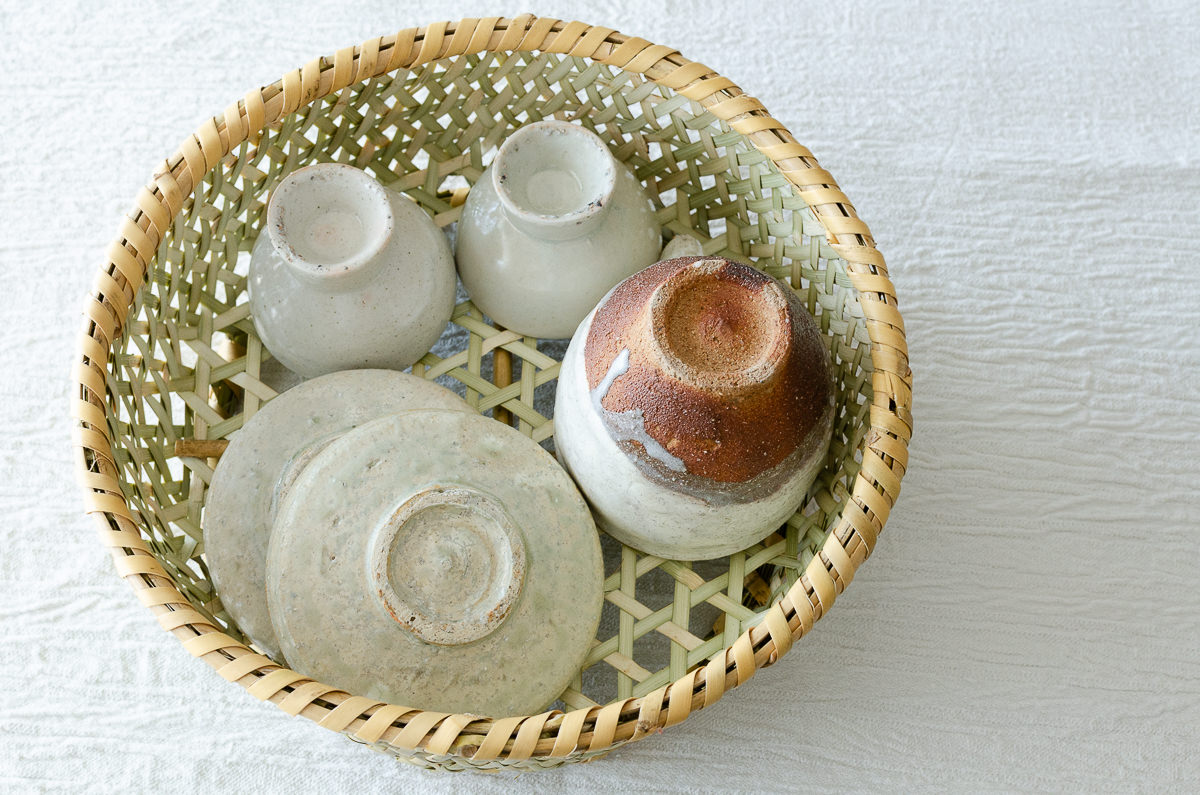
In the Togakushi area of Nagano, baskets of this shape are called chabon-kago.
A chabon is a tray used to hold tea utensils such as a teapot, teacups, and a tea canister.
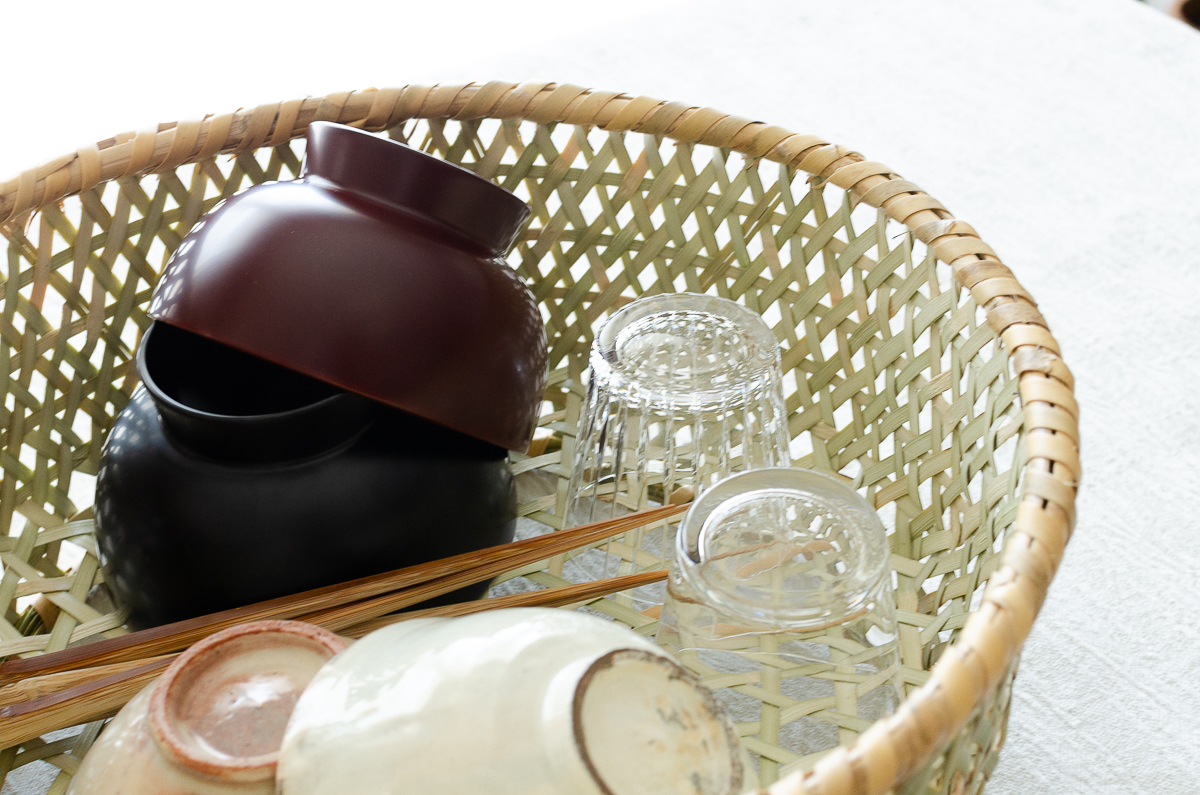
The bowl baskets introduced here may be best used in a similar way, like a chabon.
As storage baskets for ceramics or lacquerware that have been washed, carefully wiped dry,
and need a little more time to air out completely.
They also work well as baskets for fruit, vegetables, or sweets.
All of the bowl baskets shown here are not only practical,
but simply looking at the quiet presence of a basket at rest can be gently comforting.
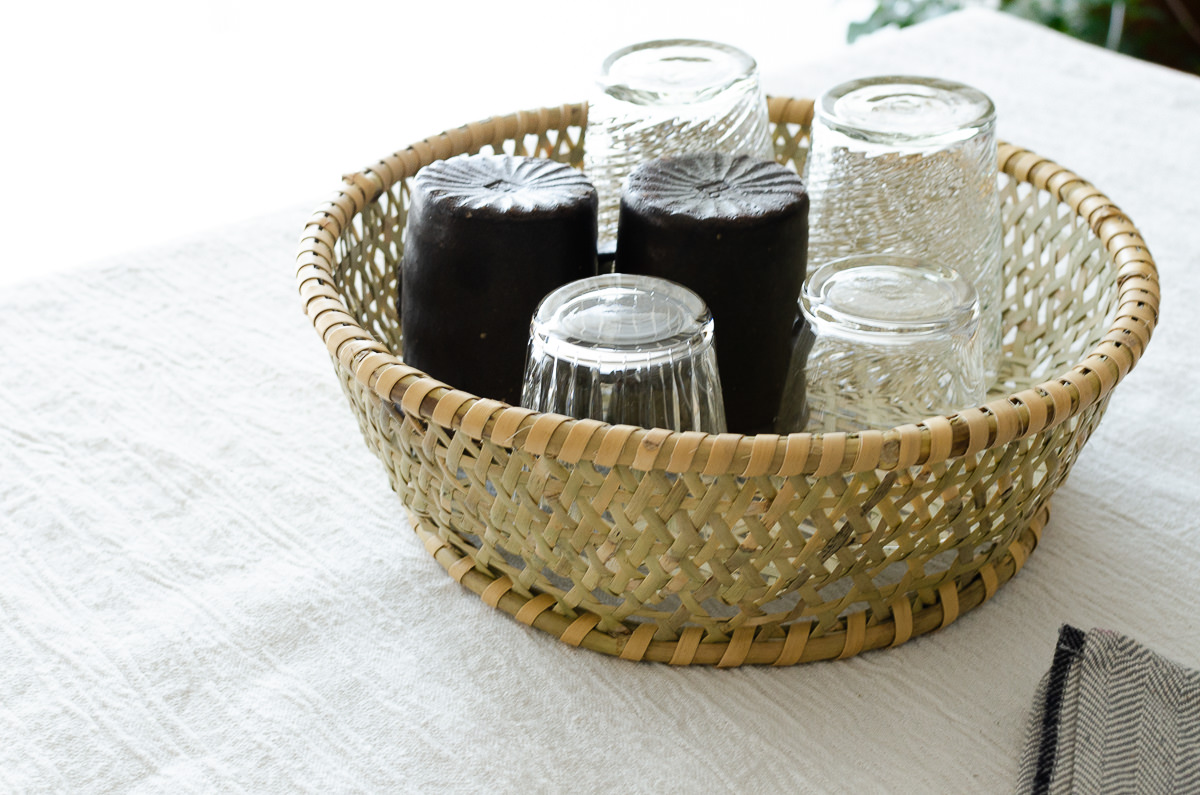
Each of these bowl baskets differs in shape and material, yet they all share a set of common characteristics.
Below, we introduce four key features.
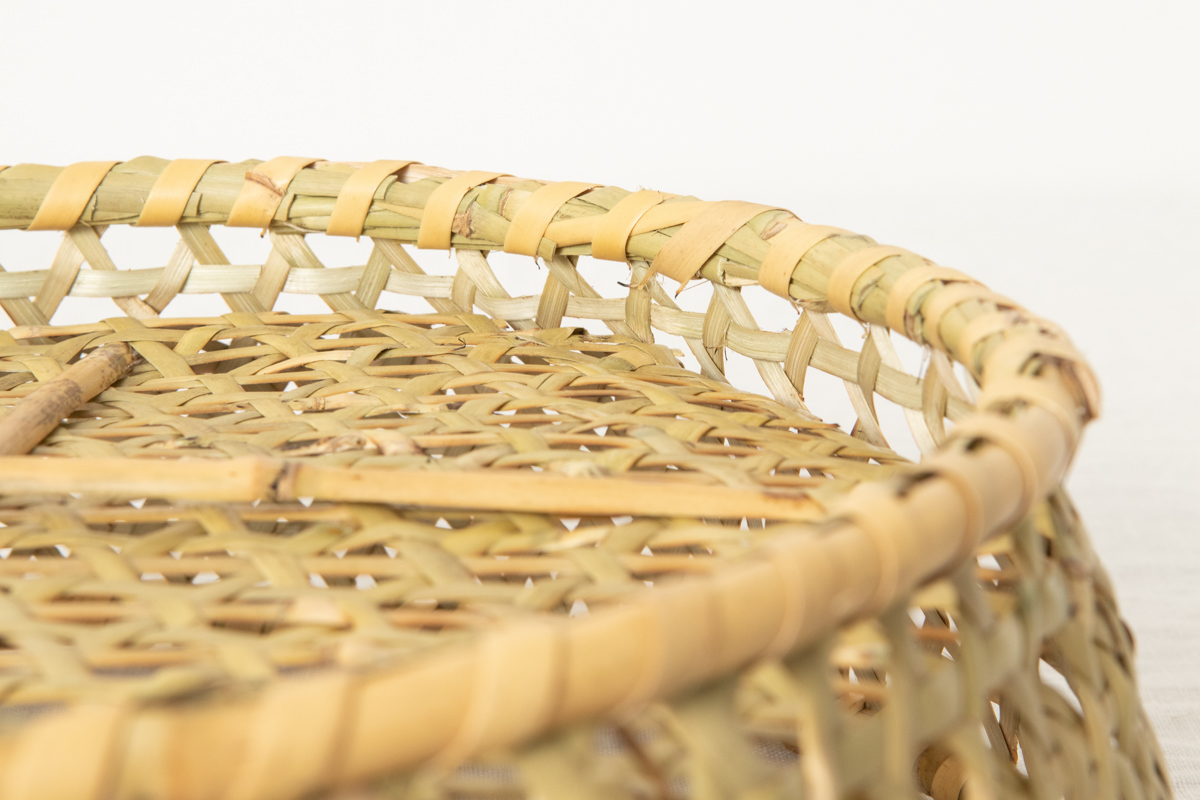
Feature 1 of bowl baskets – A raised foot
The term “kōdai” refers to a ring-shaped raised foot attached to the base, similar to those found on tea bowls or plates.
When the base of a basket sits directly on a table or shelf, air cannot circulate properly, allowing moisture and humidity to build up. This can cause darkening or mold on the basket, and may also damage the items placed inside.
The presence of a raised foot lifts the base, allowing air to circulate underneath.
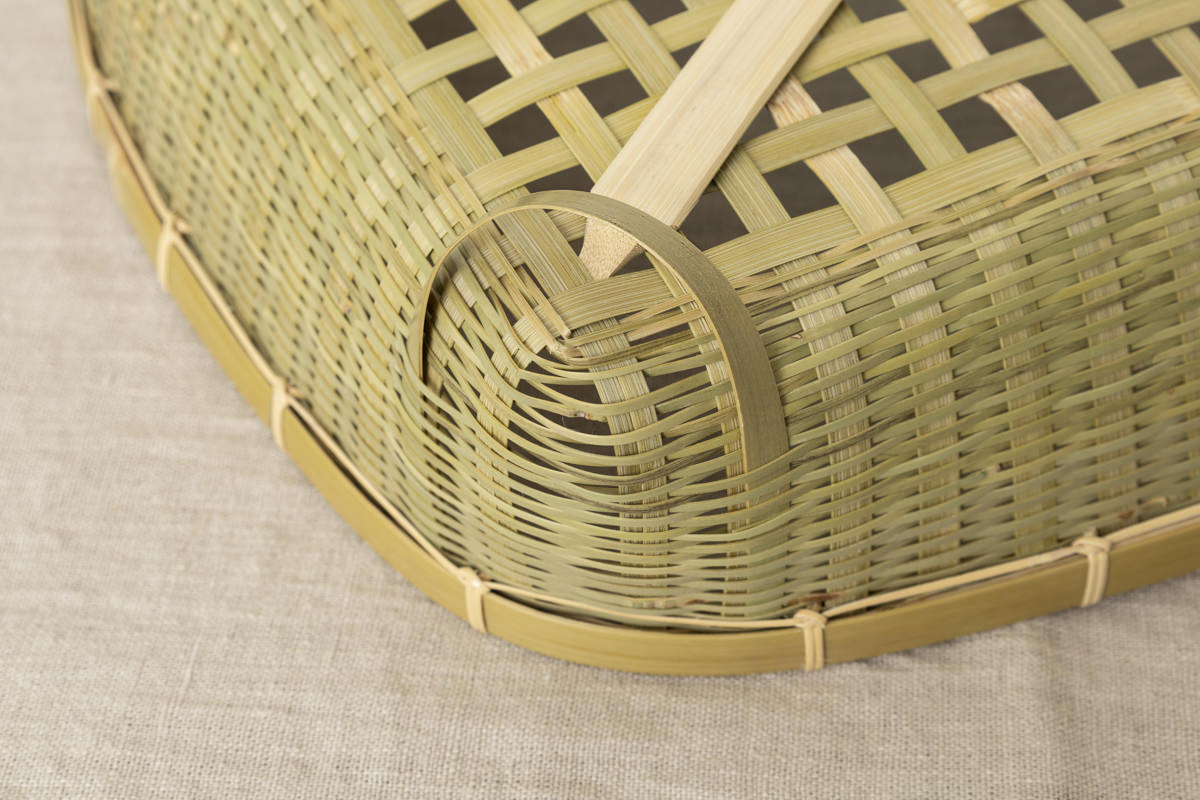
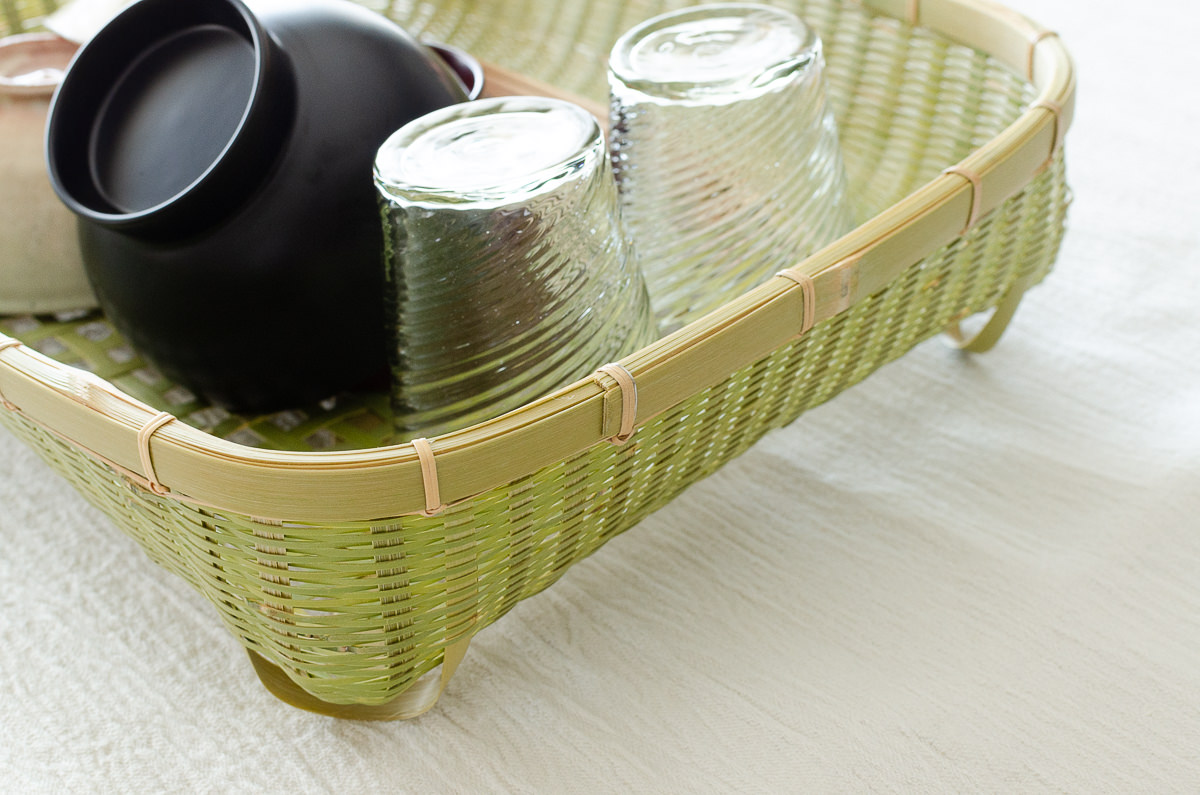
As shown in this photo, some baskets feature small feet at the four corners instead of a raised foot.
The function is the same, as they are designed to lift the base and improve air circulation.
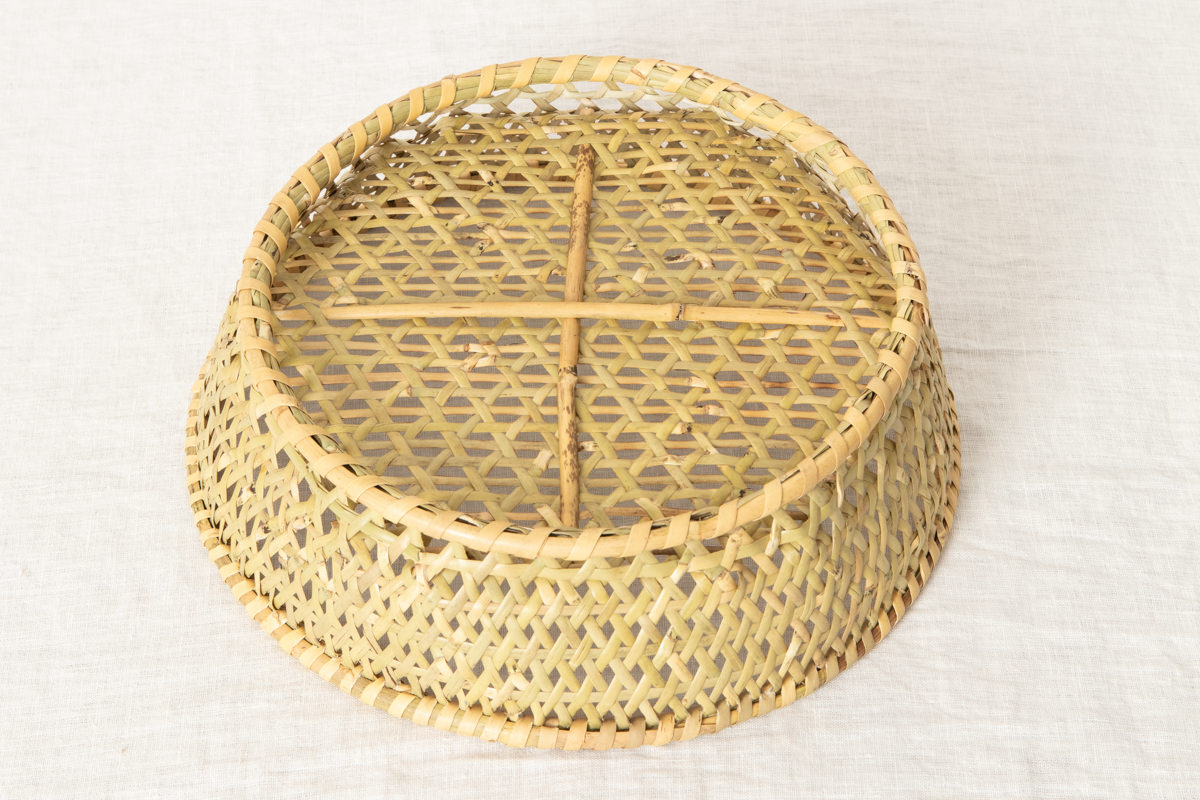
Feature 2 of bowl baskets – Reinforcing bamboo supports
Reinforcing bamboo supports, known as chikara-dake, are commonly found in bamboo baskets.
Because bamboo strips naturally flex, placing items with some weight inside a basket can put strain on the base. Chikara-dake help support this load, providing stability to the bottom even when slightly heavier items are placed inside.
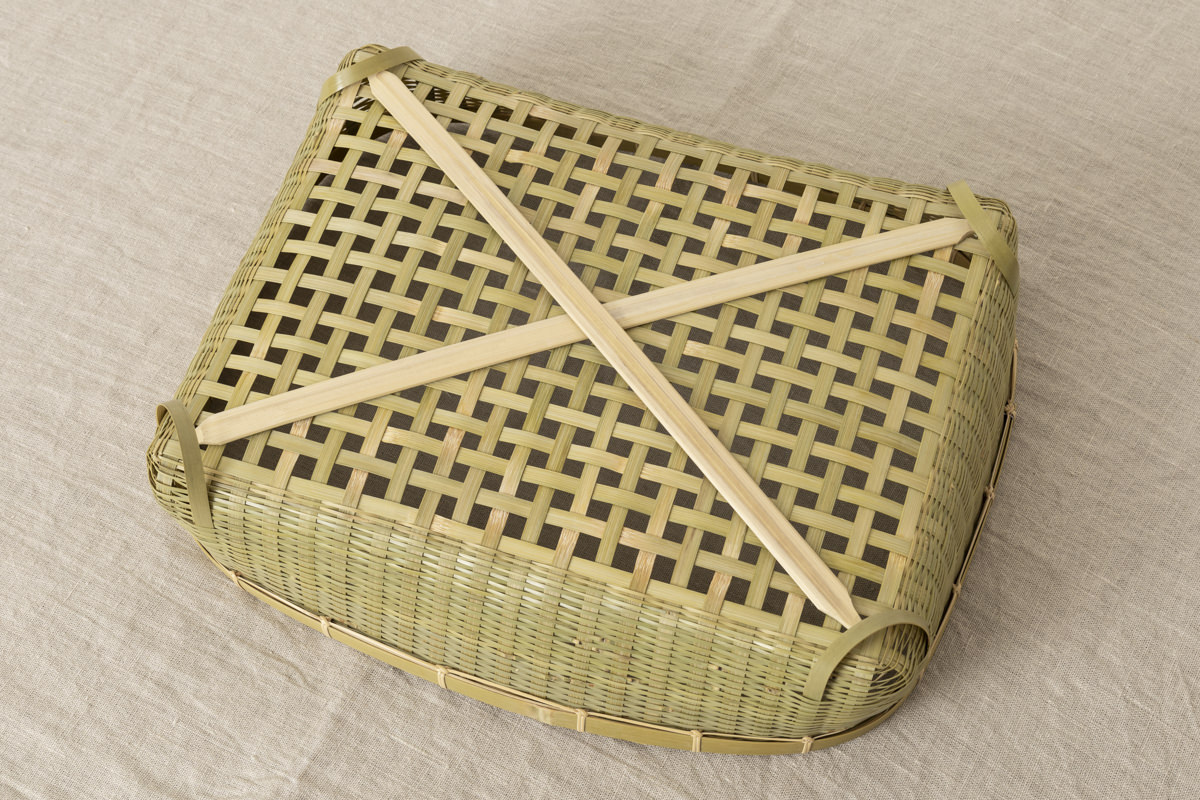
Here, reinforcing bamboo supports can be seen set into the base of a dish-draining basket.
The wider the base of a basket like this, the more it tends to flex, but thick, sturdy bamboo strips are arranged in an X-shape, creating a construction that feels reassuring even when many items are placed inside.
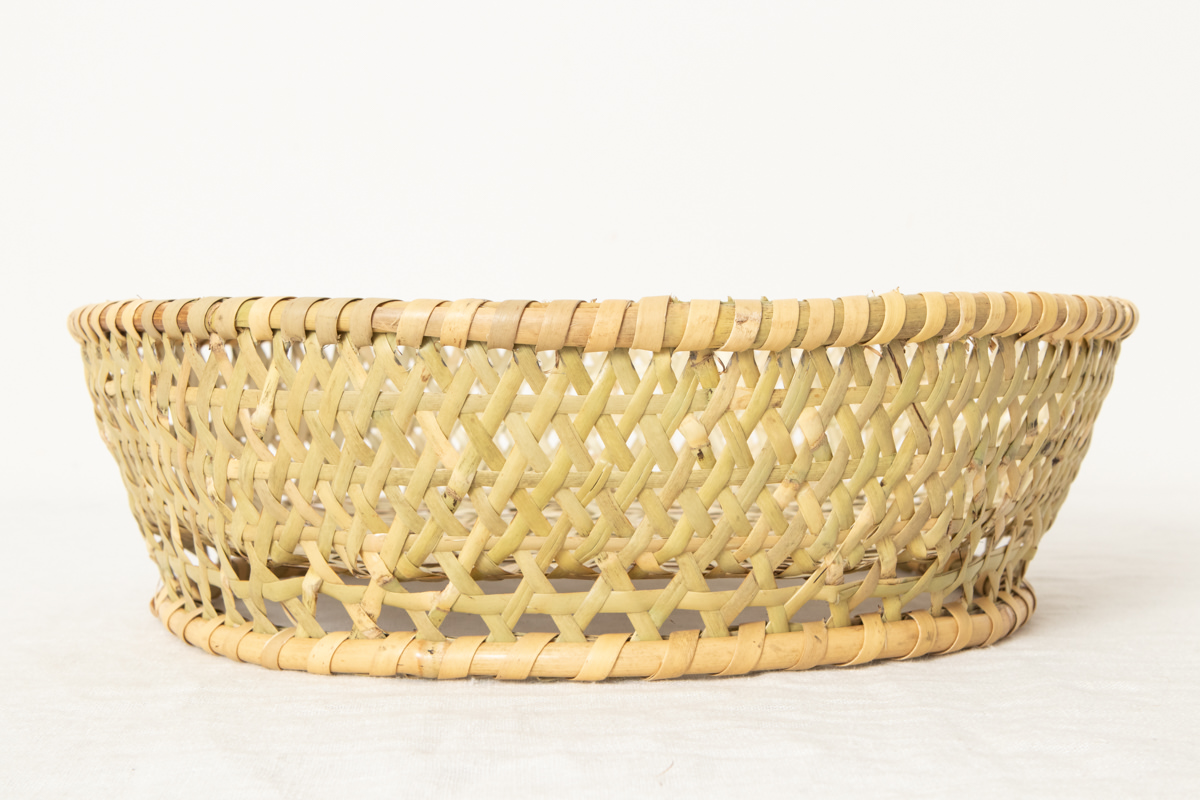
Feature 3 of bowl baskets – Upright sides
With a flat tray, items stacked inside might easily slide out, but here, the upright sides support what is placed inside, keeping it from slipping away.
Another pleasing aspect is that the contents are not overly visible, allowing the weave itself to be quietly enjoyed.
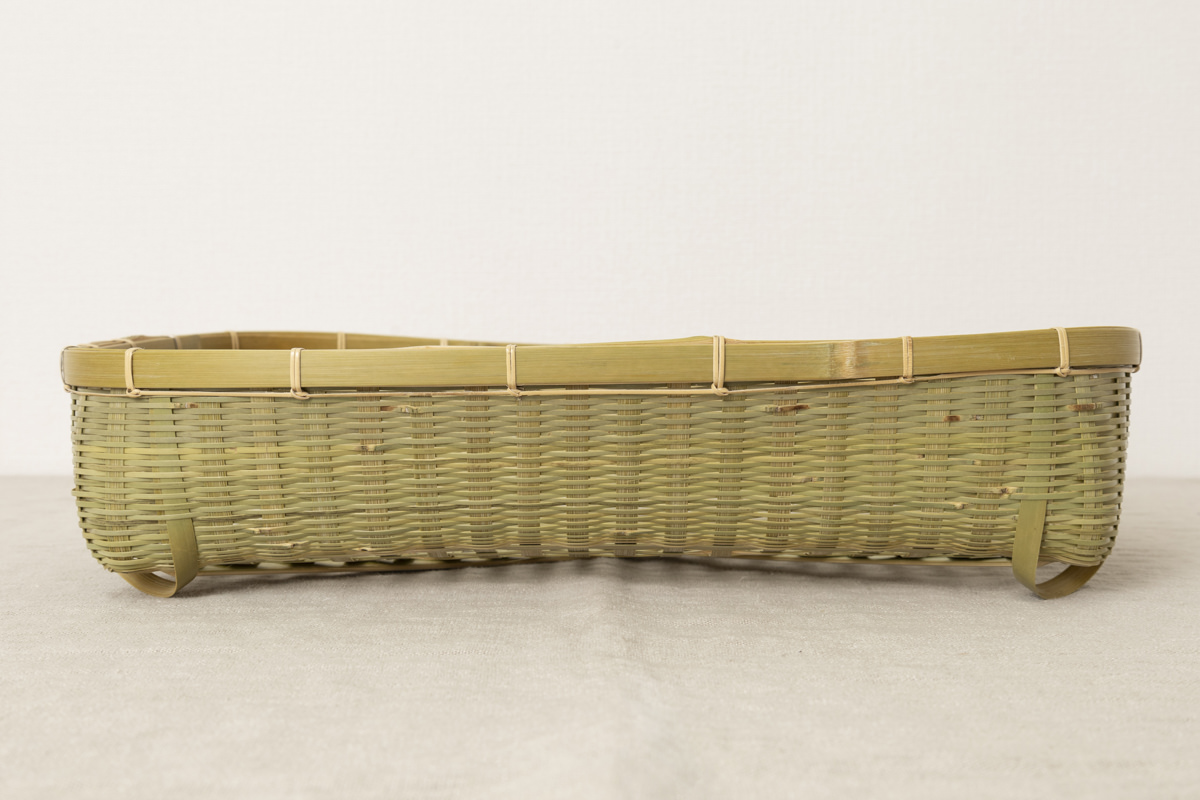
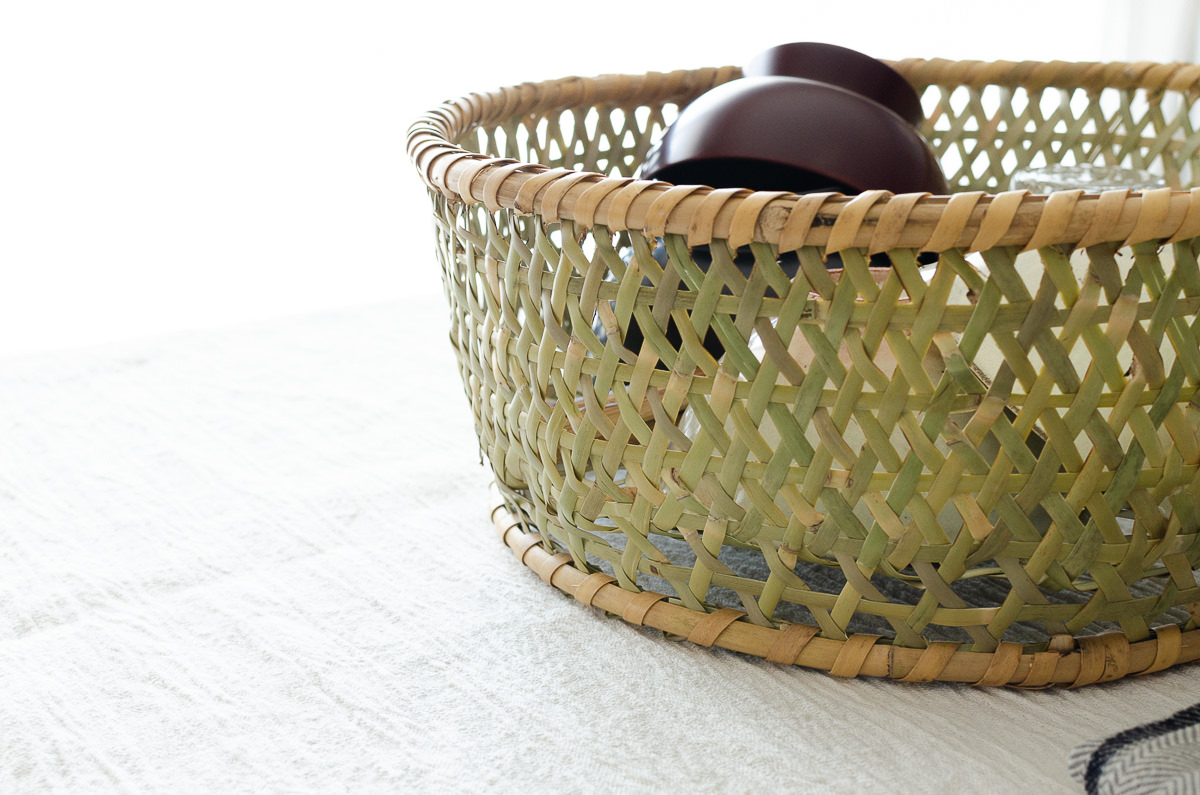
This photo shows the side of a dish-draining tray.
Because the basket is not very tall, it feels light and unobtrusive when placed out, and its shape makes it easy to put items in and take them out.
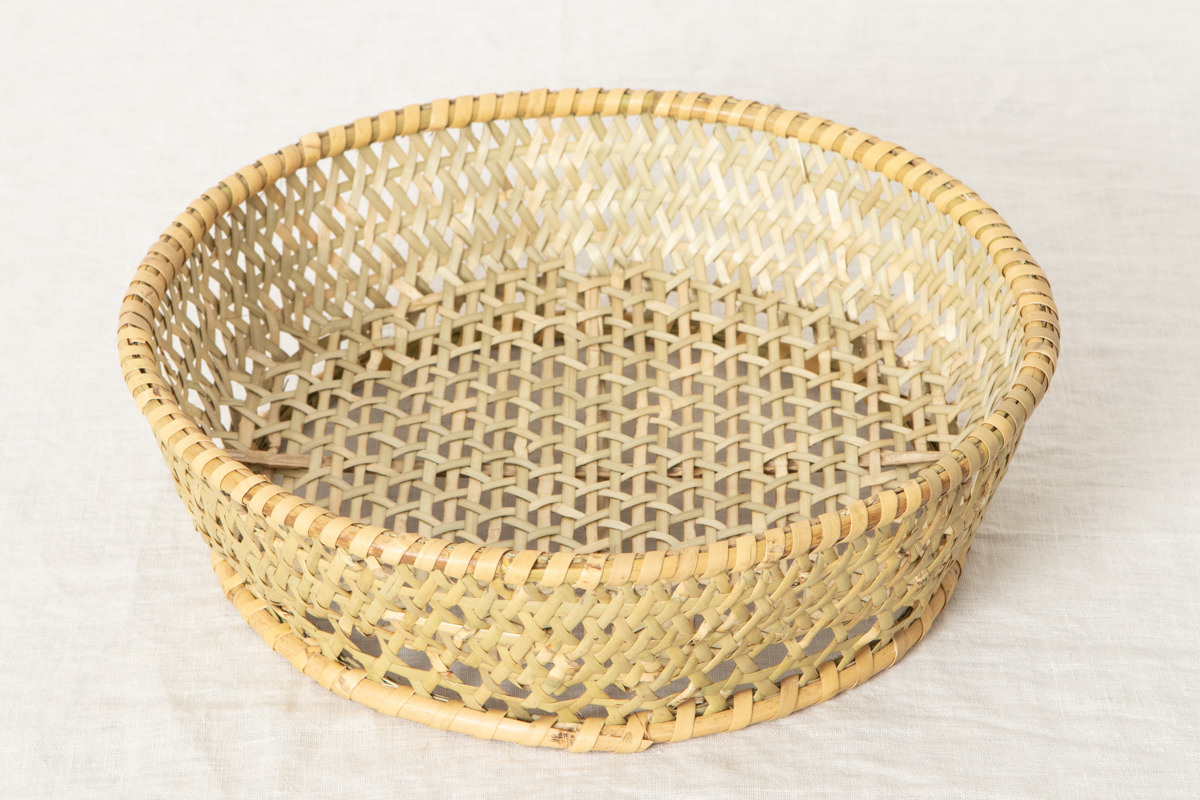
Feature 4 of bowl baskets – Open weaving
Looking at the base of these baskets, none have tightly packed weaving; instead, all feature small open spaces.
This is a deliberate design to allow moisture from dishes and other items to escape.
The gaps are small enough that items placed inside are unlikely to fall through.
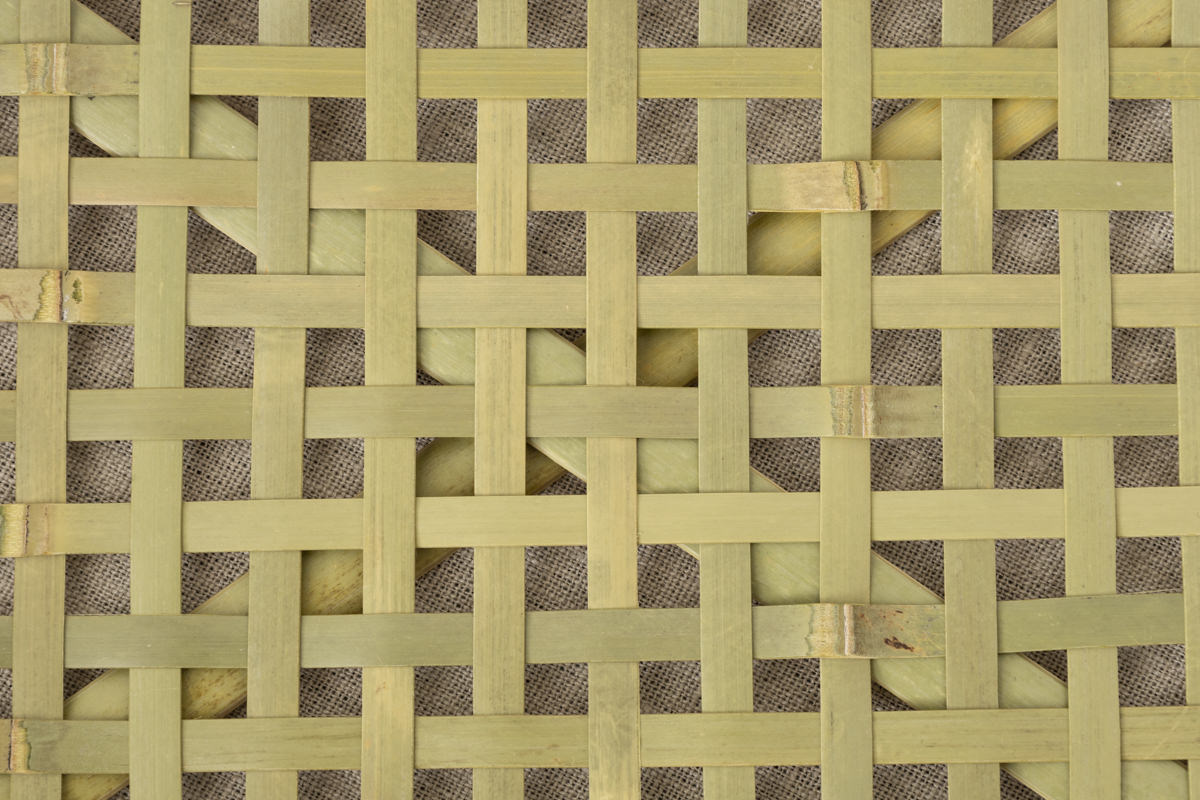
This photo shows the base of a dish-draining basket, with open spaces designed to let water drain away.
At present, this is the only bowl basket we offer that can be used as a dish-draining basket.
The reason is that the base is woven with bamboo strips that retain their outer skin, and bamboo skin has natural water-repellent properties.
This gives the basket the durability needed for use as a dish-draining basket.
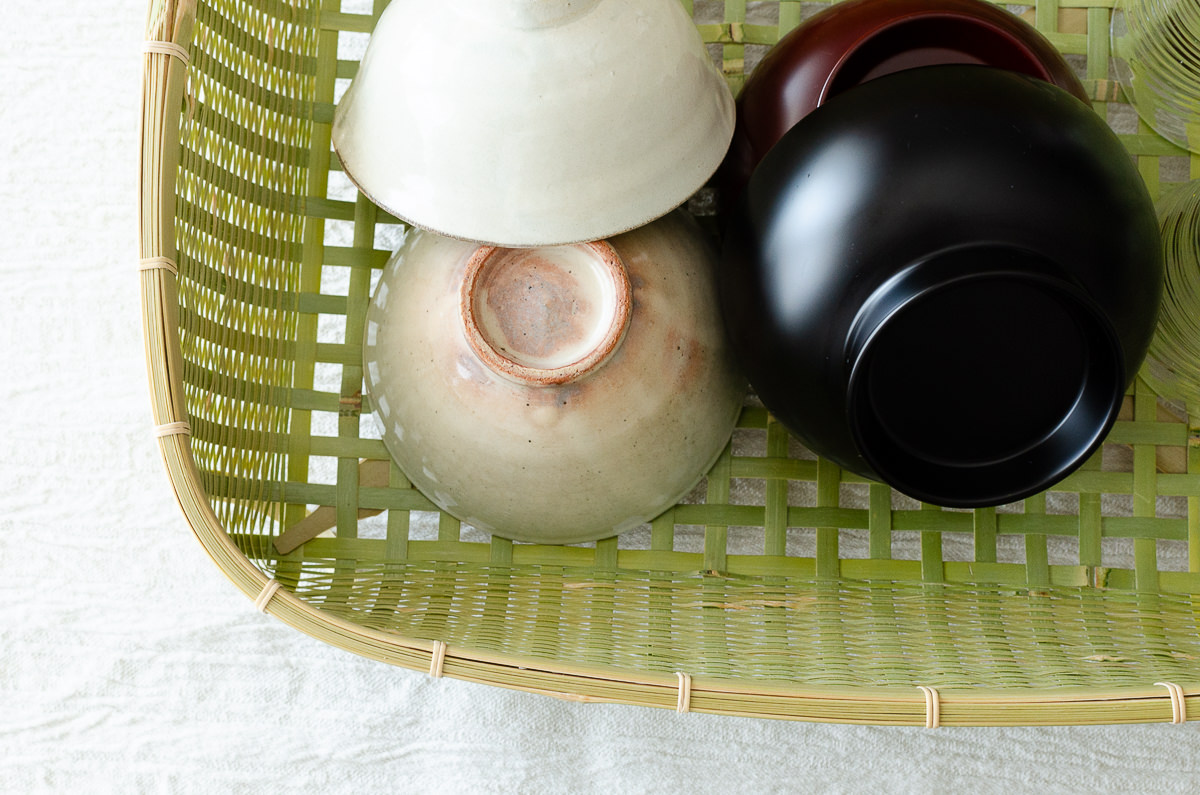
With that, we will now introduce the lineup of bowl baskets currently available at our shop.
*Clicking on a product name will take you to its individual page in our online shop.
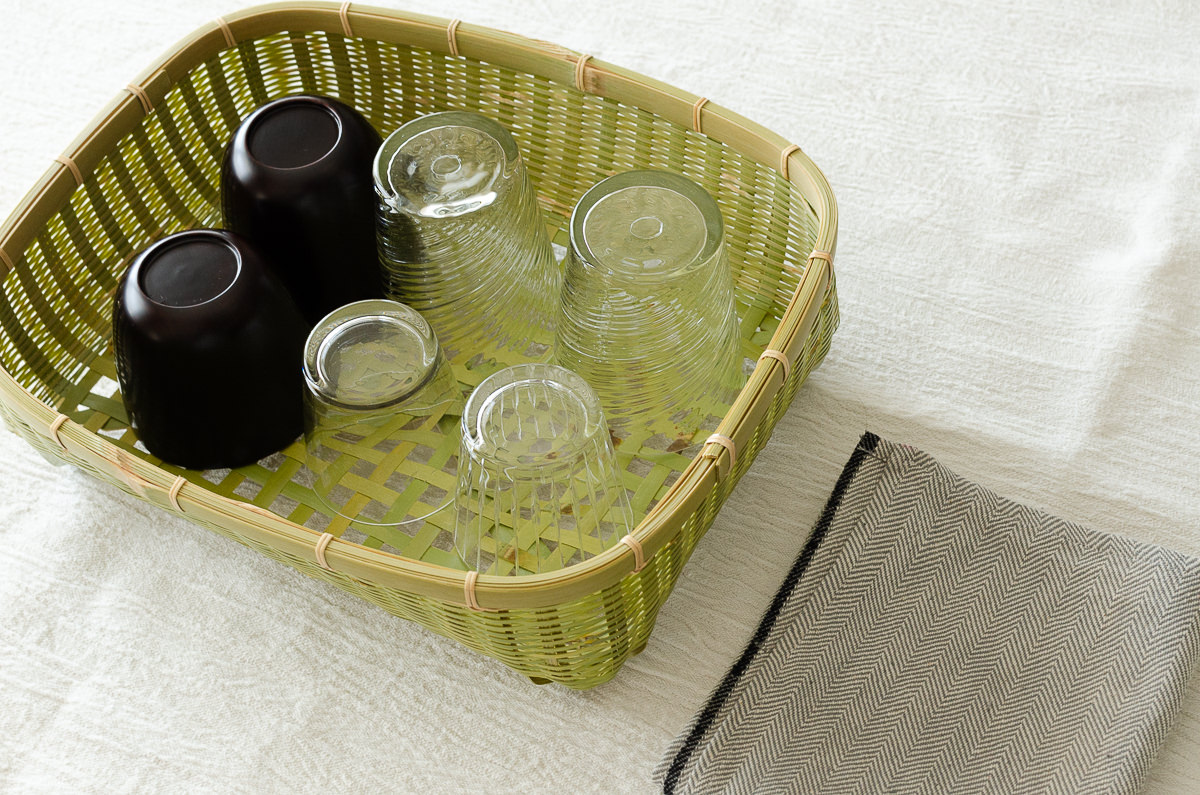
1. Dish-Draining Basket, Small
This dish-draining basket is made in Hiroshima from green bamboo (madake).
Because bamboo skin is used on the outer surface of the base, it is especially effective at shedding water.
It is also useful for drying bamboo or wooden cutlery, spatulas, and other kitchen tools.
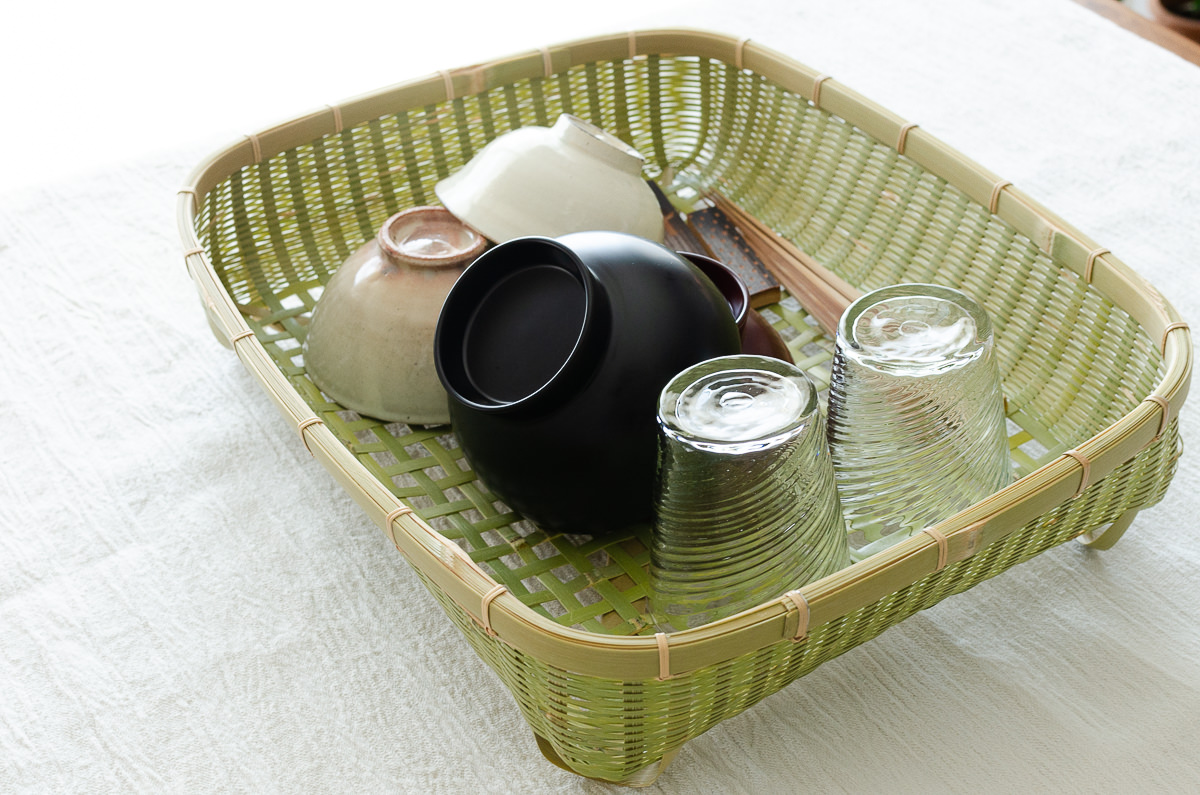
2. Dish-Draining Basket, Large
This is the large size of the same dish-draining basket. The way it stands neatly on four feet gives it a quietly dignified presence.
While it is resilient to water and even hot water, the underside of the base uses the inner part of the bamboo, which is more prone to absorbing moisture. For this reason, we recommend wiping off water frequently and allowing it to dry in a shaded, well-ventilated place.
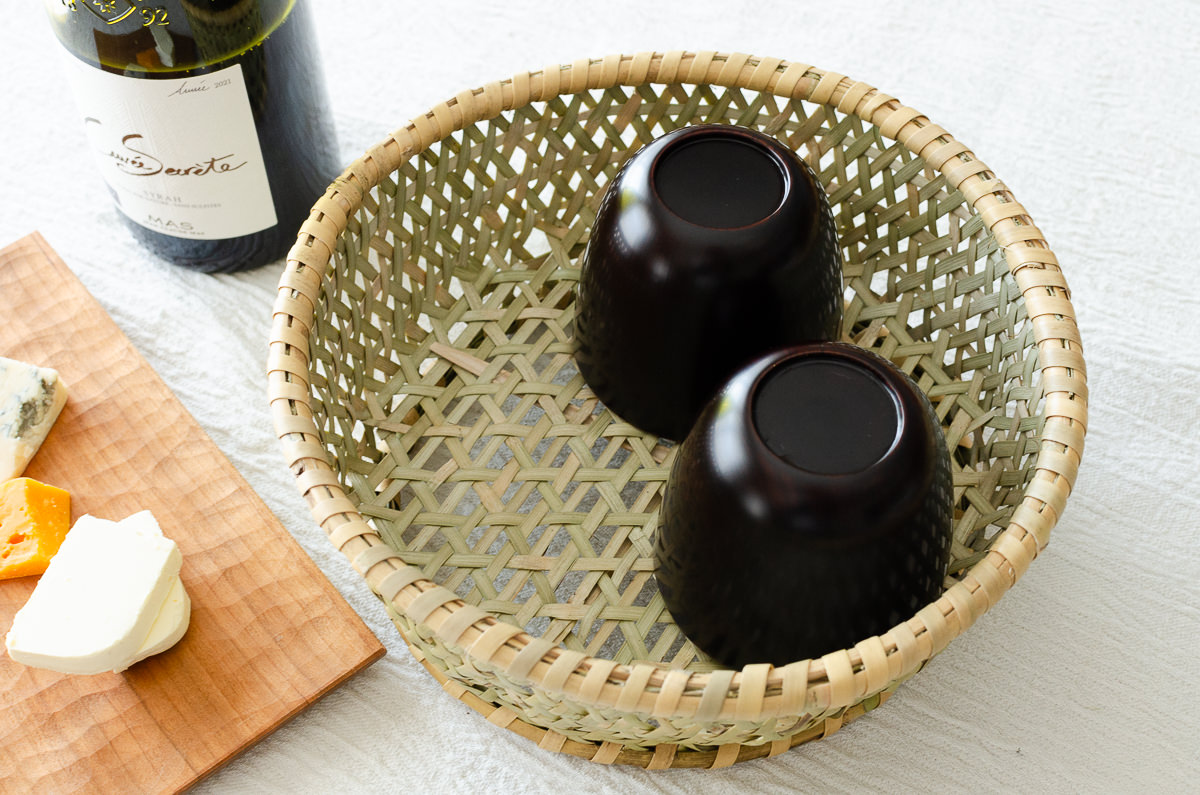
3. Round Shallow Dish Basket – Medium
This is one piece from the “chabon-kago” series made in the Togakushi area of Nagano.
It is made from nemagari-dake, a type of sasa (bamboo grass), whose outer skin has a smooth, pleasant texture.
This basket has a relatively shallow form, with slender bamboo strips and fine, closely spaced weaving. Seen from above, it features a round opening.
4. Round Shallow Dish Basket – Large
This is the larger size of the same shallow, round style.
It can hold around five to six cups or glasses.
With the shallow type, the contents remain gently visible, making it enjoyable to play with the combination of basket and items placed inside.
5. Oval Shallow Dish Basket– Medium
This is another shallow-style tea bowl basket, with an oval-shaped opening.
The clearly defined oval form is distinctive to Togakushi nemagari-dake basketry, and it is a shape that never seems to lose its appeal.
Because the oval form is closer to a rectangle, it also tends to fit more easily into a variety of spaces compared to a round basket.
This is another piece from the Togakushi nemagari-dake chabon-kago series, one of the four classic styles.
Compared to the “shallow” series, this basket has more depth, and the bamboo strips are slightly wider, resulting in a more open, robust weave.
Of course, the basket is just as sturdy and offers excellent everyday usability.
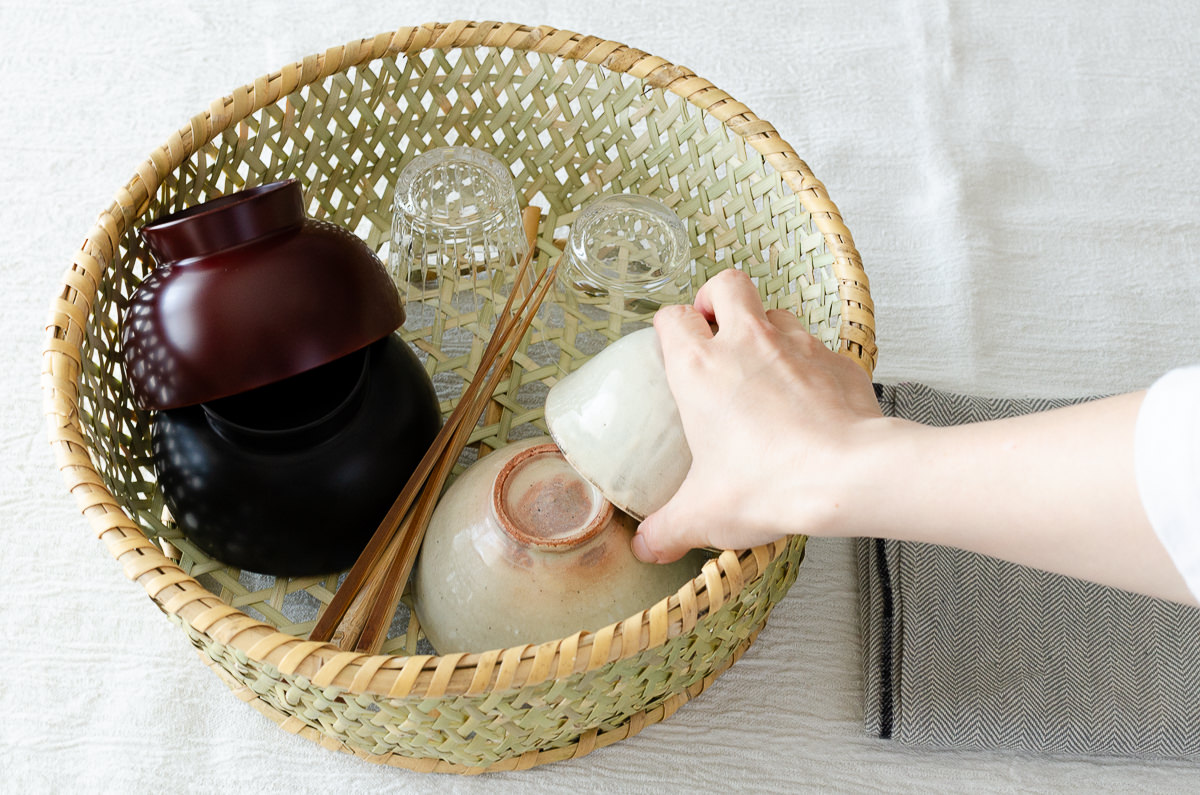
This is the large size of the classic round style.
Shown here holding tea bowls, soup bowls, glasses, and chopsticks for two people. When stacked, it appears large enough to accommodate settings for three to four people.
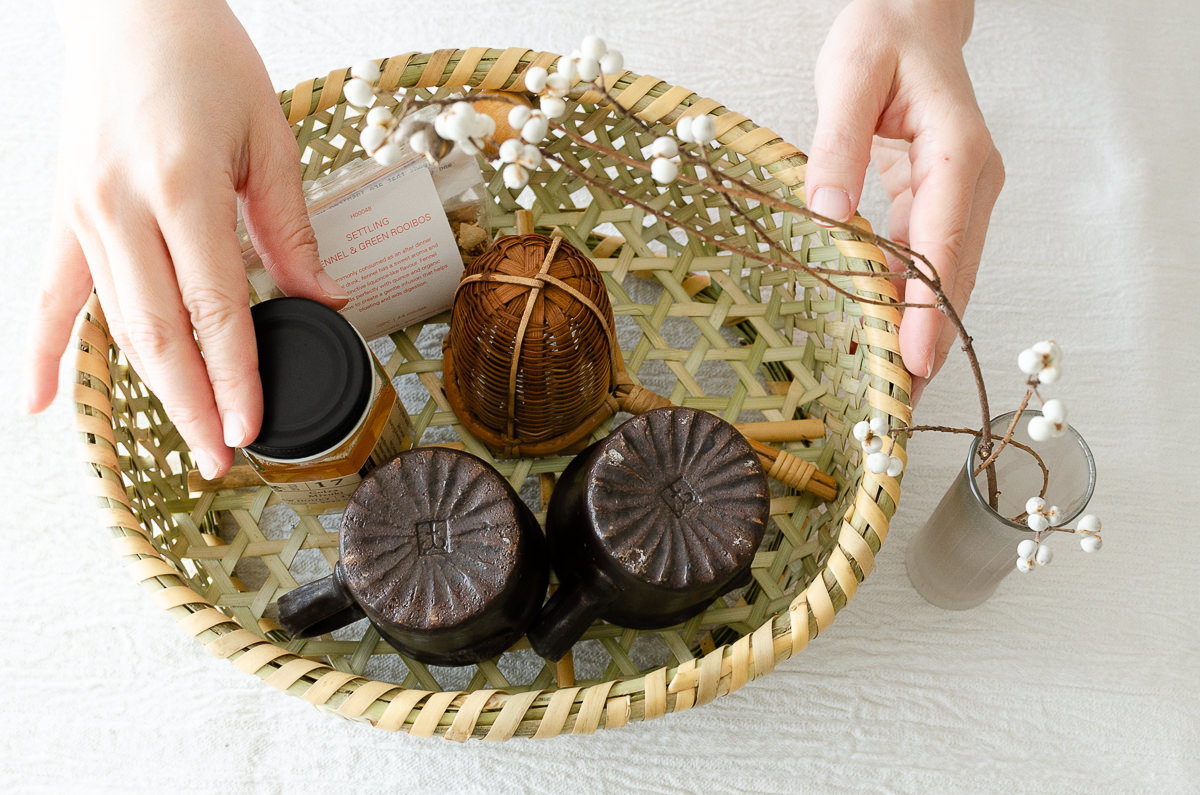
This is the medium size of the classic oval style.
Shown here holding two cups, a tea strainer, tea leaves, and honey as a familiar tea set.
Baskets of this size fit easily into many settings, making it pleasant to change how they are used from time to time.
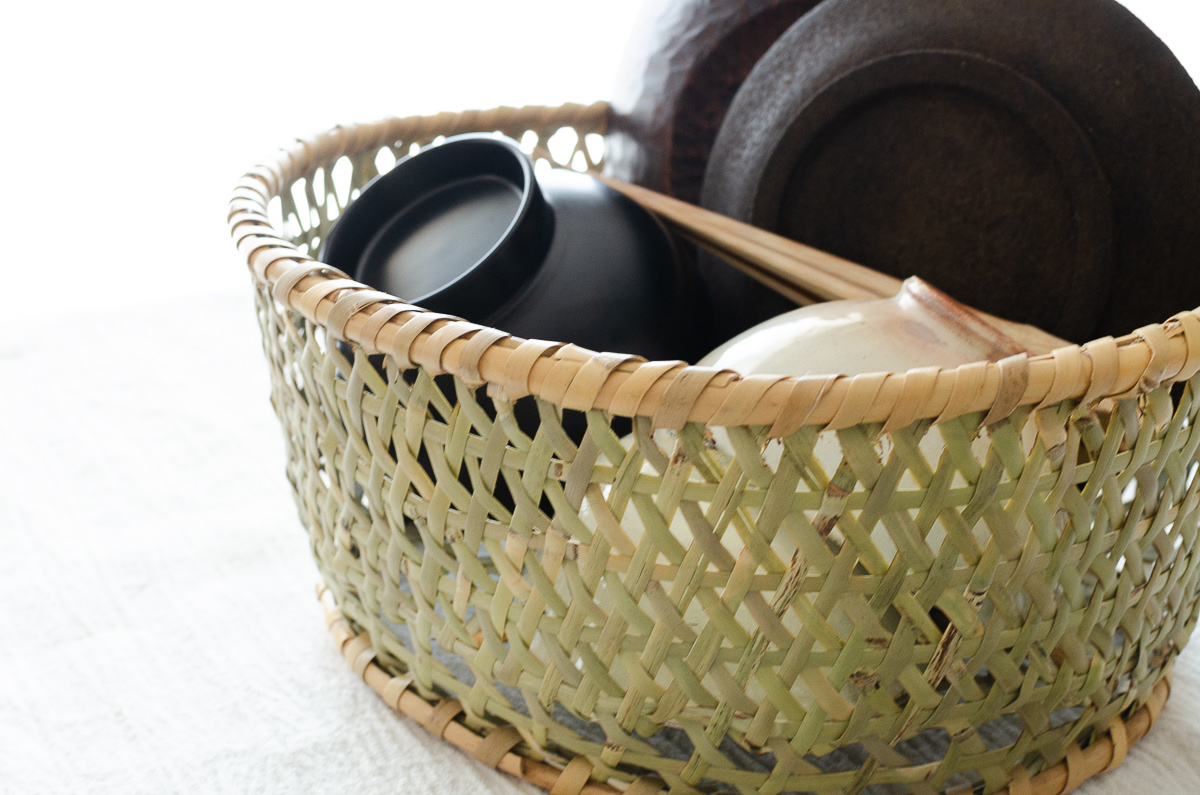
This is the large size of the classic oval series.
It is well suited for keeping everyday tableware for two to three people.
With its added depth, it also seems convenient for storing small items you may wish to keep out of sight.
For detailed information on each basket, please refer to the individual product pages.
All items introduced here are those currently in stock as of March 20, 2024.
Some items may sell out, but for products that may be restocked,
a “Notify me when back in stock” button is provided on each product page.
Please feel free to make use of this feature.
For sold-out items, the timing of the next arrival is currently undecided,
and we are unable to respond to individual inquiries regarding restock dates.
Thank you for your understanding.
Bowl baskets made from natural materials have become precious in their own right today,
but with proper care and thoughtful use, they can be companions you live with for many years.
We invite you to experience their quiet appeal for yourself.
Aya Ichikawa